Begleiten Sie uns auf eine literarische Weltreise!
Buch zum Bücherregal hinzufügen
Grey
Einen neuen Kommentar schreiben Default profile 50px
Grey
Jetzt das ganze Buch im Abo oder die ersten Seiten gratis lesen!
All characters reduced
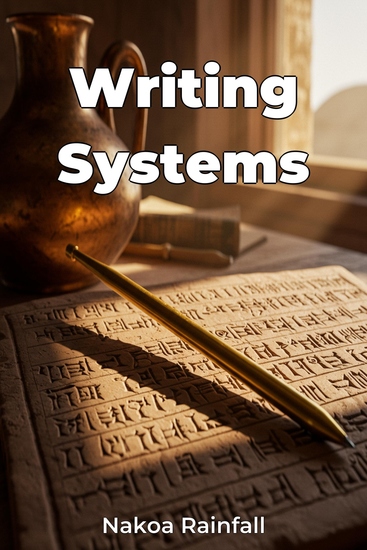
Writing Systems - cover

Writing Systems

Nakoa Rainfall

Übersetzer A AI

Verlag: Publifye

  • 0
  • 0
  • 0

Beschreibung

Writing Systems explores the captivating history and evolution of written communication, from early forms like cuneiform and hieroglyphics to modern alphabets. The book highlights how writing systems have profoundly shaped human civilization, influencing communication, cultural identity, and even the structure of human thought.

 
Did you know the invention of the alphabet significantly boosted literacy rates across societies? Or that different cultures developed unique writing systems tailored to their specific languages and needs?

 
The book uniquely presents a global perspective, examining the diversity of writing traditions beyond just Western alphabets. It traces the development of writing through archaeological evidence, linguistic analysis, and historical records.

 
Beginning with proto-writing and the societal conditions that spurred its creation, Writing Systems progresses through the evolution of alphabets and culminates in a discussion of contemporary writing systems and digital communication.

 
By integrating insights from diverse fields like archaeology, linguistics, and cognitive science, the book offers a multifaceted understanding suitable for students and anyone interested in the origins of written language.
Verfügbar seit: 29.03.2025.
Drucklänge: 68 Seiten.
Weitere Bücher, die Sie mögen werden

  • Apollo and Artemis: The Origins and History of the Twin Deities in Ancient Greek Mythology - cover

    Apollo and Artemis: The Origins...

    Editors Charles River

    • 0
    • 0
    • 0
    “Apollo’s history is a confusing one,” said the renowned poet and mythologist Robert Graves. This notion is also illustrated in the above quote from the 6th century BCE Homeric Hymn to Apollo, which gives the reader a brief glimpse into the confusion surrounding Apollo’s multi-faceted nature. The quote comes from the end of an episode in which Apollo is traversing the known world, looking for a place to build a temple to himself. Once he lands upon a place of his liking, however, he realizes that he needs to populate it with priests who would ‘guard’ and care for its ceremonies. Rather than depend upon those ‘glorious tribes’ to supply his temple with sycophants, Apollo has no patience for chance, and flies down to a Cretan merchant ship, landing on it in the form of a timber-shaking dolphin. After terrifying the merchants, he tells them that their lives in the sea trade are over, and they are to be priests at his temple from then on. Cautioning the merchants to eschew piracy and ‘keep righteousness’ in their hearts, while simultaneously confronting and sequestering them captures the youthful god’s capricious character quite well. 
    Artemis had one of the most widespread cults in the Greek world, perhaps due to her connection to nature, which can be a ubiquitous antagonist or boon-giver. Her association with nature may also explain why she was one of the oldest deities in the Greek pantheon, although her appearance in the Mycenaean Linear B script is still contested. Etymology often gives modern readers a better idea of the earliest form of a deity, but Artemis's is confusing. She is often associated with mythic qualities (such as "maidenhood" and "purity") and even non-Greek origins. The latter is as unsurprising as the former, since Artemis had a large following throughout Greece and across Asia Minor, where her most famous temple, one of the Seven Wonders of the World, resided. It was in the Near East where Artemis represented wilder characteristics.
    Zum Buch
  • We Can't Run Away From This - Racing to improve running’s footprint in our climate emergency - cover

    We Can't Run Away From This -...

    Damian Hall

    • 0
    • 0
    • 0
    What if running in beautiful places was paradoxically contributing to the destruction of those precious environments and causing irreversible global harm to people and animals too?
     
    In We Can’t Run Away From This, ultrarunner Damian Hall examines the impact of running in our climate and ecological emergency. Packed with insights from experts, it is an enlightening read which will prompt us all to really think about our kit, food and travel, and to identify simple changes we can make to our running and wider lives. But Damian also asks if concentrating on our individual footprints (pun unintended) is really the answer.
     
    We can’t run away from this any more, and this book will give every runner ideas about how to live and exercise more sustainably.
    Zum Buch
  • From Plato to Christ - How Platonic Thought Shaped the Christian Faith - cover

    From Plato to Christ - How...

    Louis Markos

    • 0
    • 0
    • 0
    What does Plato have to do with the Christian faith? 


    Quite a bit, it turns out. In ways that might surprise us, Christians throughout the history of the church and even today have inherited aspects of the ancient Greek philosophy of Plato, who was both Socrates's student and Aristotle's teacher. 


    To help us understand the influence of Platonic thought on the Christian faith, Louis Markos offers careful readings of some of Plato's best-known texts and then traces the ways that his work shaped the faith of some of Christianity's most beloved theologians, including Gregory of Nyssa, Augustine, Dante, and C. S. Lewis. 


    With Markos's guidance, listeners can ascend to a true understanding of Plato's influence on the faith.
    Zum Buch
  • Trust Shattered - Cases of Government Betrayal - cover

    Trust Shattered - Cases of...

    Peter Serefine

    • 0
    • 0
    • 0
    "Trust Shattered: Cases of Government Betrayal" is a meticulously researched, compelling narrative that unravels the complex tapestry of government actions and their profound impact on individual rights and societal trust. Spanning three distinct parts - Betrayed Bodies, Betrayed Liberty, and Betrayed Estates - this book delves into historical and contemporary instances where government intervention has overstepped, leading to significant ramifications on life, liberty, and property.Part 1, "Betrayed Bodies," exposes medical and scientific missteps and overreaches by the government. From the Tuskegee Syphilis Study to the FDA's drug revocations, it reveals how health policies and decisions have sometimes led to distrust and harm, rather than protection and healing.Part 2, "Betrayed Liberty," focuses on cases where the government’s actions have infringed upon civil liberties. It revisits moments like the McCarthy era, the Patriot Act, and the COVID-19 pandemic, highlighting how fear and crisis have been catalysts for the erosion of freedoms historically championed by democratic societies.Part 3, "Betrayed Estates," shifts the focus to property rights. It examines eminent domain, zoning laws, intellectual property, and taxation policies, demonstrating how these can sometimes betray the very essence of ownership and economic freedom.Peter Serefine masterfully intertwines historical contexts with contemporary relevance, offering a critical perspective on government actions. Each chapter is not only a recount of events but also an analysis of their ethical, legal, and societal implications. The book questions the delicate balance between public good and individual rights, scrutinizing the justifications and consequences of government policies."Trust Shattered" challenges readers to ponder the role of government in their lives. It brings to light the precarious balance between safeguarding citizens and respecting their autonomy. The book’s in-depth examination
    Zum Buch
  • On the Duty of Civil Disobedience - cover

    On the Duty of Civil Disobedience

    Henry David Thoreau

    • 0
    • 0
    • 0
    Henry David Thoreau's essay, On the Duty of Civil Disobedience, is a masterful exploration of the moral imperative to resist unjust laws and unjust governmental systems. By deploying a carefully crafted philosophical argument, Thoreau contends that citizens have an obligation to disobey any law that violates their conscience or enshrines injustice. Read in English, unabridged.
    Zum Buch
  • Ausome Connections - A Parent's Guide to Building Social Skills in Autistic Kids - cover

    Ausome Connections - A Parent's...

    Natalie Loveson

    • 0
    • 0
    • 0
    Does your autistic child struggle to connect but want to make friends? Wish you knew how to help them navigate playground drama and chat safely online? Discover realistic strategies to build social confidence, foster friendships, and celebrate your child's unique way of relating to the world! 
    This guide provides:Tools that will empower your child to understand the unwritten rules of friendship—helping them feel less lonely in school and beyond.Actionable approaches to take when your child comes home upset or crying after being teased.Steps to bridge the gap between therapists and teachers to create a kinder, more inclusive classroom.Mindset shifts to help you see meltdowns as communication, celebrate your child's quirky interests, and let go of "normal" expectations.Ways to talk to grandparents and friends who don't "get" your child to help you explain autism and build empathy in others.Insight into the power of video modeling, social stories, and safe online communities to boost your child's social skills in a fun, low-pressure way, plus guidance to protect them from online risks. 
    Don't give up hope. If you're ready to see your child gain social confidence and feel more empowered to support them on this journey, you've come to the right place! This is the start of something amazing for your child and your family! 
    Ausome Connections: A Parent's Guide to Building Social Skills in Autistic Kids is more than a book—it's a road map to a brighter social future for your child. Grab your copy today!
    Zum Buch