Rejoignez-nous pour un voyage dans le monde des livres!
Ajouter ce livre à l'électronique
Grey
Ecrivez un nouveau commentaire Default profile 50px
Grey
Abonnez-vous pour lire le livre complet ou lisez les premières pages gratuitement!
All characters reduced
World Cup Facts - cover

World Cup Facts

Nakoa Rainfall

Traducteur A AI

Maison d'édition: Publifye

  • 0
  • 0
  • 0

Synopsis

World Cup Facts explores the captivating history of the FIFA World Cup, revealing its significance as more than just a soccer tournament, but as a reflection of global culture and international relations. The book dissects legendary matches, such as the controversial 1966 final, and examines significant upsets, like Senegal's victory over France in 2002, that have challenged established soccer norms. By focusing on iconic players and their contributions, the book highlights how their individual stories are woven into the evolving tactics and strategies of the game.

 
The book begins by tracing the origins and early evolution of the tournament. It analyzes key moments and influential figures, demonstrating how the World Cup has grown into the world's most-watched sporting event. Drawing from FIFA archives, historical match footage, and player interviews, World Cup Facts adopts a narrative non-fiction style, blending meticulous fact-checking with engaging storytelling.

 
The book is structured around three main sections, starting with legendary matches that defined eras. It then examines significant upsets, and concludes by celebrating the iconic players who have graced the World Cup. This approach provides readers with a deeper understanding of the World Cup's historical significance, its impact on global culture, and the unforgettable stories behind its most memorable moments.
Disponible depuis: 19/02/2025.
Longueur d'impression: 50 pages.

D'autres livres qui pourraient vous intéresser

  • The Anti-Greed Gospel - Why the Love of Money Is the Root of Racism and How the Church Can Create a New Way Forward - cover

    The Anti-Greed Gospel - Why the...

    Malcolm Foley

    • 0
    • 0
    • 0
    "A forceful call to recognize the roots of American inequality and a solid starting point for Christians who want to help fix them." —Publishers Weekly 


    Racism is not about hate and ignorance. It's about greed. And it always has been. 


    Black Christian historian Malcolm Foley explores this idea in The Anti-Greed Gospel, showing how the desire for power and money—what some call "racial capitalism"—causes violence and exploitation. 


    Foley reviews the history of racial violence in the United States and connects the killings of modern-day Black Americans to the history of lynching in America. He helps the contemporary church wrestle with the questions racial violence brings up: How can we become communities that show generosity and resist greed? What is the next step in the journey for racial justice? 


    Listeners will walk away with a better understanding of how they can resist greed that exploits others, love their neighbor more completely, and build communities of deep solidarity, anti-violence, and truth telling.
    Voir livre
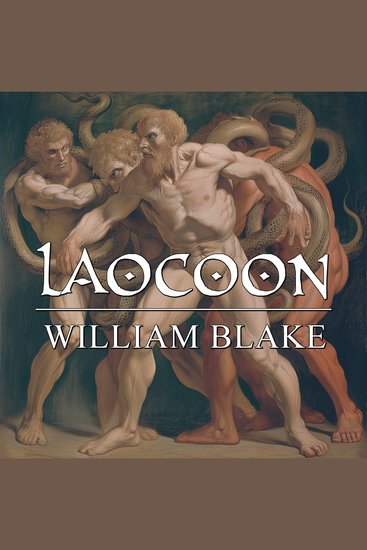
  • Laocoon - cover

    Laocoon

    William Blake

    • 0
    • 0
    • 0
    Brought to you by Altrusian Grace Media and narrated by Matthew Schmitz.The Laocoon as Jehovah with Satan and Adam, c.1820 by William Blake was the last "Illuminated" work produced by him, expounding upon the thoughts and ideas in poetic esoteric form. William Blake was an English poet, painter, and printmaker. Largely unrecognized during his life, Blake is now considered a seminal figure in the history of the poetry and visual art of the Romantic Age. William Blake worked to bring about a change both in the social order and in the minds of men.
    Voir livre
  • Dyslexia Wrestling with an Octopus - 10 Tips to Help Your Child - cover

    Dyslexia Wrestling with an...

    Beth Beamish

    • 0
    • 0
    • 0
    Does your child have dyslexia? 
    Backed by research and over a decade of personal experience, I've developed a holistic approach to help your child succeed.Find out about the eight areas of dyslexic challenge.Discover tools to teach your child to read, spell, and master the multiplication tablesUnderstand other learning challenges commonly found alongside dyslexiaUncover the links between dyslexia and common health challengesLearn how to build your child's strengths and competencies 
    Recommended by Dyslexia Assessor Craig Keane, Director of Develop Us in Wales. "I'm a specialist dyslexia assessor and teacher. I was looking for a book to recommend to parents of children I assess and teach. I wasn't expecting to learn much from the book because I'm a specialist in this field. I was wrong! Beth presents interesting statistics about dyslexia and how it can impact people in society. She explores different ways you can explain dyslexia to anyone of any age using the octopus theory! I highly recommend this book to parents, teachers, specialists and anyone who would like to educate themselves about dyslexia!"  
    "While reading this book, I have several "Ah ha!" moments that explain my child's behaviour. The book made me feel I had confided all my concerns to her, and she gave me answers. I read articles, research papers and other books, but none have really explained to me so well the many "whys?" and what I need to know about my child." Amazon review.
    Voir livre
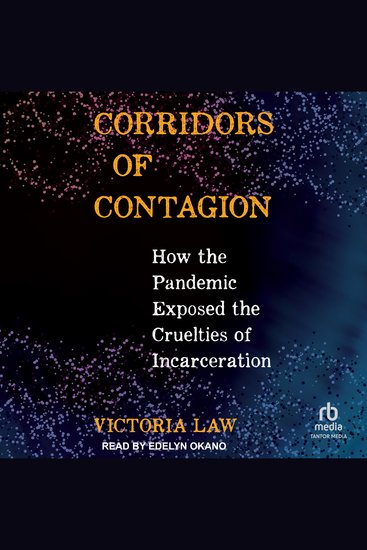
  • Corridors of Contagion - How the Pandemic Exposed the Cruelties of Incarceration - cover

    Corridors of Contagion - How the...

    Victoria Law

    • 0
    • 0
    • 0
    Corridors of Contagion brings to light the experiences of five people incarcerated across the United States as they navigate the onset of the pandemic—and the many months, stretched into years, that followed. Journalist Victoria Law combines this storytelling with a trenchant analysis of the structural failures of the US carceral system: failures that made prisons uniquely vulnerable to COVID-19 outbreaks, from overcrowding to solitary confinement, from insufficient healthcare to life sentences. 


    The book portrays the horrors of continual lockdowns not in the comfort of one's own home, but in prisons where routine violence and chaos is made even more unimaginable by the complete lack of control over protection from a terrifying and lethal new virus. The pandemic provided an opportunity for lawmakers and policy makers to rethink the nation's addiction to perpetual punishment. Instead, US jails and prisons doubled down on punishment under the guise of pandemic protections. As a result, people behind bars experienced increased stress, mental health challenges, increased violence, and higher rates of deaths, many of which could have been prevented. 


    Corridors of Contagion reminds listeners about both the particular horrors experienced by people in cages and the continued role of the US as the world’s prison nation.
    Voir livre
  • Habit Forming - Drug Addiction in America 1776-1914 - cover

    Habit Forming - Drug Addiction...

    Elizabeth Kelly Gray

    • 0
    • 0
    • 0
    Habitual drug use in the United States is at least as old as the nation itself. Habit Forming traces the history of unregulated drug use and dependency before 1914, when the Harrison Narcotic Tax Act limited sales of opiates and cocaine under US law. Many Americans used opiates and other drugs medically and became addicted. Some tried Hasheesh Candy, injected morphine, or visited opium dens, but neither use nor addiction was linked to crime, due to the dearth of restrictive laws. After the Civil War, American presses published extensively about domestic addiction. Later in the nineteenth century, many used cocaine and heroin as medicine. As addiction became a major public health issue, commentators typically sympathized with white, middle-class drug users, while criticizing such use by poor or working-class people and people of color. When habituation was associated with middle-class morphine users, few advocated for restricted drug access. By the 1910s, as use was increasingly associated with poor young men, support for regulations increased. In outlawing users' access to habit-forming drugs at the national level, a public health problem became a larger legal and social problem, one with an enduring influence on American drug laws and their enforcement.
    Voir livre
  • Gettysburg Address The (Librovox) - cover

    Gettysburg Address The (Librovox)

    Abraham Lincoln

    • 0
    • 0
    • 0
    It was a cloudy November day in 1863 when thousands gathered to hear renowned orator Edward Everett dedicate a national cemetary at the site of a pivotal battle early in July of that year. Also present to deliver "a few appropriate remarks" was the President of the United States, Abraham Lincoln. Lincoln spoke but 278 words; Everett later wrote to the President, "I should be glad, if I could flatter myself that I came as near to the central idea of the occasion, in two hours, as you did in two minutes." Though there are surviving transcripts of Everett's lengthly speech, it is Lincoln's words which have come to be known as "The Gettysburg Address" (Summary by Chip)
    Voir livre