¡Acompáñanos a viajar por el mundo de los libros!
Añadir este libro a la estantería
Grey
Escribe un nuevo comentario Default profile 50px
Grey
Suscríbete para leer el libro completo o lee las primeras páginas gratis.
All characters reduced
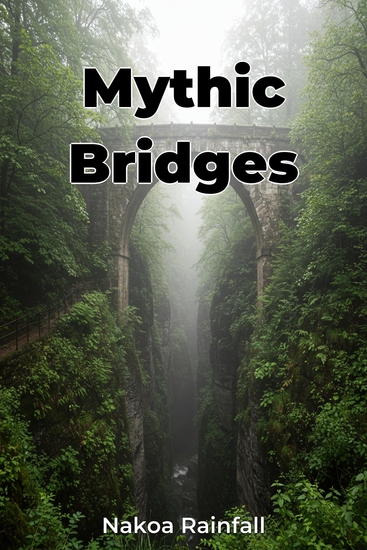
Mythic Bridges - cover

Mythic Bridges

Nakoa Rainfall

Traductor A AI

Editorial: Publifye

  • 0
  • 0
  • 0

Sinopsis

"Mythic Bridges" explores the rich symbolism of bridges as more than mere physical structures, revealing their profound significance in mythology and religious beliefs across cultures. Bridges often represent liminal spaces, acting as thresholds between the earthly and divine realms. Early civilizations viewed bridge construction as a triumph over nature, imbuing them with spiritual importance. The book highlights the bridge as a symbol of divine intervention, often built or guarded by deities. Consider the rainbow bridge Bifrost in Norse mythology, connecting Earth to Asgard. The book examines how these mythic bridges facilitate spiritual journeys, function as sites of judgment, and represent cosmic order. Structured to first introduce universal archetypes, the narrative then delves into specific examples from various cultures. "Mythic Bridges" presents a fresh perspective by synthesizing information from diverse fields to reveal the lasting legacy of these symbols in art, literature, and contemporary spiritual practices.
Disponible desde: 26/02/2025.
Longitud de impresión: 56 páginas.

Otros libros que te pueden interesar

  • Three Castles Burning - A History of Dublin in Twelve Streets - cover

    Three Castles Burning - A...

    Donal Fallon

    • 0
    • 0
    • 0
    Eason Favourite Book of the Year 2022 
     
    'she is no small town, and this is no small story . . .'
    BASED ON THE POPULAR DUBLIN HISTORY PODCAST
    
    
    A companion to the hugely successful podcast of the same name by Donal Fallon, THREE CASTLES BURNING is an enjoyable wander through some of Dublin's less obvious but more interesting streets and roads such as Henrietta Street, Watling Street, Fownes Street and Kildare Road.
    On the Dublin streets we walk every day, there are hidden reminders of the lesser-known heroes and events that have contributed to the evolving story of our capital. The city's motto, 'the obedience of the citizens produces a happy city', may feel outdated and loaded today but the three burning castles of its ancient coat of arms have come to represent the indomitable spirit, creativity and vision that define this big town. Inspired by the No. 1 podcast, Three Castles Burning: A History of Dublin in Twelve Streets champions the activists, workers, architects, poets, migrants, artists and merchants who have made and remade the city we know and love by going beneath the many layers of twelve key streets where they lived and worked. Because, in the city Joyce called the 'Hibernian Metropolis', the disobedience of its citizens is the cornerstone of its past, present and future.
    This combination of social, cultural, industrial and commercial, and political history, through the prism of the places where revolutions great and small were sparked, offers the reader a fresh and unexpected take on Ireland's capital city.
    Ver libro
  • Children's Home - A Short Documentary - cover

    Children's Home - A Short...

    Paul Ieson

    • 0
    • 0
    • 0
    This short story is about the facts that have to deal with The Miami Children's Home. Some things that went on there are quite shocking and you may find quite interesting. This was written so that people would not forget about the home and the things that went on there. The story is dedicated to all the kids who lived there over the years.
    Ver libro
  • State of the Union 1986 - cover

    State of the Union 1986

    Ronald Reagan

    • 0
    • 0
    • 0
    The 1986 State of the Union Address delivered February 4, 1986, was delayed following the Space Shuttle Challenger disaster which killed its seven crew members. Reagan reports the U.S. is the economic miracle to which the world once again turns, with record economic growth and inflation cut from over 12 to under 4 percent.  
    But the federal budget system is broken. “We do not face large deficits because American families are undertaxed; we face those deficits because the Federal Government overspends.” “We must proceed with Grace commission reforms against waste.” Tax cuts have done more to “help America's economy break free than any program since John Kennedy's tax cut almost a quarter century ago.” 
    We “must redouble our efforts for freer and fairer trade.” We oppose legislation touted as providing protection that raises prices for us all.  
    We see a renaissance in education and support “vouchers that give parents freedom of choice”. Hundreds of billions of dollars in poverty programs have led to a breakdown of the family and deteriorating schools. As Franklin Roosevelt said, “Welfare is a narcotic, a subtle destroyer of the human spirit.” Welfare “should be judged by how many of its recipients become independent of welfare.” 
    Reagan sees technology as the solution to “the greatest problem of the 20th century. A security shield can one day render nuclear weapons obsolete and free mankind from the prison of nuclear terror.”  
    “The American dream is a song of hope… to discover a new universe inside a tiny silicon chip or a single human cell.” “So, let us go forward to create our world of tomorrow in faith, in unity, and in love. God bless you, and God bless America.” 
    Audio recording courtesy of the Ronald Reagan Presidential Library. 
    AspenLeafMedia.com
    Ver libro
  • How to Be a Renaissance Woman - The Untold History of Beauty & Female Creativity - cover

    How to Be a Renaissance Woman -...

    Jill Burke

    • 0
    • 0
    • 0
    Beauty, make-up, art, power: How to Be a Renaissance Woman presents an alternative history of this period as told by the women behind the paintings, providing a window into their often overlooked or silenced lives. Can the pressures women feel to look good be traced back to the sixteenth century? 


    As the Renaissance visual world became populated by female nudes from the likes of Michelangelo and Titian, a vibrant literary scene of beauty tips emerged, fueling debates about cosmetics and adornment. Telling the stories of courtesans, artists, actresses, and writers rebelling against the strictures of their time, when burgeoning colonialism gave rise to increasingly sinister evaluations of bodies and skin color, this book puts beauty culture into the frame. 


    How to Be a Renaissance Woman will take listeners from bustling Italian market squares, the places where the poorest women and immigrant communities influenced cosmetic products and practices, to the highest echelons of Renaissance society, where beauty could be a powerful weapon in securing strategic marriages and family alliances. It will investigate how skin-whitening practices shifted with the emerging sub-Saharan African slave trade, how fads for fattening and thinning diets came and went, and how hairstyles and fashion could be a tool for dissent and rebellion—then as now.
    Ver libro
  • Ukrainian History Of The 20th Century - Ukraine Revolution World War And The Soviet Union - cover

    Ukrainian History Of The 20th...

    HISTORY FOREVER

    • 0
    • 0
    • 0
    ★ Do you want to discover the History of Ukraine? ★ 
    If your answer is yes, get this book now! 
    ★ BUY THIS BOOK NOW AND DISCOVER MORE ABUOT UKRAINE TODAY! ★ 
    In this book you will discover; 
    ·       Ukraine and Europe as a Nation State 
    ·       Ukraine’s International obligations and freedom 
    ·       Ukraine and Taiwan Relations 
    ·       Ukraine and United State Relations 
    ·       How Ukraine Became Part of the USSR - The Soviet–Ukrainian War 
    ·       Ukraine after the Fall of the Soviet Union 
    ·       Why Ukraine's Orthodox Church split from Russia 
    ·       Germany's Historical Responsibility For Ukraine 
    ·       The Story Of Volodymyr Zelensky 
    ★ BUY THIS BOOK NOW AND DISCOVER MORE ABUOT UKRAINE TODAY! ★
    Ver libro
  • What We Owe the Future - cover

    What We Owe the Future

    William MacAskill

    • 0
    • 0
    • 0
    An Oxford philosopher makes the case for “longtermism”—that positively influencing the long-term future is a key moral priority of our time 
     
    The fate of the world is in our hands. Humanity’s written history spans only five thousand years. Our yet-unwritten future could last for millions more—or it could end tomorrow. Astonishing numbers of people could lead lives of great happiness or unimaginable suffering, or never live at all, depending on what we choose to do today. 
      
    In What We Owe The Future, philosopher William MacAskill argues for longtermism, that idea that positively influencing the distant future is a key moral priority of our time. From this perspective, it’s not enough to reverse climate change or avert the next pandemic. We must ensure that civilization would rebound if it collapsed; counter the end of moral progress; and prepare for a planet where the smartest beings are digital, not human. 
      
    If we put humanity’s course to right, our grandchildren’s grandchildren will thrive, knowing we did everything we could to give them a world full of justice, hope, and beauty.
    Ver libro