Rejoignez-nous pour un voyage dans le monde des livres!
Ajouter ce livre à l'électronique
Grey
Ecrivez un nouveau commentaire Default profile 50px
Grey
Abonnez-vous pour lire le livre complet ou lisez les premières pages gratuitement!
All characters reduced
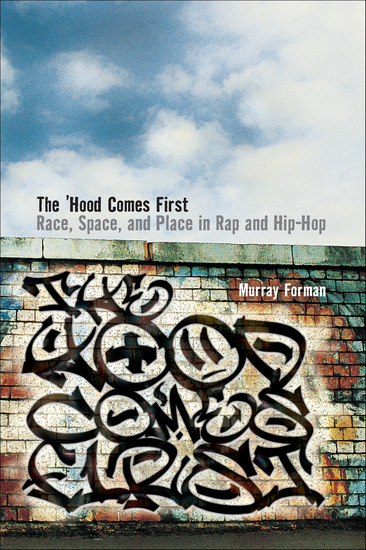
The 'Hood Comes First - Race Space and Place in Rap and Hip-Hop - cover

The 'Hood Comes First - Race Space and Place in Rap and Hip-Hop

Murray Forman

Maison d'édition: Wesleyan University Press

  • 0
  • 0
  • 0

Synopsis

The 'Hood Comes First looks at the increasingly specific emphasis on real neighborhoods and streets in rap music and hip hop culture as an urgent response to the cultural and geographical ghettoization of black urban communities. Examining rap music, along with ancillary hip hop media including radio, music videos, rap press and the cinematic 'hood genre, Murray Forman analyzes hip hop culture's varying articulations of the terms "ghetto," "inner-city," and "the 'hood," and how these spaces, both real and imaginary, are used to define individual and collective identity.Negotiating academic, corporate, and "street" discourses, Forman assesses the dynamics between race, social space and youth. Race, class and national identification are recast and revised within rap's spatial discourse, concluding with the construction of "the 'hood," a social and geographic symbol that has become central to concepts of hip hop authenticity. Additionally, the book analyzes the processes within the music and culture industries through which hip hop has been amplified and disseminated from the 'hood to international audiences.
Disponible depuis: 06/08/2024.
Longueur d'impression: 619 pages.

D'autres livres qui pourraient vous intéresser

  • For No Reason at All - The Changing Narrative of the First World War in American Film - cover

    For No Reason at All - The...

    Jeffrey A. Hinkelman

    • 0
    • 0
    • 0
    The years following the signing of the Armistice saw a transformation of attitudes regarding military conflict as America attempted to digest the First World War. During these years popular film culture in the US created new ways of addressing the impact of the war on individuals and society. Filmmakers created works that promoted their own ideas about the depiction of wartime service—ideas that frequently conflicted with established, heroic tropes for the portrayal of warfare on film. 


    Filmmakers spent years modifying existing standards and working through storytelling options before achieving a consensus regarding the fitting method for rendering war on screen. This process reached its peak during the Pre-Code Era of the early 1930s when the initially prevailing narrative would be briefly supplanted by an entirely new approach that questioned the premises of wartime service. The rhetoric of these films argued for an antiwar stance that questioned the wartime experience. 


    For No Reason at All: The Changing Narrative of the First World War in American Film discusses a variety of Great War–themed films made from 1915 to the present, tracing the changing approaches to the conflict over time.
    Voir livre
  • Stories from Kathasaritasagara series - 13 - From Various sources - cover

    Stories from Kathasaritasagara...

    Anusha HS

    • 0
    • 0
    • 0
    The book Kathasaritsagara has been created by Soma Deva. It consists of 21,500 shlokas. 
    This book Kathasaritsagara has been divided into 18 lambakaas, and those 18 lambakaas are still more divided into 125 Tharanga's. 
    Some lambakaas are very big, while some are very small. 
    If there are 115 Shlokas in the 11th Lambaka, there are around 4925 Shlokas in 12th Lambaka. 
    During ancient times from the mouth of Lord Shiva, this story got birth. Those who listen to this story will experience all sorts of worldly pleasures. They will be blessed by Lord Shiva and at last reach jnana Loka by the blessings of lord Shiva.
    Voir livre
  • The Role of Parents in Education - How to Raise an Educated Child Using Highly Effective Parent Involvement Activities - cover

    The Role of Parents in Education...

    Frank Dixon

    • 0
    • 0
    • 0
    Do You Want to Make Sure That Your Kids Get the Best Education They Can Possibly Get? 
    Then there are certain things you can do as a parent to ensure that happens…Can we really trust schools to set our kids up for the ultimate life? 
    Think about it for a moment… 
    What are the keys to a good life? 
    Good health, good relationships, a positive mindset, perseverance, hard work... you name them. 
    How many of those essential life skills are actually taught in schools? 
    Not many, if any at all. 
    Which means that it’s in our hands as parents to make sure that our kids actually get the education they need for a long, successful, happy and healthy life... 
    ...this book will show you exactly what you can do to give your kids the best education they could ever dream of. 
    In The Role of Parents in Education, you’ll discover... 
    ✓ What to Teach Your Child That They Aren’t Taught in School 
    ✓ How to Effectively Raise a Well-Educated Child 
    ✓ The Best Parenting Involvement Activities for Participating in Your Kids’ Education 
    ✓ The Enormous Benefits of Raising Properly Educated Children 
    and much more... 
    So, do you want the best education for your kids? And do you want to help them on the way there?Then Click The “Buy Now” Button Above Today to Immediately Start Improving Your Children's Future!
    Voir livre
  • How I Found the Lost Atlantis! by Dr Paul Schliemann - narrated by Michael Henrik Wynn - cover

    How I Found the Lost Atlantis!...

    Dr. Paul Schliemann

    • 0
    • 0
    • 0
    The article on which this audio book is based was published in the 'New York American' on October 20th, 1912.  
    The author, Dr. Paul Schliemann, was the grandson of Heinrich Schliemann (1822 - 1890), a founder of modern archaeology. In this famous archaeological hoax he makes outrageous and sensational claims about the lost continent Atlantis, and his grandfather’s research.  
    The text was written in an age when many of the Victorian adventure writers, like H. Rider Haggard in Britain, Emilio Salgari in Italy and Karl May in Germany topped reading lists. In 1912, the jungle calls of Tarzan echoed through American pulp magazines for the very first time.  
    Paul Schliemann capitalizes on the contemporary craze for his grandfather’s archaeological discoveries, for lost worlds and legendary characters like the queen of Sheba and Prester John. Since 1907, Howard Carter had been excavating in Egypt, and in 1922 Carter made his historical discovery of the tomb of Tutankhamun. 
    Paul Schliemann’s article is highly entertaining, and features passages reminiscent of Indiana Jones. Michael Henrik Wynn, the editor of the educational net radio stream Historyradio.org, gives a spirited performance of what has become a classic and much loved hoax in archaeological circles.
    Voir livre
  • Patrick Henry's Give Me Liberty or Give Me Death - cover

    Patrick Henry's Give Me Liberty...

    Patrick Henry

    • 0
    • 0
    • 0
    Patrick Henry’s Give Me Liberty or Give Me Death speech, delivered on March 23, 1775, is one of the most powerful orations in American history. Addressing the Virginia Convention, Henry’s passionate plea for freedom from British rule helped ignite the flames of the American Revolution. His bold declaration, “Give me liberty, or give me death!” has since become a symbol of the fight for independence and human rights. 
    Narrated by Gary Middleton, this audiobook brings Patrick Henry’s stirring words to life, capturing the intensity and urgency of the moment. Whether you’re a student of history or simply an admirer of powerful rhetoric, this speech is an essential listen for understanding the spirit of the American Revolution.
    Voir livre
  • Being Cosmopolitan - A Political Approach - cover

    Being Cosmopolitan - A Political...

    Luke Ulas

    • 0
    • 0
    • 0
    What does it mean to be cosmopolitan? Typically, cosmopolitanism is understood as a broad moral orientation, involving some kind of commitment to global moral equality. On this understanding, to be cosmopolitan is simply to evidence that moral orientation oneself. By contrast, Being Cosmopolitan takes up a thoroughly political approach. The focus is on what it might mean, and what it is like, to be political in a distinctly cosmopolitan form. What it means to be cosmopolitan in this thoroughly political sense cannot involve appeal to any particular moral orientation, because politics is about, inter alia, the contestation of such orientations and commitments. Instead, this book offers an account that is based upon the internalization of particular kind of global "social imaginary," involving the imagination of a global public to which certain issues—or global public affairs—are understood to pertain. 


    Within which kind of global order is it possible, or comfortable, for a cosmopolitical agent to live? In answer to this question, the book argues against the viability of both a world of self-determining peoples, and of "pluralist" global visions—both of which are popular with moral cosmopolitan theorists.
    Voir livre