Rejoignez-nous pour un voyage dans le monde des livres!
Ajouter ce livre à l'électronique
Grey
Ecrivez un nouveau commentaire Default profile 50px
Grey
Abonnez-vous pour lire le livre complet ou lisez les premières pages gratuitement!
All characters reduced
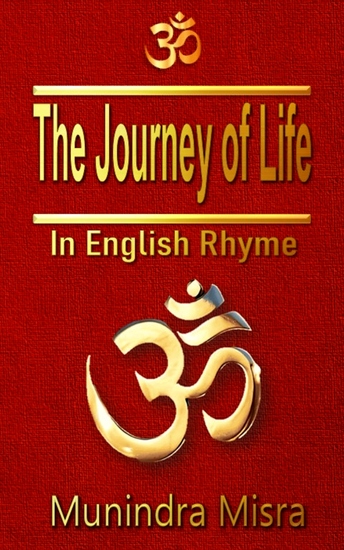
The Journey of Life - In English rhyme - cover

The Journey of Life - In English rhyme

Munindra Misra

Maison d'édition: Munindra Misra

  • 0
  • 0
  • 0

Synopsis

In cosmic sound, Om's vibrations rise,
 
Connecting all, with sacred, mystic sighs.
 
Trideva's trio, Brahma, Vishnu, and Shiva too,
 
In harmony, the universe's balance imbue.
 
Om's syllable, a symbol of the whole,
 
Echoes through eternity, a sacred goal.
 
Brahma's creation, a cosmic, grand design,
 
Vishnu's preservation, the universe's rhyme in line.
 
Shiva's destruction, a cycle to renew,
 
In Om's vibration, all three aspects shine through.
 
In Trideva's unity, the universe's might,
 
Om's resonance, a celestial, guiding light.
 
Through Om's sound, the cosmos takes its birth,
 
Trideva's symphony, a divine, cosmic mirth.
 
In every atom, Om's vibration does reside,
 
Trideva's essence, the universe's heartbeat, side by side.
Disponible depuis: 20/03/2025.
Longueur d'impression: 290 pages.

D'autres livres qui pourraient vous intéresser

  • Absolute Tao - Subtle is the way to love happiness and truth - cover

    Absolute Tao - Subtle is the way...

    Osho

    • 0
    • 0
    • 0
    Moving beyond the usual interpretations of this classic Chinese text - that of using it as an indicator of what to do next or attempting to predict the future - Osho is using the Tao Te Ching as Lao Tzu intended: to ignite the flame of individual awareness and insight. His commentaries on these seven verses burn through every idea we may hold about ourselves until we can see with the same crystal-clear light as Lao Tzu.
    Tao, like Osho, is the way of wholeness: not dividing or denying anything, simply remaining choiceless and aware. You will find yourself listening to this series as if it were a waterfall; as you listen, you will come to understand the emptiness that puts us in touch with the eternal and makes bliss and ecstasy possible.
    
    - On the Absolute Tao
    - Ordinariness
    - On the Character of Tao
    - Emptiness
    - On the Danger of Overweening Success
    - There Is No Meaning
    - On the Utility of Not-Being
    - Witnessing
    - On the Wise Ones of Old
    - Wisdom and Understanding
    
    © & ℗ 1975 OSHO International Foundation
    Voir livre
  • The Last Romantic - C S Lewis English Literature and Modern Theology - cover

    The Last Romantic - C S Lewis...

    Jeffrey W. Barbeau

    • 0
    • 0
    • 0
    Credo Book Award Winner – Natural Theology
    "There are so many books on Lewis that are simply a rehash of existing knowledge; by contrast, this is a work of fresh, detailed, illuminating scholarship. ... Barbeau's use of Lewis's personal annotations in the books in the Marion E. Wade Collection is a revelation and makes this book a permanent and important contribution to the study of Lewis's thought." – Malcolm Guite, Girton College, Cambridge
    Three Essays on C. S. Lewis and Romanticism
    Many readers have heard C. S. Lewis's logical arguments for the Christian faith. Yet throughout his wide-ranging study and writing, Lewis often began with experience, intuition, and religious feeling rather than dogmatic assertions. The most profound questions of Lewis's own life, argues theologian and literary critic Jeffrey Barbeau, can be seen in his quest to understand the relationship between personal experience and the truth about the world around him.
    In a series of three essays, Barbeau explores the influence of nineteenth-century Romanticism on the writings of C. S. Lewis. Barbeau demonstrates Lewis's indebtedness to Romantic notions of imagination and subjectivity, opens new contexts for understanding ideas about memory and personal identity in his autobiographical writings, and explores beliefs about nature and Christian sacraments throughout his writings on Christian faith. This theological and literary investigation reveals Lewis as a profoundly modern thinker and illuminates his ongoing relevance to contemporary debates about theology and culture.
    Drawing on extensive reading of the marginalia in the personal library of C. S. Lewis held by the Marion E. Wade Center, Barbeau offers a fresh understanding of the influence of modern theology and Romantic poetry, especially Wordsworth and Coleridge, on many of Lewis's most beloved works. Essays and responses include:
    
    - C. S. Lewis and the "Romantic Heresy," with response from professor Sarah Borden,
    - C. S. Lewis and the Anxiety of Memory, with response from professor Matthew Lundin, and
    - C. S. Lewis and the Sacramental Imagination, with response from professor Keith L. Johnson.
    
    About the Series
    The Hansen Series celebrates the literary and spiritual contributions of seven British authors whose works have captivated readers across generations: Owen Barfield, G. K. Chesterton, C. S. Lewis, George MacDonald, Dorothy L. Sayers, J. R. R. Tolkien, and Charles Williams. These seven authors were all deeply involved in the friendships and intellectual exchanges that shaped the Inklings, a mid-twentieth-century group of Christian writers and thinkers in Oxford, England. This series invites readers to deepen their engagement with these timeless voices and their enduring influence on literature, faith, and the life of the imagination.
    Voir livre
  • The Tales of Odin - Exploring the Myths of Norse Sovereignty - cover

    The Tales of Odin - Exploring...

    Odessa Nightshade

    • 0
    • 0
    • 0
    Odin, the Allfather, stands at the heart of Norse mythology as the ruler of Asgard and the most revered of the Aesir gods. His presence looms over the myths, guiding fate through wisdom, war, and magic. Unlike many deities who rule with absolute power, Odin is a seeker—forever chasing knowledge, sacrificing for wisdom, and embracing the harsh realities of destiny. His relentless pursuit of understanding, even at great personal cost, defines his role as a sovereign figure in Norse tradition.  
      
    One of the defining aspects of Odin's character is his thirst for wisdom. Unlike other gods who rely on brute strength or trickery, Odin seeks knowledge from the farthest reaches of the cosmos. He surrenders an eye at Mimir’s well to glimpse the secrets of the universe, proving that true power comes not from force but from insight. His self-imposed suffering on the World Tree, Yggdrasil, where he hangs for nine days and nights to uncover the runes, further exemplifies his willingness to endure hardship for enlightenment. These sacrifices are not acts of desperation but a calculated investment in his dominion. To rule effectively, Odin understands that he must possess knowledge beyond that of gods and mortals alike.  
      
    While wisdom is his greatest pursuit, Odin is also a god of war. Unlike Thor, who thrives in battle with sheer might, Odin’s approach is more strategic. He governs over Valhalla, where fallen warriors, the Einherjar, prepare for Ragnarok. His connection to war is not merely about bloodshed but about the honor and destiny of those who fight. He chooses the slain, sending the Valkyries to collect souls for the final battle. Yet, Odin is not a god who fights on impulse. His understanding of fate informs his actions, and every decision he makes is in preparation for the ultimate conflict. 
    Voir livre
  • Transactional Analysis in Psychotherapy - cover

    Transactional Analysis in...

    Eric Berne

    • 0
    • 0
    • 0
    "Transactional Analysis in Psychotherapy" by Eric Berne is a seminal text that delves into the intricacies of human interaction and communication through the lens of transactional analysis (TA). Published in 1961, this book presents TA not just as a theory but as a practical method of therapy, offering insights into the dynamics of human behavior. Berne introduces concepts such as ego states, which categorize communication and behavior into parent-like, child-like, or adult-like forms, and "strokes," which are units of interpersonal recognition. He explores the structuring of time and the concept of life scripts—unconscious life plans adopted under parental influence. Berne's work is foundational in the field of psychotherapy, providing tools for understanding the complexities of human relationships and the mechanisms of communication, making it an essential read for professionals in psychology and psychotherapy, as well as anyone interested in the deeper understanding of social interactions.
    Voir livre
  • Big Questions of Philosophy The: Book Summary & Analysis - cover

    Big Questions of Philosophy The:...

    Briefly Summaries

    • 0
    • 0
    • 0
    This is a concise summary and analysis of ,The Big Questions of Philosophy by 
    David Edmonds.
     
    It is not the original book and is not affiliated with or endorsed by David Edmonds.
    Ideal those seeking a quick and insightful overview.
     
    Delve into life's most profound questions with clarity and wit in The Big Questions of Philosophy. This thought-provoking exploration tackles timeless issues such as morality, free will, the nature of consciousness, and the existence of God. Blending ancient wisdom with contemporary insights, the book provides accessible explanations of complex philosophical ideas, inviting readers to engage with the fundamental questions that shape human understanding and experience.
    Voir livre
  • The Critique of Pure Reason - cover

    The Critique of Pure Reason

    Immanuel Kant

    • 0
    • 0
    • 0
    The Critique of Pure Reason is a philosophical work written by Immanuel Kant, published in 1781. The book is divided into two main parts: the first part deals with what Kant calls "Transcendental Aesthetic," which is concerned with the nature of space and time and the way in which our minds perceive them. The second part deals with what Kant calls "Transcendental Logic," which is concerned with the nature of our understanding and how we reason about the world. 
    In the Critique of Pure Reason, Kant aims to investigate the limits and conditions of knowledge, particularly in the context of metaphysics. He argues that all knowledge must be based on experience, but that our understanding is not limited to the information that we can gain through our senses. Rather, he posits that we have certain innate concepts and categories that allow us to make sense of the world and that shape our perception and understanding of reality. 
    Kant's approach to metaphysics is known as transcendental idealism, which holds that the world as it appears to us is not necessarily the same as it is in itself. He argues that we can only know the world as it appears to us, not as it is in itself, and that our knowledge is necessarily limited by the nature of our minds and our perception. 
    Overall, the Critique of Pure Reason is a complex and influential work that has had a profound impact on philosophy, particularly in the fields of epistemology and metaphysics. It is considered a foundational text of modern philosophy and is still widely studied and debated today.
    Voir livre