


Rig Veda Mandal 4 - In English rhyme
Munindra Misra
Maison d'édition: Munindra Misra
Synopsis
The Rig Veda - Mandal 04 with 58 Shuktas in English rhyme
Disponible depuis: 05/07/2025.
Longueur d'impression: 138 pages.

Maison d'édition: Munindra Misra
The Rig Veda - Mandal 04 with 58 Shuktas in English rhyme

Educational inequity remains one of the most pressing challenges facing modern society. Despite decades of effort to create equal opportunities for all students, disparities persist, especially along lines of race, socioeconomic status, and geography. These inequities are not merely abstract concepts but realities that shape the educational experiences of millions of children worldwide, with long-lasting effects on their futures.

At its core, educational inequity refers to the unequal distribution of resources, opportunities, and outcomes within the education system. It manifests in various forms, such as disparities in school funding, access to qualified teachers, availability of educational materials, and differences in academic performance across different student groups. For example, students from low-income families or rural areas often face additional barriers, including overcrowded classrooms, outdated textbooks, and limited access to extracurricular activities. Meanwhile, students from wealthier backgrounds tend to attend schools with better facilities, more advanced technology, and more specialized support.

The impact of these disparities is profound. Research shows that students who attend underfunded schools are more likely to experience lower academic achievement, higher dropout rates, and limited access to higher education. Additionally, the long-term effects of these inequities extend beyond the classroom, influencing future employment opportunities, income levels, and overall life outcomes. For marginalized communities, the cycle of inequality can be difficult to break, perpetuating systemic disadvantages that span generations.
Voir livre
Priceless Wisdom from a Modern Tao Te Ching Odyssey“...this book will completely absorb your attention from the beginning...” —Emanuele Pettener, PhD, assistant professor of Italian and writer in residence at Florida Atlantic University#1 New Release in Chinese Poetry, Asian Poetry, and Tao Te ChingA literary memoir like no other, Monk of Park Avenue recounts novelist and martial master Monk Yon Rou’s spiritual journey of self-discovery. Learn from Yon Rou as he tackles tragedy and redemption on an unforgettable soul-searching odyssey.A spiritual journey with extraordinary encounters. Yon Rou’s memoir is a kaleidoscopic ride through the upper echelons of New York Society and the nature-worshipping, sword-wielding world of East Asian religious and martial arts. Monk of Park Avenue divulges a privileged childhood in Manhattan, followed by the bitter rigors of kung fu in China and meditations in Daoist temples. Join Yon Rou’s adventure as he encounters kings, Nobel laureates, and the Mob. Witness this martial master’s incarceration in a high-mountain Ecuadorian hellhole and fight for survival in Paraguay’s brutal thorn jungle. Meet celebrities along the way. A story of love, loss, persistence, triumph, and mastery, The Monk of Park Avenue is peopled with the likes of Milos Forman, Richard Holbrooke, Paul McCartney, Warren Beatty and now-infamous opioid purveyors, the Sackler Family. Yun Rou’s memoir is no mere celebrity tell-all, but a novelist and martial master’s path to self-discovery.The Monk of Park Avenue offers you:Paths for personal and spiritual growthAnecdotal stories of self-discovery and insights into how to liveAn eloquent, candid exploration of spiritual transformationIf you loved Zen and the Art of Motorcycle Maintenance, To Shake the Sleeping Self, or Lao Tzu by Ursula K. Le Guin, you’ll love The Monk of Park Avenue. Also, be sure to read Monk Yon Rou’s Mad Monk Manifesto, winner of both the Gold & Silver 2018 Nautilus Book Award.Voir livre
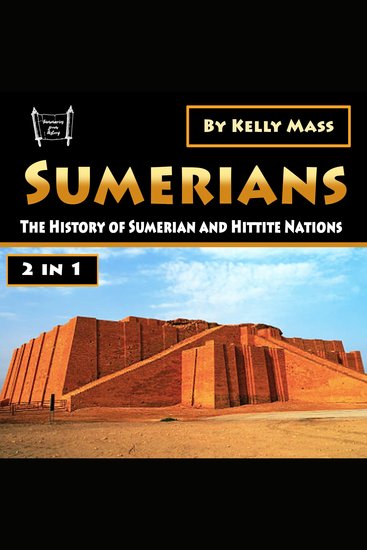
This book contains 2 topics, which are:
1 - Sumerians: The Sumerians were the people from Sumer, the first recognized society in the historic area of southern Mesopotamia (now southern Iraq), developed throughout the 6th and 5th centuries BC throughout the Chalcolithic and early Bronze Ages. In addition to age-old Egypt, the Caral-Supe culture, the Indus Valley civilization, the Minoan civilization, and age-old China, it is also one of the world's early civilizations. Sumerian farmers who lived along the Tigris and Euphrates valleys grew a great deal of grain and other items, which allowed them to establish metropolitan towns. Before 3000 BC, there was proto-writing. The earliest files date from between 3500 and 3000 BC and are from the cities of Uruk and Jemdet Nasr.
2 - Hittites: The Hittites were mentioned in the Bible. They were an Anatolian people that contributed to creating a kingdom in Kussara before 1750 BC, the Kanesh or Nesha kingdom between 1750 and 1650 BC, and finally an empire based upon Hattusa in north-central Anatolia around 1650 BC. Under uppiluliuma I, the empire reached its peak in the mid-14th century BC, when it ruled over much of Anatolia and areas of the northern Levant and Upper Mesopotamia.
Between the 15th and 13th centuries BC, the Hattusa Empire, also called the Hittite Empire, defended control of the Near East with the New Kingdom of Egypt, the Middle Assyrian Empire, and the Mitanni Empire. The Middle Assyrian Empire ultimately emerged as the dominant power, took much of the Hittite Empire, and ransacked the rest by Phrygian newbies to the area. The Hittites separated into numerous self-governing Syro-Hittite countries around c. 1180 BC, at the time of the Late Bronze Age collapse, some of which stayed till the 8th century BC before giving up to the Neo-Assyrian Empire.
Voir livre
In 1848, THE COMMUNIST MANIFESTO was published by two émigrés from Germany. Marx and Engels' apocalyptic vision of an insatiable system that penetrates every corner of the world reduces every relationship to that of profit, and burst asunder the old forms of production and of politics. It is still a recognisable picture of our world – the vampiric energy of the system being once again highly contentious.

The Manifesto is a text that shows no sign of fading into antiquarian obscurity. Its ideas animate in different ways the work of writers like Yanis Varoufakis, Adam Tooze, Naomi Klein and the journalist Owen Jones.

China Mieville is not a writer who has been hemmed in by conventional notions of expertise or genre, and this is a strikingly imaginative take on Marx and what his most haunting book has to say to us today.
Voir livre

The Oyo Empire, one of the most powerful and influential states in West Africa, has a rich and complex history that spans centuries. Located in what is today southwestern Nigeria, the empire was a major force in the region, known for its military prowess, sophisticated political system, and extensive trade networks. The history of the Oyo Empire dates back to the 14th century, when it emerged as one of the leading Yoruba kingdoms in the area. Over time, Oyo became a dominant power in West Africa, shaping the political, economic, and cultural landscape of the region.
At its height, the Oyo Empire controlled a vast territory stretching across modern-day Nigeria and parts of Benin and Togo. The empire was strategically positioned along important trade routes, allowing it to thrive economically and maintain strong ties with neighboring kingdoms. Its economy was based primarily on agriculture, with crops such as yams, millet, and sorghum being grown in abundance. Additionally, the Oyo people were involved in long-distance trade, exchanging goods like kola nuts, textiles, and metalwork with other African states and even European traders.
Politically, the Oyo Empire was an advanced and well-organized state. The Alafin, the emperor of Oyo, was the supreme ruler and held significant authority over the empire. However, the Alafin did not rule alone. The Oyo Mesi, a council of chiefs, played a critical role in governance, advising the Alafin and ensuring the balance of power. This system of governance allowed the empire to remain stable for centuries, even as it faced external threats and internal challenges. The military was also a key component of the empire’s strength, with the Oyo army being one of the most formidable in West Africa. The empire’s military success was due in part to its highly disciplined forces, as well as the use of cavalry, which gave it a tactical advantage over its enemies.
Voir livre
Kingdom of Wolves – The Journey is  a true story of survival and the soul’s journey to freedom,
reclamation, redemption, and wholeness of spirit. The author was a silent victim of domestic abuse that spanned a period of three decades, she was not only held captive by her abuser but also her own low self-esteem, fears, and insecurities.

With  this book she takes you on a journey through the psychological and emotional labyrinth of the minds of both the victim and the abuser simultaneously, giving the reader a unique insight into the perilous and  malignant world of domestic abuse.

She  demystifies any previously held misconceptions that are often attached to victims, by providing an intimate account of her personal experience with domestic abuse, her subsequent survival and how she overcame profound fears and great adversity in her quest to find her individual strength, purpose, and authenticity.

The  author also brings to light the necessary reformative processes that needed to occur in order for true rehabilitation and transformation to take place, clearing the path for her to achieve her ultimate goal of atonement and freedom.
Voir livre





