Begleiten Sie uns auf eine literarische Weltreise!
Buch zum Bücherregal hinzufügen
Grey
Einen neuen Kommentar schreiben Default profile 50px
Grey
Jetzt das ganze Buch im Abo oder die ersten Seiten gratis lesen!
All characters reduced
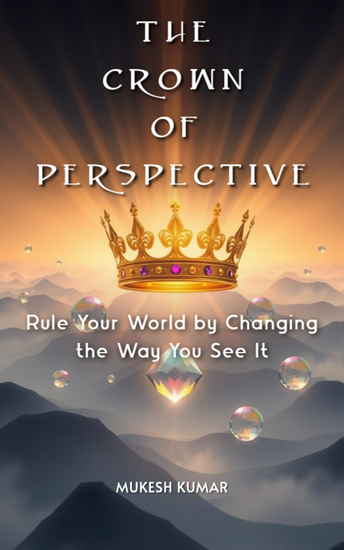
The Crown of Perspective - Rule Your World by Changing the Way You See It - cover

The Crown of Perspective - Rule Your World by Changing the Way You See It

Mukesh Kumar

Verlag: Publishdrive

  • 0
  • 0
  • 0

Beschreibung

The Crown of Perspective: Rule Your World by Changing the Way You See It by Sunny Sharma is a guide to reshaping your mindset so you can respond to challenges with strength, clarity, and control. How you see the world determines how you move through it. This book helps you challenge limiting beliefs, shift mental filters, and adopt a lens that empowers growth instead of resistance. It teaches you how to stop reacting from habit and start responding with intention. Whether you're facing setbacks, self-doubt, or emotional conflict, The Crown of Perspective equips you with mental frameworks to see clearly, act wisely, and think strategically. You don’t need to change everything around you—just how you see it. Perspective is power. And once you wear the crown, everything changes.
Verfügbar seit: 08.08.2025.
Drucklänge: 94 Seiten.

Weitere Bücher, die Sie mögen werden

  • I love to pray - cover

    I love to pray

    LADONNA J HITE

    • 0
    • 0
    • 0
    Introduce your child to Jesus and help them discover how easy praying can be.
    Zum Buch
  • Digital Feedback Methods - cover

    Digital Feedback Methods

    Jennifer Schluer

    • 0
    • 0
    • 0
    Feedback spielt eine entscheidende Rolle im Lernprozess. Doch welche Möglichkeiten gibt es, Lernprozesse durch digitales Feedback zu unterstützen? Dieses Buch bietet Lehrenden und Studierenden ein wissenschaftlich fundiertes Orientierungs- und Anwendungswissen zu digitalen Feedbackmethoden. Diese können nicht nur im Online- oder Hybridunterricht eingesetzt werden, sondern auch den Präsenzunterricht bereichern. Die Vorzüge und Grenzen der jeweiligen digitalen Feedbackmethoden werden diskutiert und Umsetzungsempfehlungen abgeleitet. Dies umfasst u.a. schriftliches Feedback im Texteditor, in Cloud-Dokumenten, in Chats, Diskussionsforen, Wikis, Umfragen und E-Mails sowie multimodales Feedback in Videokonferenzen und per Audio-, Video- und Bildschirmaufnahme. Darüber hinaus werden Vorschläge gegeben, um verschiedene Methoden sinnhaft miteinander zu kombinieren und Lerndialoge anzuregen.
    Zum Buch
  • A History of Ireland in Ten Body Parts - cover

    A History of Ireland in Ten Body...

    Ian Miller

    • 0
    • 0
    • 0
    Skulls, height, hands, legs, sex organs, blood, brains, stomachs, ears and corpses – discover Irish history anew through the utterly unique prism of the human body.
    From the brutal beheading of the red-headed Clonycavan Man some 2,000 years ago to the ancient skulls – believed to be those of giants – stolen from islands off Ireland's west coast, medical historian Dr Ian Miller brings readers on a delightfully gruesome journey through our rich heritage.
    Learn about the fears of excessive tea drinking that were once such a great cause for concern on this isle – scarcely believable! Meet the doctors who revolutionised Irish medicine in the 19th century – along with the deplorable bodysnatching that accompanied this progress.
    Fact and folklore intertwine seamlessly throughout, providing the reader with an endlessly fascinating account of matters historical and mythological.
    Zum Buch
  • True Knights Templars - Secrets and Legends of the Medieval Warriors - cover

    True Knights Templars - Secrets...

    John Harpoon

    • 0
    • 0
    • 0
    The Knights Templar have captivated the imagination of historians, writers, and conspiracy theorists for centuries. Founded in the early 12th century, this powerful and mysterious order of warrior monks played a significant role in medieval Europe and the Crusades. While their military strength was formidable, the Templars’ influence extended far beyond the battlefield, reaching into politics, finance, and even the cultural identity of Europe. Their legacy continues to inspire fascination and debate.  
    The origins of the Knights Templar trace back to the aftermath of the First Crusade when Christian forces recaptured Jerusalem. Amidst the unstable region, a group of knights led by Hugues de Payens pledged to protect Christian pilgrims traveling to the Holy Land. These knights adopted strict vows of poverty, chastity, and obedience, dedicating their lives to both spiritual devotion and military service. With the support of the influential Bernard of Clairvaux, the Templars gained recognition from the Catholic Church, receiving papal backing and exemption from local laws.  
    Over the following two centuries, the Knights Templar grew into a powerful institution. They established a network of fortresses across Europe and the Middle East, serving as both military outposts and financial hubs. The Templars became known for their innovations in banking, offering secure ways for pilgrims and nobles to transfer funds across vast distances. This financial prowess allowed them to accumulate significant wealth, making them indispensable to monarchs and rulers across Europe. 
    Zum Buch
  • The Settlers Lot - cover

    The Settlers Lot

    Henry Tankard

    • 0
    • 0
    • 0
    This book is an exposure of some of the difficulties that challenged the promoters, the legislature, and the settlers. It also records the enterprise and tenacity of the powerful community ethic that saved the settlement from total collapse. A core group of settlers at great cost to themselves by continuing to work when their wages defaulted, showed that notwithstanding a lack of financial capital, they could dedicate abundant social capital to the cause.
    Zum Buch
  • Postwar Europe - A Very Short Introduction - cover

    Postwar Europe - A Very Short...

    Richard Bessel

    • 0
    • 0
    • 0
    The Second World War was the most destructive conflict in history. It left Europe in ruins, its economies severely damaged and millions of its people facing malnutrition, its political systems shaken if not destroyed. Yet three decades later its economies had recovered; it largely appeared politically stable; its inhabitants generally were well housed and well fed. Then at the end of the 1980s, the postwar settlement disintegrated, and a new chapter in Europe's postwar history had begun.In this Very Short Introduction, Richard Bessel presents a clear, concise, informative account of Europe's history between the end of the Second World War and roughly the end of the twentieth century. He explores the conditions in Europe at the end of the war, how political life took shape and societies were rebuilt, the impressive economic recovery, the Cold War division, the end of empire, and European cultural life. Bessel discusses how we might understand the beginnings and endings of the postwar era, and emphasizes the importance of the experiences and actions of specific generations of Europeans.
    Zum Buch