Begleiten Sie uns auf eine literarische Weltreise!
Buch zum Bücherregal hinzufügen
Grey
Einen neuen Kommentar schreiben Default profile 50px
Grey
Jetzt das ganze Buch im Abo oder die ersten Seiten gratis lesen!
All characters reduced
Diseases of Ornamental Aromatic and Medicinal Plants - cover

Diseases of Ornamental Aromatic and Medicinal Plants

Mujeebur Rahman Khan, Ziaul Haque

Verlag: Bentham Science Publishers

  • 0
  • 0
  • 0

Beschreibung

Plant diseases in ornamental, aromatic and medicinal crops are common in occurrence, and account for up to 12-20% yield losses. Diseases of Ornamental, Aromatic and Medicinal Plants is a unique reference aimed to fulfil knowledge gaps on this subject. Nine chapters cover major diseases and nematode problems in important ornamental plants (cut flowers, potted flowers, flowering geophytes, and turfs), medicinal plants (tuberous and non-tuberous) and aromatic plants.The book explains the etiology, symptoms, disease cycle, economic importance, distribution, and management of respective plants with advanced and sustainable approaches. The book is intended as a key resource for students, botanists and academics in plant science courses. It also serves as a quick guide for horticulture professionals and gardeners dealing with plant diseases and nematode infestations on premises.ReadershipStudents, botanists and academics in plant science courses (undergraduate, graduate and postgraduate levels); horticulture professionals and gardeners.
Verfügbar seit: 25.06.2024.
Drucklänge: 365 Seiten.


Weitere Bücher, die Sie mögen werden

  • Nuclear Revolution - Powering the Next Generation - cover

    Nuclear Revolution - Powering...

    Jack Spencer

    • 0
    • 0
    • 0
    “Jack Spencer tells it the way it is and needs to be to make nuclear energy an affordable choice for America. Read this thoughtful and provocative book written by one of America’s great conservative thinkers.” — William Martin, Former Deputy Energy Secretary; Chair, Nuclear Energy Advisory Committee
    		 
    Skyrocketing energy prices are placing downward pressure on economic growth throughout the world. There seems to be no relief in sight, with hundreds of millions without access to reliable energy and with global energy consumption expected to grow by 50 percent over the next 30 years. Some would impose energy rationing―or in other words, slow human progress. But with nearly 46 percent of the world’s population living on less than $5.50 per day, slowing human progress is unacceptable. The only solution is more energy and lots of it.
    		 
    Jack Spencer, in his upcoming book, Nuclear Revolution: Powering the Next Generation, argues that nuclear energy offers real answers to power our homes and industries, clean our air and water, and maybe even take us to Mars. However, we have been getting nuclear power wrong for decades.
    		 
    Skeptics say that nuclear energy is too expensive and threatens the world with the proliferation of nuclear weapons material and radioactive waste. Proponents say that nuclear power needs and deserves the support of the state and the taxpayer, cradle to grave. The time has come, Spencer argues, to think big nuclear energy and pull it out of the time capsule that pop culture, environmental activists, lobbyists, peaceniks, and policymakers are all too content to leave nuclear in.
    		 
    Spencer writes that while the government-industry partnership that defined the early years of America’s commercial nuclear rise was essential to the nation’s security, reluctance to modernize that relationship has prevented the American nuclear industry from reaching its full potential. In its place, Spencer offers an alternative that shatters how we think about nuclear energy policy and realigns the responsibilities of government and industry with the incentives that will drive America to success.
    		 
    Nuclear Revolution describes why government intervention in the nuclear industry is a problem, how to move from the status quo to something new, and why such reforms will kick off an era of nuclear entrepreneurship and innovation. Over 70 years ago, nuclear energy entered the scene with great promise. Now more than ever, the world needs that promise delivered, and America can lead the way.
    Zum Buch
  • The Fall Of Homo Digitalis - Impersonal Intimacy And New Relationships in The Digital Era - cover

    The Fall Of Homo Digitalis -...

    Brian Gibson

    • 0
    • 0
    • 0
    With unparalleled insight and a keen understanding of the digital revolution's impact on our lives, this book explores the rise of Homo Digitalis, a new era of human existence where screens, algorithms, and data have reshaped how we interact. 
    From the exhilarating thrill of swiping right to the troubling reality of social media-driven envy, this book delves into the paradox of our time: the paradox of impersonal intimacy. We've become experts at connecting with others across the globe while sometimes struggling to communicate with those closest to us. "The Fall of Homo Digitalis" examines how these unprecedented technological advancements have redefined our notions of love, friendship, and human connection. 
    Whether you're a digital native, a concerned parent, or anyone curious about the transformative power of technology on our relationships, this book is a must-read for all those seeking to comprehend the ever-shifting dynamics of love, intimacy, and human connection in the digital age. "The Fall of Homo Digitalis" mirrors our digital selves and guides us toward a more connected and authentic future.
    Zum Buch
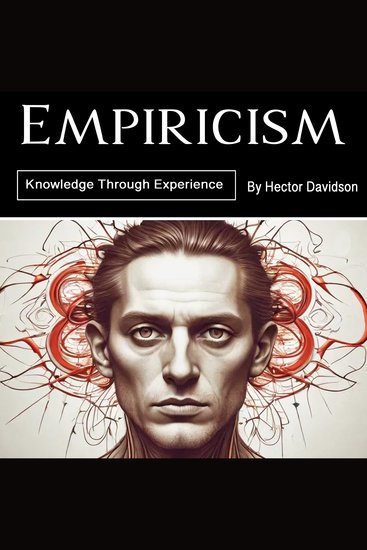
  • Empiricism - Knowledge Through Experience - cover

    Empiricism - Knowledge Through...

    Hector Davidson

    • 0
    • 0
    • 0
    Empiricism, as a philosophical doctrine, asserts that knowledge is primarily derived from sensory experience. This perspective contrasts sharply with rationalism, which emphasizes reason and innate knowledge. Empiricism has shaped our understanding of the world and influenced numerous fields, from the natural sciences to ethics and epistemology. The essence of empiricism lies in the conviction that the mind begins as a "blank slate" (tabula rasa) and that experience, rather than pre-existing ideas or concepts, forms the foundation of all knowledge. 
    At the heart of empiricist thought is the belief that all human knowledge starts with perception. We acquire information about the world through our senses—sight, hearing, touch, taste, and smell—which provide the raw data from which we form concepts and beliefs. For empiricists, knowledge is not something we discover internally, but something we gather from external reality. This view stands in contrast to the rationalist emphasis on a priori knowledge, which is independent of experience and accessible only through reason. 
    Empiricism's roots can be traced back to ancient philosophy, with early proponents like Aristotle, who argued that all knowledge comes from sensory observation. However, the modern development of empiricism is largely credited to three major figures: John Locke, George Berkeley, and David Hume. Locke introduced the idea of the mind as a tabula rasa, arguing that individuals are born without innate ideas and that all knowledge comes from experience. Berkeley took this further by suggesting that even the existence of the external world depends on perception, encapsulating the notion that "to be is to be perceived." Hume, the most radical empiricist of the three, questioned the very basis of causality and inductive reasoning, asserting that our beliefs in cause-and-effect relationships were not rationally justified but arose from habitual experience.
    Zum Buch
  • Daily Vagus Nerve Exercises - The Most Effective Methods to Dramatically Reduce Inflammation Release Trauma and Rewire Your Brain From Anxiety - cover

    Daily Vagus Nerve Exercises -...

    Katrina Power

    • 0
    • 0
    • 0
    Do you often experience the following symptoms? 
    - Anxiety, emotional overwhelm or difficulty switching off? 
    - Depression, feel flat or numb? 
    - Gastrointestinal issues like stomach bloating and pain, IBS, SIBO or sensitivities? 
    - Chronic pain, migraine or fibromyalgia? 
    - Frequent Insomnia? 
    - Chronic fatigue? 
    - Chronic inflammation or autoimmune issues? 
    If yes, then this guide could help you. 
    This book combines education & interactive exercises on the vagus nerve, brain, the nervous system, self-regulation, stress recovery and how they can improve your physical health. 
    You’ll learn how to enhance the functioning of your vagus nerve using postures, movement, sensory points, audio exercises and the breath. 
    The exercises can be your daily ally, helping you to unwind the long-term tension that’s been held in your body and mind, and kept old, unhealthy emotional patterns playing out. 
    Meanwhile, the vagus nerve stimulation has been shown to improve conditions such as: 
    - Anxiety disorder 
    - Heart disease 
    - Tinnitus 
    - Obesity 
    - Alcohol addiction 
    - Migraines 
    - Alzheimer’s 
    - Leaky gut 
    - Bad blood circulation 
    - Mood disorder 
    - Cancer 
    Whether you are feeling anxiety or depression, you can use tools to engage your social nervous system to re-establish higher order nervous system functions. 
    Healing the nervous system can take time and requires patience. Put the polyvagal theory into action in your life to increase your sense of freedom in body and mindThis audiobook provides all the tools you need to understand and heal your vagus nerve.
    Zum Buch
  • Optimize Your Health: The Hidden Causes and How to Heal - Revitalize Your Health! Discover Audio Lessons Unveiling Hidden Causes and Healing Methods - cover

    Optimize Your Health: The Hidden...

    Harrison Vale

    • 0
    • 0
    • 0
    Optimize Your Health: The Hidden Causes and How to Heal 
    ⭐⭐ Simplified Audio Guide ⭐⭐ 
    Are you looking to advance in your career and demonstrate your expertise by successfully mastering your understanding of vibrant wellness and potent healing insights from 'Optimize Your Health: The Hidden Causes and How to Heal'? 
    Seeking a comprehensive guide that provides all necessary elements to unlock vibrant wellness through powerful healing insights? 
    Your search ends here! 
    This audiobook serves as your definitive companion for deepening your understanding, applying your knowledge, and engaging in practical approaches. With this, you're geared for success. 
    Key features of this enriched guide: 
    - Profound insights about vibrant wellness and powerful healing 
    - Detailed explanations of health optimization principles 
    - Effective strategies for understanding and application 
    Our audiobook distinguishes itself through comprehensive coverage, essential for gaining a thorough understanding of health and healing. Concepts aren’t merely skimmed; they are delved into with precision. 
    Please note that this audiobook is not affiliated with any official wellness entities and is purely an independent resource for your benefit. 
    Designed with a clear structure and easy-to-understand language, 'Optimize Your Health: The Hidden Causes and How to Heal' ensures smooth transitions between topics. Say goodbye to dense jargon and welcome clear, precise, and technically accurate content. 
    So, why wait? Click the BUY NOW button, secure your audiobook, and begin your journey to unlocking vibrant wellness through powerful healing insights!
    Zum Buch
  • Borders - A Very Short Introduction (2nd Edition) - cover

    Borders - A Very Short...

    Joshua Hagen, Alexander C. Diener

    • 0
    • 0
    • 0
    First published in 2012, Borders: A Very Short Introduction began with the premise that "we live in a very bordered world." The intervening decade has witnessed a flurry of events and developments that continue to highlight the centrality of borders in contemporary domestic and international affairs, as well as the interstices between the two, including sudden surges in migrant and refugees flows; renewed emphasis on traditional border security and wall construction; growing tensions concerning maritime sovereignty; rapid advances in cybersecurity, surveillance, and biometrics; expanded detention and deportation infrastructures; proliferation of transborder organizations; revived populist and nationalist sentiments; and protectionist and integrationist trade practices, to name some prominent examples from recent headlines. 


    This revised edition accounts for recent developments including Brexit, the 2015 migration crisis across Europe, efforts to build a border wall between the United States and Mexico, growing isolationist and nativist sentiments, demands for indigenous homelands, transnational protest movements, Russian cross-border incursions, and insurgencies and rebellions across much of North Africa and Southwest Asia.
    Zum Buch