Rejoignez-nous pour un voyage dans le monde des livres!
Ajouter ce livre à l'électronique
Grey
Ecrivez un nouveau commentaire Default profile 50px
Grey
Abonnez-vous pour lire le livre complet ou lisez les premières pages gratuitement!
All characters reduced
A Story of an Encounter with a Teleporter - cover

A Story of an Encounter with a Teleporter

Mostyn Heilmannovsky

Maison d'édition: BookRix

  • 0
  • 0
  • 0

Synopsis

My friend has some secrets, but I would have never guessed that he has or maybe still is working for a company, which constructs secret technological machines, which enable you to teleport yourself from A to B. 
 
Please review this book, if you liked it!
Disponible depuis: 21/12/2023.
Longueur d'impression: 16 pages.
D'autres livres qui pourraient vous intéresser

  • A Profitable Weakness - From their pens to your ears genius in every story - cover

    A Profitable Weakness - From...

    George Gissing

    • 0
    • 0
    • 0
    George Robert Gissing was born on November 22nd, 1857 in Wakefield, Yorkshire.  
    He was educated at Back Lane School in Wakefield. Gissing loved school. He was enthusiastic with a thirst for learning and always diligent.  By the age of ten he was reading Dickens, a lifelong hero. 
    In 1872 Gissing won a scholarship to Owens College. Whilst there Gissing worked hard but remained solitary. Unfortunately, he had run short of funds and stole from his fellow students. He was arrested, prosecuted, found guilty, expelled and sentenced to a month's hard labour in 1876. 
    On release he decided to start over.  In September 1876 he travelled to the United States. Here he wrote short stories for the Chicago Tribune and other newspapers. On his return home he was ready for novels. 
    Gissing self-published his first novel but it failed to sell.  His second was acquired but never published. His writing career was static.  Something had to change.  And it did. 
    By 1884 The Unclassed was published.  Now everything he wrote was published. Both Isabel Clarendon and Demos appeared in 1886. He mined the lives of the working class as diligently as any capitalist. 
    In 1889 Gissing used the proceeds from the sale of The Nether World to go to Italy. This trip formed the basis for his 1890 work The Emancipated. 
    Gissing's works began to command higher payments. New Grub Street (1891) brought a fee of £250.  
    Short stories followed and in 1895, three novellas were published; Eve's Ransom, The Paying Guest and Sleeping Fires. Gissing was careful to keep up with the changing attitudes of his audience.  
    Unfortunately, he was also diagnosed as suffering from emphysema. The last years of his life were spent as a semi-invalid in France but he continued to write. 1899; The Crown of Life. Our Friend the Charlatan appeared in 1901, followed two years later by The Private Papers of Henry Ryecroft. 
    George Robert Gissing died aged 46 on December 28th, 1903 after catching a chill on a winter walk.
    Voir livre
  • The Science of Getting Rich - cover

    The Science of Getting Rich

    Wallace D. Wattles

    • 0
    • 0
    • 0
    The Science of Getting Rich is the classic guide to creating wealth through the Law of Attraction. First published in 1910, a hundred years later it inspired Rhonda Byrne's bestselling book and movie, The Secret. According to Wallace D. Wattles, "There is a science of getting rich, and it is an exact science, like algebra or arithmetic. There are certain laws which govern the process of acquiring riches; once these laws are learned and obeyed by any man, he will get rich with mathematical certainty."
    Voir livre
  • A Princess's Vengeance - From their pens to your ears genius in every story - cover

    A Princess's Vengeance - From...

    Catherine Louisa Pirkis

    • 0
    • 0
    • 0
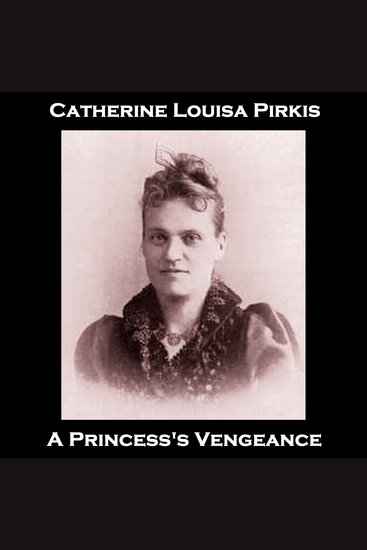
    The bookshelves of British literature are incredible collections that have gathered together centuries of very talented authors.  From these Isles their fame spread and whilst among their number many are now forgotten or neglected their talents endure.  Among them is Catherine Louisa Pirkis.
    Voir livre
  • A Dead Secret - From their pens to your ears genius in every story - cover

    A Dead Secret - From their pens...

    Lafcadio Hearn

    • 0
    • 0
    • 0
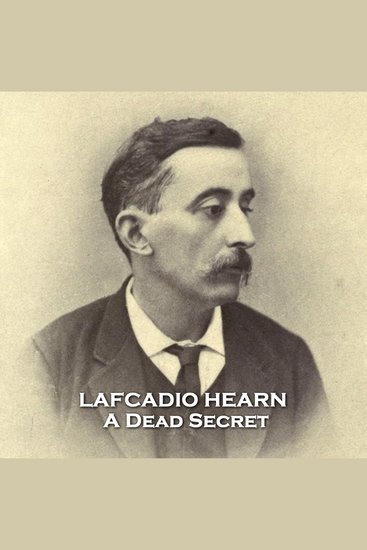
    Lafcadio Hearn was born on the 27th June 1850 on the Ionian isle of Levkás in Greece to a British Army officer and a Greek Mother. 
    His father, fearing for his career prospects at being married to a Greek Orthodox wife, sent them to Dublin whilst he continued to advance his career with further postings.  Life there was difficult for mother and son.  His father returned, wounded and traumatised, when Lafcadio was three.  He annulled the marriage and she remarried but had to give up care of Lafcadio to her sister-in law.   
    After brief periods for Catholic education in England and France he emigrated to Ohio in the United States when he was 19, taking on a series of casual jobs before embarking on a career as a journalist, publishing poems and essays in Cincinnati.  It was whilst here that he began a side-line in translating, starting with Gautier and Flaubert.  He married in 1874 to a 20 year old African-American woman in violation of Ohio's anti-miscegenation law.  The marriage soon failed. 
    In 1877 he relocated to New Orleans to write on a variety of themes before picking up a two year assignment from Harper’s to write in the West Indies, where he also wrote his first novel. 
    In 1890 Harper’s sent him to Japan.  Here he left journalism and took the remarkable decision to become a schoolteacher in the north of Japan.   Enraptured by the culture he was driven to explain it in various Western publications to those who had little, if any, knowledge of its culture.  Within the year he had fallen in love with, and married, a high-born Japanese lady, together they would have four children.   
    In 1895 he became a Japanese national and took the name Koizumi Yakumo, Koizumi being his wife’s family name. 
    The following few years, whilst a professor of Literature at the Imperial University of Japan, were his most creative and admired period.   
    Lafcadio Hearn died of heart failure on the 26th of September 1904, in Tokyo, Japan shortly before leaving to deliver a series of lectures at Cornell University in New York State.  He was 54.
    Voir livre
  • Top 10 Poets The - The 18th Century - Five poems each from best poets born in the 18th century - cover

    Top 10 Poets The - The 18th...

    William Wordsworth, William...

    • 0
    • 0
    • 0
    Throughout the long centuries of human history is the want, and the need, to share information, to exchange ideas and for that knowledge and experience, for curiosity and learning, to be the basis of a civil society. 
    In literature the ambition is much narrower.  In order to be known, to be popular, you had to be published.  And for that people had to know you existed and your ideas worth reading.  Obviously for most of humanity’s time people couldn’t read and texts couldn’t be published in any great number. 
    In the 15th Century Gutenberg’s printing press began the revolution to address the second and by the 19th century had gathered pace with startling speed and mass distribution.  Education for the many was brought in to help people understand more of their world and, with new skills, how to have a better place within it.  Now, if the powers that owned the presses and means of distribution agreed an audience would now be able to avail themselves of your ideas, your printed words.  
    Sadly, in the thirst for the new, the recent and the past fell from sight, relegated to dark corners and dusty shelves.    
    But the printed word is rarely without someone, somewhere busying themselves through piles of papers and books rediscovering what a good story is, whatever its age. 
    In this volume we offer up a small selection of talents from the literary landscape of the 18th Century and its authors whose time has now come again.
    Voir livre
  • HG Wells -More Selected Short Stories - cover

    HG Wells -More Selected Short...

    H. G. Wells

    • 0
    • 0
    • 0
    H.G. Wells is widely regarded as one of the most imaginative and visionary writers of the late 19th and early 20th centuries. Best known for his groundbreaking science fiction novels like The War of the Worlds and The Time Machine, Wells was also a prolific short story writer, producing a diverse body of work that explored many of the same themes as his longer novels: the wonders and perils of scientific progress, the mysteries of the human mind, and the complex relationship between society and the individual. 
    Wells’ short stories, though perhaps less celebrated than his novels, serve as a window into his vast intellectual curiosity and creative range. These stories often play with speculative ideas in compact, inventive ways, offering a glimpse of his talent for combining narrative flair with philosophical inquiry. In these pages, the reader will find tales of strange inventions, eerie encounters, and dystopian visions, all of which reflect Wells’ keen interest in the future of humanity and the ethical dilemmas that arise with technological advancement. 
    Head Stories Audio presents their second selection of Short Stories by H.G Wells, narrated by Simon Hester. With original music.
    Voir livre