Rejoignez-nous pour un voyage dans le monde des livres!
Ajouter ce livre à l'électronique
Grey
Ecrivez un nouveau commentaire Default profile 50px
Grey
Abonnez-vous pour lire le livre complet ou lisez les premières pages gratuitement!
All characters reduced
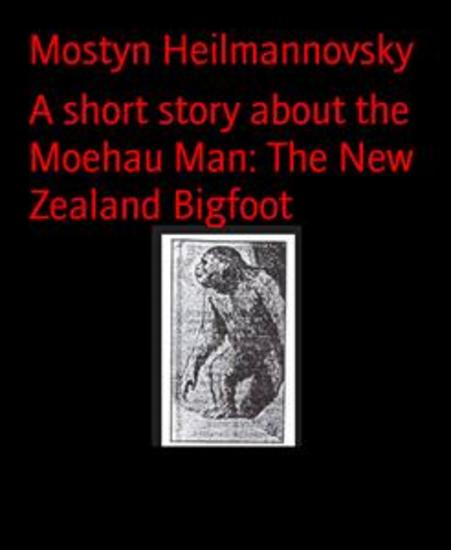
A short story about the Moehau Man: The New Zealand Bigfoot - cover

A short story about the Moehau Man: The New Zealand Bigfoot

Mostyn Heilmannovsky

Maison d'édition: BookRix

  • 0
  • 0
  • 0

Synopsis

An interesting story about two encounters with a being, who should actually not exist. A guy by the name of Jack Johnstone shares his personal encounters, which he had had in the early Sixties of the 20th century, with this cryptid, that is not very well studied and unrightly so underrated.  
 
Please review this book, if you liked it!
Disponible depuis: 21/12/2023.
Longueur d'impression: 10 pages.

D'autres livres qui pourraient vous intéresser

  • The Best American Mystery Stories 2016 - cover

    The Best American Mystery...

    Elizabeth George

    • 0
    • 1
    • 0
    The Anthony Award–winning author presents a “highly readable” anthology featuring mysteries by Stephen King, Megan Abbott, Elmore Leonard and more (Publishers Weekly).   “What you’ll find in this volume are stories that demonstrate a mastery of plotting; stories that compel you to keep turning the pages because of plot and because of setting; stories that wield suspense like a sword; stories of people getting their comeuppance; stories that utilize superb point of view; stories that plumb one particular and unfortunate attribute of a character,” promises guest editor Elizabeth George in her introduction.  The Best American Mystery Stories 2016 is a feast of both literary crime and hard-boiled detection, featuring a seemingly innocent murderer, a drug dealer in love, a drunken prank gone terribly wrong, and plenty of other surprising twists and turns.  The Best American Mystery Stories 2016 includes entries by Steve Almond, Megan Abbott, Matt Bell, Lydia Fitzpatrick, Tom Franklin, Stephen King, Elmore Leonard, Kristine Kathryn Rusch, and others.  “There isn’t enough Xanax in anyone’s medicine cabinet to calm the jitters these 20 skillful stories will unleash on a worried world.” —Kirkus Reviews
    Voir livre
  • Aloysha the Pot - From their pens to your ears genius in every story - cover

    Aloysha the Pot - From their...

    Leo Tolstoy

    • 0
    • 0
    • 0
    Leo Tolstoy was born in 1828 in the Russian province of Tula to a wealthy noble family. As a child, he had private tutors but he showed little interest in any formal education. When he went to the University of Kazan in 1843 to study oriental languages and law, he left without completing his courses.  Life now was relaxed and idle but with some writing also taking place.  Gambling debts forced an abrupt change of path and he joined the army to fight in the Crimean War.  He was commended for his bravery and promoted but was appalled at the brutality and loss of life.  He recorded these and other earlier experiences in his diaries which formed the basis of several of his works. 
    In 1852 ‘Childhood’ was published to immediate success and was followed by ‘Boyhood’ and ‘Youth’. 
    His experience in the army and the horrors he witnessed resulted in ‘The Cossacks’ in 1862 and the trilogy ‘Sevastopol Tales’. After the war he travelled around Europe, visiting London and Paris and meeting such luminaries as Victor Hugo and Charles Darwin.  
    It was now that Tolstoy began his masterpiece, ‘War and Peace’. Published in 1869 it was an epic work that changed literature. He quickly followed this with ‘Anna Karenina’.  
    These successes made Tolstoy rich and helped him accomplish many of his dreams but also brought problems as he grappled with his faith and the lot of the oppressed poor. These revolutionary views became so popular that the authorities now kept him under surveillance.  
    He led a life of asceticism and vegetarianism and put his socialist ideals into practice by establishing numerous schools for the poor and food programmes. He also believed in giving away his wealth, which caused much discord with his wife.  
    His writing continued to bring forth classics such as ‘The Death of Ivan Ilyich’ and many brilliant and incisive short stories such as ‘How Much Land Does A Man Need’.  
    In 1901 Tolstoy was excommunicated from the Church and controversially deselected for the Nobel Prize for Literature. 
    Whilst undertaking a pilgrimage by train in October 1910 with his daughter Aleksandra he caught pneumonia in the nearby town of Astapovo.  Leo Tolstoy died on November 9th, 1910, he was 82.
    Voir livre
  • Edith Nesbit - Six of the Best – An Introduction - Their legacy in 6 classic stories - cover

    Edith Nesbit - Six of the Best –...

    Edith Nesbit

    • 0
    • 0
    • 0
    Six has always been a number we group things around – Six of the best, six of one half a dozen of another, six feet under, six pack, six degrees of separation and a sixth sense are but a few of the ways we use this number. 
     
    Such is its popularity that we thought it is also a very good way of challenging and investigating an author’s work to give width, brevity, humour and depth across six of their very best. 
     
    In this series we gather together authors whose short stories both rivet the attention and inspire the imagination to visit their gems in a series of six, to roam across an author’s legacy in a few short hours and gain a greater understanding of their writing and, of course, to be lavishly entertained by their ideas, their narrative and their way with words. 
     
    These stories can be surprising and sometimes at a tangent to what we expected, but each is fully formed and a marvellous adventure into the world and words of a literary master. 
     
    1 - Six of the Best - Edith Nesbit - An Introduction 
    2 - Edith Nesbit - An Introduction 
    3 - From The Dead by Edith Nesbit 
    4 - The Mass for the Dead by Edith Nesbit 
    5 - The Power of Darkness by Edith Nesbit 
    6 - The Pavilion by Edith Nesbit 
    7 - The Ebony Frame by Edith Nesbit 
    8 - Man Size in Marble by Edith Nesbit
    Voir livre
  • Falls Confession - cover

    Falls Confession

    Dawn Blair

    • 0
    • 0
    • 0
    He fed the wrong snake and it led to his doom. 
    As a champion, Fall fights for the side of good, until that moment when he doesn’t. Chaos needs attention too or the universe tilts out of balance. Now incarcerated, they press for Fall’s confession: why did he do it? 
    Can his actions make up for his heinous crime and let good once again triumph over what he has done? 
    A standalone, fantasy short story from the Wells of the Onesong series by the author of 1-800-Mischief and The Doorway Prince.
    Voir livre
  • May You Live In Interesting Times An Old Chinese Curse - cover

    May You Live In Interesting...

    Rachel Lawson

    • 0
    • 0
    • 0
    "But Lance! We have to stop them! They are trying to pull down a statue of your granddad!" Said a magician a dimension away to Lance's teenage son Lance Junior. They were watching an angry mob of grey aliens and human sympathizers. Who were trying to rip down a statue of the local hero Blue Midnight, the Emperor of the local solar system in a park. 
    Blue Midnight being of course Blake. 
    "Let them, Gabriel, to fight them would cause them to be angrier and they will turn on us! It is only a statue It is only a symbol! It is not the man," said Lance Junior in the magician's head as he dragged the mad magician away from the place.
    Voir livre
  • The Murderer - Bulgakov expertly explores life and death choices set on the backdrop of the Bolshevik Revolution - cover

    The Murderer - Bulgakov expertly...

    Mikhail Bulgakov

    • 0
    • 0
    • 0
    Mikhail Bulgakov was born on 15th May 1891 in Kiev, in the Kiev Governorate of the Russian Empire, into a Russian family.  He was one of seven children. 
     
    In 1901, Bulgakov attended the First Kiev Gymnasium, and developed a keen interest in Russian and European literature, theatre and opera.  After the death of his father in 1907, his mother assumed responsibility for his education.  After graduating Bulgakov entered the Medical Faculty of Kiev University and then took up a post as physician at the Kiev Military Hospital. 
     
    At the outbreak of the First World War, he volunteered as a doctor and was sent directly to the front, where he was badly injured at least twice.  To suppress chronic pain, especially in the abdomen, he injected morphine.  It took years to wean himself off. 
     
    He now took up medical posts in various towns and in 1919, he was mobilised by the Ukrainian People's Army and assigned to the Northern Caucasus.  There, he became seriously ill with typhus and barely survived.  
     
    After this illness, Bulgakov abandoned his medicine to pursue writing.  He moved to Vladikavkaz and had two plays staged there with great success.  He wrote too for various newspapers and other outlets, but his critics were many.  And growing. 
     
    When a Moscow's theatre director severely criticised Bulgakov, Stalin personally protected him, saying that a writer of Bulgakov's quality was above ‘party words’ like ‘left’ and ‘right’.   Indeed, it is said that Stalin watched ‘The Days of the Turbins’ at least 15 times. 
     
    It was not to last and by March 1929, Bulgakov's career was ruined when Government censorship stopped publication of any of his work and plays. 
     
    In despair, Bulgakov wrote a personal letter to Stalin.  He requested permission to emigrate.  He received a phone call from the Soviet leader, who asked the writer whether he really desired to leave. He replied that a Russian writer cannot live outside of his homeland.  Stalin thus gave him permission to continue working. In May 1930, he re-joined the theater, as stage director's assistant.  
     
    During the last stressful decade of his life, and in poor health, Bulgakov continued to work on ‘The Master and Margarita’, wrote plays, critical works, stories, and continued translations and dramatisations of novels.  Many of them were not published, others were derided by critics.  
     
    On 10th March 1940, Mikhail Afanasyevich Bulgakov died from nephrosclerosis.  He was 48. 
     
    ‘The Master and Margarita’ was not published in any form until the mid-1960’s 
     
    Here Bulgakov relates a story as told by a doctor describing the terrible things that humanity is capable of doing in times of war.
    Voir livre