Begleiten Sie uns auf eine literarische Weltreise!
Buch zum Bücherregal hinzufügen
Grey
Einen neuen Kommentar schreiben Default profile 50px
Grey
Jetzt das ganze Buch im Abo oder die ersten Seiten gratis lesen!
All characters reduced
Trans Barrier History - cover

Trans Barrier History

Mira Donnelly

Übersetzer A AI

Verlag: Publifye

  • 0
  • 0
  • 0

Beschreibung

Trans Barrier History uncovers the historical and systemic discrimination faced by trans individuals, focusing on how institutional and social barriers have impeded trans equality. The book reveals that these pervasive obstacles are deeply embedded in societal norms and legal frameworks, leading to significant disparities in areas like employment, healthcare, and legal recognition. Readers will gain insights into the historical denial of equitable employment opportunities and the inadequacies within healthcare systems, understanding how these factors contribute to ongoing marginalization.

 
The book analyzes the evolution of societal attitudes toward trans people and the shifting legal landscapes, demonstrating how the denial of basic rights is a result of systemic prejudice. It examines discriminatory hiring practices, denial of medical care, and the difficulties in obtaining accurate legal documentation through case studies and archival research.

 
Furthermore, it emphasizes the interconnectedness of these barriers, showing how challenges in one area, such as obtaining proper identification, can exacerbate problems in others, like securing employment or healthcare access. Using an interdisciplinary approach, Trans Barrier History integrates perspectives from history, gender studies, law, and sociology, offering a comprehensive understanding of these challenges.

 
The book progresses by first establishing a historical groundwork, then presenting detailed case studies, and finally analyzing the intersections of these barriers. This approach aims to equip readers with a deeper understanding of systemic discrimination and promote inclusive policies.
Verfügbar seit: 07.04.2025.
Drucklänge: 80 Seiten.

Weitere Bücher, die Sie mögen werden

  • A Rare Recording of Titanic Survivor Eva Hart - cover

    A Rare Recording of Titanic...

    Eva Hart

    • 0
    • 0
    • 0
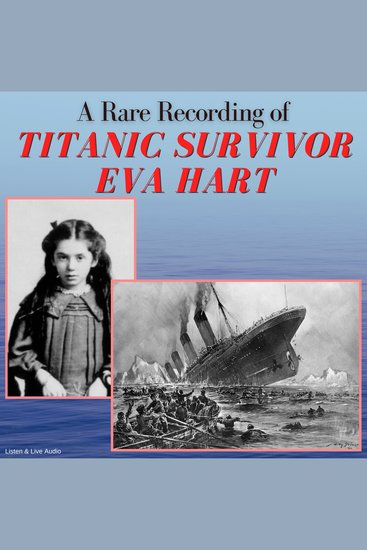
    RMS Titanic was a British passenger liner, operated by the White Star Line, that sank in the North Atlantic Ocean on April 15, 1912, after striking an iceberg during her maiden voyage from Southampton, England, to New York City. Of the estimated 2,224 passengers and crew aboard, more than 1,500 died, making it the deadliest sinking of a single ship up to that time. It remains the deadliest peacetime sinking of an ocean liner or cruise ship. In this 1993 interview, Eva Hart, a seven year-old passenger on the Titanic, offers a vivid account of her family's unexpected journey aboard the Titanic, and her mother's unsettling premonition. As Hart said of the ship having too few lifeboats: "One life is worth more than the whole ship, surely."
    Zum Buch
  • Summary: The Hundred Years' War on Palestine - A History of Settler Colonialism and Resistance 1917--2017: Key Takeaways Summary and Analysis - cover

    Summary: The Hundred Years' War...

    Brooks Bryant

    • 0
    • 0
    • 0
    DISCLAIMER: THIS IS NOT THE OFFICIAL BOOK. 
    This is a summary, and it does not accompany the official 
    "The Hundred Years' War on Palestine" by Rashid Khalidi presents a comprehensive history of the Palestinian-Israeli conflict from a Palestinian perspective. It begins with an 1899 letter from Yusuf Diya al-Khalidi, the author's ancestor, warning against Zionist plans in Palestine. Khalidi uses archival materials and family reports to challenge traditional narratives of the conflict as a mere clash over territory. He argues that it's a century-long colonial war against Palestinians, led by Zionists and later Israel, with support from Britain and the U.S. The book covers major events like the Balfour Declaration, the 1948 destruction of Palestine, and Israel’s 1982 Lebanon invasion. Khalidi aims to provide a balanced account, acknowledging Palestinian leadership flaws and the rise of national movements on both sides and offering a fresh perspective on an ongoing conflict.
    Zum Buch
  • The Law - cover

    The Law

    Frédéric Bastiat

    • 0
    • 0
    • 0
    "The Law" by Frédéric Bastiat is a seminal work in political philosophy and economics, offering a robust defense of individual liberty and property rights against the encroachments of government. Written in 1850, Bastiat's concise yet profound treatise critiques the use of law as an instrument of coercion and redistribution, arguing instead that its proper role is the protection of individual freedoms. Through eloquent and accessible prose, Bastiat expounds on the dangers of socialism and economic interventionism, advocating for a system where the law serves only to uphold justice, ensure public order, and protect rights. His work remains a cornerstone of libertarian thought, celebrated for its lucid analysis of the principles underpinning a free society and its prescient warnings against the overreach of governmental power.
    Zum Buch
  • Sovok - The Memoirs of a Liar? - cover

    Sovok - The Memoirs of a Liar?

    Kevin McKinney

    • 0
    • 0
    • 0
    Witness first-hand the transition from Soviet Union to liberated Russia and its return to a regime of tyranny and injustice from the perspective of a foreigner who lived through it. McKinney describes his interactions for over twenty years with dissidents, billionaires, artists, cosmonauts, mob bosses, presidents, prosecutors, and prime ministers, while constantly breaking laws and bending rules, as mostly every character in the book also does. He introduces some of the most dangerous, loyal, and hospitable people, and often they're one in the same person. 
    Described by one literary critic as "Jack Kerouac, narrating the adventures of Thomas Pynchon's character, Tyrone Slothrop, only in Russia," Sovok takes you on a front-row view of the transition from Soviet Union to liberated Russia and then how it went back to today's tyranny. 
    If a movie plot, it would be a blend of Grand Hotel Budapest, Wolf of Wall Street, Bonfire of the Vanities, Snatch, Eastern Promises, and Everything is Illuminated. By declaring himself a liar, the author prods the reader to question everyone and everything. Through personal stories, one of Sovok's central themes is that a network of loyal and moral friends can circumvent the strictest government regulations and defeat criminal syndicates. Sovok falls into one or a dozen categories of book. The one category it is not is ordinary. 
    "Everything is so realistic that is seems invented," - Italy 
    "The impression is incredible. I feel like I'm in reading science fiction, yet I am one of the characters. Events are described not as I knew them, but completely differently. It's as if the author saw them from a different angle, and that the author's angle is truer than the distorted view I saw them from. This is the best thing I've read in many years." - Ukraine 
    "I am totally, completely, absolutely and entirely fascinated. The things you write about are so well familiar to me. I love it." - Russia
    Zum Buch
  • The Emotion of Love Between the Sexes - cover

    The Emotion of Love Between the...

    Sanford Bell

    • 0
    • 0
    • 0
    "The Emotion of Love Between the Sexes" by Sanford Bell explores the intricate dynamics of romantic love. Through insightful analysis, Bell delves into the complexities of attraction, intimacy, and companionship, offering profound insights into the emotional bonds that unite individuals across genders. Read in English, unabridged.
    Zum Buch
  • The Power of Nothing to Lose - The Hail Mary Effect in Politics War and Business - cover

    The Power of Nothing to Lose -...

    Anonym

    • 0
    • 0
    • 0
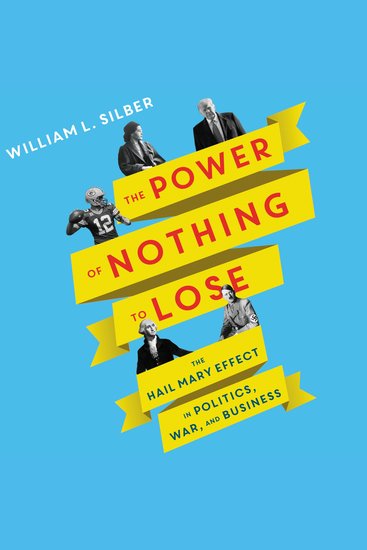
    Following books by Malcolm Gladwell and Dan Ariely, noted economics professor William L. Silber explores the Hail Mary effect, from its origins in sports to its applications to history, nature, politics, and business. 
    A quarterback like Green Bay’s Aaron Rodgers gambles with a Hail Mary pass at the end of a football game when he has nothing to lose -- the risky throw might turn defeat into victory, or end in a meaningless interception. Rodgers may not realize it, but he has much in common with figures such as George Washington, Rosa Parks, Woodrow Wilson, and Adolph Hitler, all of whom changed the modern world with their risk-loving decisions. 
    In The Power of Nothing to Lose, award-winning economist William Silber explores the phenomenon in politics, war, and business, where situations with a big upside and limited downside trigger gambling behavior like with a Hail Mary. Silber describes in colorful detail how the American Revolution turned on such a gamble. The famous scene of Washington crossing the Delaware on Christmas night to attack the enemy may not look like a Hail Mary, but it was. Washington said days before his risky decision, “If this fails I think the game will be pretty well up.” Rosa Parks remained seated in the white section of an Alabama bus, defying local segregation laws, an act that sparked the modern civil rights movement in America. It was a life-threatening decision for her, but she said, “I was not frightened. I just made up my mind that as long as we accepted that kind of treatment it would continue, so I had nothing to lose.” 
     The risky exploits of George Washington and Rosa Parks made the world a better place, but demagogues have inflicted great damage with Hail Marys. Towards the end of World War II, Adolph Hitler ordered a desperate counterattack, the Battle of the Bulge, to stem the Allied advance into Germany. He said, “The outcome of the battle would spell either life or death for the German nation.” Hitler failed to change the war’s outcome, but his desperate gamble inflicted great collateral damage, including the worst wartime atrocity on American troops in Europe. 
    Silber shares these illuminating insights on these figures and more, from Woodrow Wilson to Donald Trump, asylum seekers to terrorists and rogue traders. Collectively they illustrate that downside protection fosters risky undertakings, that it changes the world in ways we least expect.
    Zum Buch