Begleiten Sie uns auf eine literarische Weltreise!
Buch zum Bücherregal hinzufügen
Grey
Einen neuen Kommentar schreiben Default profile 50px
Grey
Jetzt das ganze Buch im Abo oder die ersten Seiten gratis lesen!
All characters reduced
Ridiculous Superstitions - cover

Ridiculous Superstitions

Mira Donnelly

Übersetzer A AI

Verlag: Publifye

  • 0
  • 0
  • 0

Beschreibung

Ridiculous Superstitions explores the fascinating world of cultural beliefs and rituals, delving into why people adhere to seemingly irrational practices. From knocking on wood to avoiding black cats, these traditions reveal deep insights into human behavior and the historical roots of our anxieties. The book examines how superstitions serve as attempts to explain the unexplainable and exert control over unpredictable events.Did you know that many superstitions evolved from ancient religious practices or that some are rooted in cognitive biases, like the illusion of control? The book progresses from introducing core concepts of belief and ritual to exploring superstitions across different cultures, including Europe, Asia, and Africa. It investigates the psychological underpinnings of these beliefs, such as how anxiety and uncertainty contribute to their persistence.What makes this book unique is its approach to not just listing superstitions but analyzing their cultural and psychological significance, offering a fresh perspective on the enduring power of folklore in shaping social attitudes and individual choices in world history.
Verfügbar seit: 31.03.2025.
Drucklänge: 63 Seiten.

Weitere Bücher, die Sie mögen werden

  • Women vs American Supreme Court - The History of Abortion Legislation - cover

    Women vs American Supreme Court...

    United States Congress, Jon O....

    • 0
    • 0
    • 0
    The legality of abortion in the United States is subject to individual state laws. In 1973, Roe v. Wade made the first abortion case to be taken to the Supreme Court, which had made it federally legal. In 1992, Roe was partially overturned by Planned Parenthood v. Casey, which stated that states cannot place legal restrictions posing an undue burden for "the purpose or effect of placing a substantial obstacle in the path of a woman seeking an abortion of a nonviable fetus." In 2022, both Roe and Casey were overturned, and abortions are now subject to regulations based on state laws once again. Individual states can regulate and limit the use of abortion, some of which already have through the use of "trigger laws", which made abortion illegal within the first and second trimesters when Roe was overturned. Eight states—Alabama, Arizona, Arkansas, Michigan, Mississippi, Oklahoma, West Virginia and Wisconsin—still have pre-Roe abortion bans in their laws, which may be enforced too. 
    This reading provides a thorough overview of the federal legalisation regarding the legality of abor-tion. It presents a judicial history and legislative response of the US federal institutions. In addition this collection is enriched with information which are indispensable part of every abortion debate in the United States.
    Contents
    Abortion: Judicial History and Legislative Response
    Abortion At or Over 20 Weeks' Gestation (FAQ) 
    Revolutionary Ruling: Roe v. Wade 
    Doe v. Bolton 
    Planned Parenthood v. Casey 
    Women's Health Protection Act
    2022 Ruling: Dobbs v. Jackson Women's Health Organization
    Zum Buch
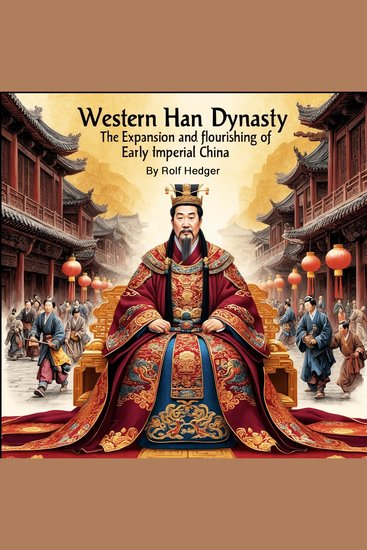
  • Western Han Dynasty - The Expansion and Flourishing of Early Imperial China - cover

    Western Han Dynasty - The...

    Rolf Hedger

    • 0
    • 0
    • 0
    The Western Han Dynasty (206 BCE – 9 CE) emerged following the collapse of the Qin Dynasty, a period marked by harsh legalist rule and widespread rebellion. The fall of the Qin created a power vacuum, leading to years of conflict between rival warlords. Among them was Liu Bang, a peasant-born general who would go on to establish one of China’s most influential dynasties. His leadership, pragmatic policies, and ability to gain the support of both the military and the common people played a crucial role in shaping the early Han state. 
    Liu Bang, later known as Emperor Gaozu, rose to prominence during the rebellion against the Qin. Unlike his rival Xiang Yu, a nobleman known for his military prowess, Liu Bang relied on strategy, diplomacy, and alliances to gain an advantage. In 202 BCE, he decisively defeated Xiang Yu at the Battle of Gaixia, solidifying his control over China and declaring himself the first emperor of the Han Dynasty. His rule marked a shift away from the oppressive policies of the Qin, emphasizing stability, leniency, and bureaucratic governance. 
    One of Gaozu’s first major reforms was the reduction of harsh legalist laws that had caused unrest under the Qin. He abolished extreme punishments, lowered taxes, and granted land to military leaders and allies. However, in order to maintain control, he adopted a semi-feudal system, granting large territories to loyal kings while keeping direct control over the central government. This system helped secure loyalty but later posed challenges as regional rulers sought more autonomy.
    Zum Buch
  • Searching for George Gordon Meade - The Forgotten Victor of Gettysburg - cover

    Searching for George Gordon...

    Tom Huntington

    • 0
    • 0
    • 0
    A historian chronicles the life of the Union Civil War general while recounting his own unusual journey during his investigation into the past. Who was George Gordon Meade? He should be remembered as one of the Civil War’s most important generals. Instead, history has pushed him aside. The hot-tempered Meade received command of the Union’s dysfunctional Army of the Potomac only three days before he defeated Robert E. Lee’s Confederates at Gettysburg. After that, Meade watched his reputation decline, thanks in part to the escape of Lee’s army, hostility from politicians and the press, the machinations of Gen. Daniel Sickles, and the rise of Ulysses S. Grant. “I suppose after a while,” Meade once grumbled, “it will be discovered I was not at Gettysburg at all.”  The Rodney Dangerfield of Civil War generals, Meade gets no respect—and author Tom Huntington wanted to find out why. In Searching for George Gordon Meade, he tells the story of the general’s life and his participation in the Civil War’s great engagements, from George McClellan’s Richmond Campaign to Appomattox. Huntington also provides accounts of his own investigations of Meade’s legacy. Along the way he hikes across battlefields, recites the names of fallen soldiers at a candlelit ceremony at Gettysburg, drinks a champagne toast at Meade’s grave on New Year’s Eve, and visits a severed leg, a buried arm, and a horse’s head. The result is a quirky and compelling mash-up of history, biography, travel, and journalism that casts new light on an overlooked figure from the past. Praise for Searching for George Gordon Meade“Unique and irresistible.” —Harold Holzer, chairman of Lincoln Bicentennial Foundation“Huntington’s wry, boisterous biography-within-a-travel journal . . . strives to remake the reputation of Meade and offers a compelling new way to approach biography.” —John G. Shelby, Meade: The Price of Command, 1863–1865 “It’s the rare reader who will not enjoy accompanying Huntington on his search for Meade.” —America’s Civil War "A refreshingly readable and well-researched book. . . . Searching for George Gordon Meade should be required reading for all those interested in Civil War history.” —Civil War News
    Zum Buch
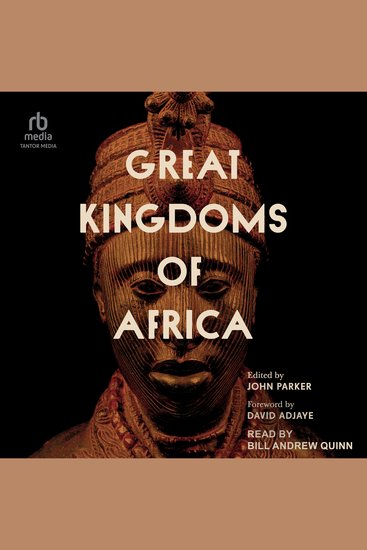
  • Great Kingdoms of Africa - cover

    Great Kingdoms of Africa

    David Adjaye

    • 0
    • 0
    • 0
    A groundbreaking, sweeping overview of the great kingdoms in African history and their legacies, written by world-leading experts. 


    This is the first book for nonspecialists to explore the great precolonial kingdoms of Africa that have been marginalized throughout history. Great Kingdoms of Africa aims to decenter European colonialism and slavery as the major themes of African history and instead explore the kingdoms, dynasties, and city-states that have shaped cultures across the African continent. 


    This groundbreaking book offers an innovative and thought-provoking overview that takes us from ancient Egypt and Nubia to the Zulu Kingdom almost two thousand years later. Each chapter is written by a leading historian, interweaving political and social history and drawing on a rich array of sources, including oral histories and recent archaeological findings. Great Kingdoms of Africa is a timely and vital book for anyone who wants to expand their knowledge of Africa's rich history.
    Zum Buch
  • The Afterlife of Byzantium - cover

    The Afterlife of Byzantium

    Santiago Machain

    • 0
    • 0
    • 0
    The Afterlife of Byzantium traces the final centuries of the Byzantine Empire from the Palaiologan restoration to the fall of Constantinople—and follows its astonishing afterlife far beyond 1453. Through nine richly detailed chapters culminating in a study of legacy and memory, this volume reveals how an empire under pressure reinvented itself through faith, diplomacy, art, scholarship, and everyday resilience. Readers encounter the return to Constantinople in 1261, the fraying frontiers of the Balkans and Anatolia, the mystical power of Hesychasm, the resourceful brilliance of Palaiologan art, the hard math of a late economy, and the fine-edged craft of survival diplomacy. The ascent of the Ottomans and the last defense of 1453 are narrated alongside the intimate human experiences of merchants, monks, mothers, and envoys. 
    Beyond the walls, the book follows Byzantium’s legacy into Ottoman institutions, Orthodox worship, Venetian print shops, Cretan ateliers, Muscovite courts, and the domestic rituals that carried memory forward. It shows how Byzantine law, liturgy, education, iconography, and political imagination shaped communities for centuries, from the Phanar’s salons to Athonite scriptoria, from market stalls to imperial chancelleries. Written in an informative, humanized, and professional voice, this is a story of continuity through change—a portrait of how an empire’s culture outlived its sovereignty and continued to teach the world how to endure with dignity.
    Zum Buch
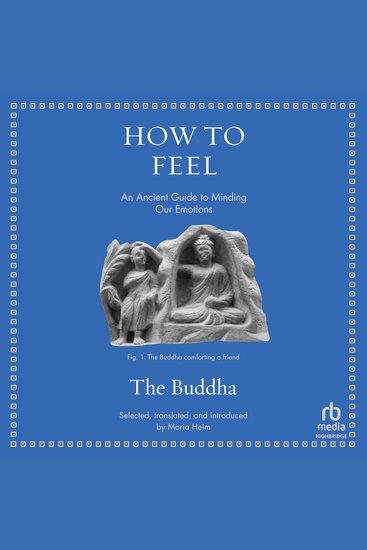
  • How to Feel - An Ancient Guide to Minding Our Emotions - cover

    How to Feel - An Ancient Guide...

    The Buddha

    • 0
    • 0
    • 0
    To feel is to suffer. But do we have to suffer as much as we do? Twenty-five hundred years ago, the Buddha discovered that practices of mindfully observing our feelings and emotions can help us gain some distance from them. In How to Feel, Maria Heim provides new translations of essential early Buddhist teachings on mindfulness meditation and connects them to recent findings in psychology and neuroscience. A superb meditation manual and insightful exploration of psychology, the book also provides a brief introduction to Buddhism.Drawing from the Samyutta Nikaya, an early canonical collection, How to Feel introduces Buddhist practices of mindfulness. Using them, we can watch feelings come and go like winds passing through the sky. We can observe what causes our negative emotions and learn to shift our attention to other things. We can see where emotions lead us and learn to redirect them. We will still feel, but, with practice, emotions will have less control over us.Just as they did in ancient India, the teachings in How to Feel offer today’s audiences radically new and more enlightened ways to experience emotions.
    Zum Buch