Begleiten Sie uns auf eine literarische Weltreise!
Buch zum Bücherregal hinzufügen
Grey
Einen neuen Kommentar schreiben Default profile 50px
Grey
Jetzt das ganze Buch im Abo oder die ersten Seiten gratis lesen!
All characters reduced
Nomadic Time - cover

Nomadic Time

Mira Donnelly

Übersetzer A AI

Verlag: Publifye

  • 0
  • 0
  • 0

Beschreibung

"Nomadic Time" explores how nomadic cultures, particularly the Mongols and Bedouins, structured their lives around environmental rhythms rather than fixed calendars. This approach, termed "environmental time," challenges the assumption that linear time is the most advanced way to organize society. The book reveals that these societies developed sophisticated systems attuned to their environments, enabling sustainable resource management and social cohesion.

 
One intriguing fact is that the Mongols scheduled social gatherings and political decisions based on seasonal events, showcasing the deep integration of natural cycles into their societal structure. Similarly, the Bedouins used celestial navigation not only for daily travel but also to determine optimal times for planting and harvesting, illustrating their profound understanding of astronomy.

 
The book delves into the seasonal migrations of the Mongols, driven by the need to find grazing lands and water, and the Bedouins' reliance on stars for navigation across vast deserts. It progresses by first contrasting environmental time with linear time, then examining the Mongols' seasonal movements, followed by the Bedouins' celestial navigation.

 
By exploring these alternative temporal paradigms, "Nomadic Time" offers valuable insights into human adaptability and sustainable living. The book offers a fresh perspective by challenging Eurocentric notions of time and progress.
Verfügbar seit: 05.03.2025.
Drucklänge: 64 Seiten.


Weitere Bücher, die Sie mögen werden

  • Illiberal Europe - Eastern Europe from the Fall of the Berlin Wall to the War in Ukraine - cover

    Illiberal Europe - Eastern...

    Leon Marc

    • 0
    • 0
    • 0
    Eighteen years have passed since ten countries from Central & Eastern Europe joined the European Union and more than three decades since the Berlin Wall was torn down in 1989 - but ignorance about what is popularly still called Eastern Europe is as widespread as ever. Slovenia still gets mixed up with Slovakia, the Slavs remain a mystery in a Europe apparently dominated by Romanic and Germanic nations and a country like the Czech Republic is labelled as Eastern European, although one needs to travel west to get from Vienna to Prague. 
     
    First published in 2009 under the title What's so eastern about Eastern Europe?, this book is much more than a revised and updated version of the first edition. Its presentation of the political and cultural history of Central, Eastern and South-Eastern Europe, written in an accessible language is now complemented with recent developments in the region. The new edition digs into the reasons behind the illiberal turn in Poland, Hungary and elsewhere, putting the alleged democratic backslide into the wider context of European populism. Leon Marc offers a new and fresh perspective in explaining the roots of populism and social conservativism in the region, which the book sees in a mixture of historical factors, economic conditions, the heavy burden of Communist legacy, as well as a reaction to contemporary social developments in the West. Drawing on a wide range of literature, the book calls for more sensibility to these underlying causes, critical examination of the true European values, and for a coalition of defenders of Humanism and Judeo-Christian tradition as key pillars of its identity, in order to save Europe and its liberal democracy. 
     
    This updated and expanded edition contains a brand new chapter bringing this book up to date with recent events, including Covid-19 and the Ukrainian conflict. 
     
    'Comprehensively and concisely, Leon Marc's book presents readers with vital insights into the different dimensions of our common European history and culture' - Professor Dr Jaap W. de Zwaan, Director of the Netherlands Institute of International Relations
    Zum Buch
  • On Liberty - Explore the definitive cornerstone of Political Philosophy that champions individual freedom against the dangerous tyranny of the majority in this timeless thought-provoking masterpiece - cover

    On Liberty - Explore the...

    John Stuart Mill

    • 0
    • 0
    • 0
    What happens when the greatest threat to your freedom is not a dictator, but the very society that surrounds you? 
    In a world where conformity is rewarded and dissent is silenced, John Stuart Mill’s groundbreaking treatise stands as an impenetrable shield for human individuality. The central struggle of our age is no longer just subjects against governments, but the sovereign individual against the oppressive "tyranny of the majority." Exploring the delicate balance between civil authority and personal independence, Mill argues passionately that society has no right to interfere with a person’s actions unless they cause harm to others. Dive into a profound philosophical journey that dissects the vital necessity of free speech, the dangers of dead dogmas, and the absolute sovereignty of the mind. 
    Why you will love this: This Political Philosophy classic transcends time, speaking directly to modern debates on censorship, ideological conformity, and human rights. Whether you are a student of history, a political science enthusiast, or a lover of profound intellectual discourse, you will find yourself gripped by Mill's razor-sharp logic. Its brilliant deconstruction of utilitarian ethics and social liberty provides the ultimate toolkit for anyone seeking to defend independent thought in an increasingly polarized world. 
    About the Author: John Stuart Mill was a British philosopher, political economist, and civil servant whose works fundamentally shaped 19th-century intellectual history. A pioneering advocate for early liberal thought, Mill's rigorous defenses of freedom, logic, and ethical inquiry remain a cornerstone of modern democratic theory.
    Zum Buch
  • Emily Dickinson: A short biography - 5 Minutes: Short on time - long on info! - cover

    Emily Dickinson: A short...

    5 Minutes, 5 Minute Biographies,...

    • 0
    • 0
    • 0
    Emily Dickinson, poet extraordinaire: Life and works in a short biography! Everything you need to know, brief and concise. Infotainment, education and entertainment at its best!
    Zum Buch
  • Break the Limits of Your Brain - Unlocking Mental Power Enhancing Memory and Cultivating Lifelong Learning - cover

    Break the Limits of Your Brain -...

    Leonard Murru

    • 0
    • 0
    • 0
    Break the Limits of Your Brain: Unlocking Mental Power, Enhancing Memory, and Cultivating Lifelong Learning 
    Discover the untapped potential of your mind with Break the Limits of Your Brain. This transformative audiobook offers practical insights and actionable strategies to strengthen your brain, improve your memory, and maintain a healthy mind throughout your life. 🌟 
    💡 What You'll Learn: 
    - The incredible benefits of brain exercise and how it boosts cognitive function 🧠 
    - How to identify and overcome thinking on autopilot to take control of your thoughts 🚀 
    - Brain exercises that reduce the risk of mental illness and promote mental wellness 🌱 
    - The power of new experiences in keeping your brain vibrant and healthy 🌍 
    - How taking up a new hobby can fuel curiosity and learning 🎨 
    - Proven methods to improve your memory and recall important details 🔑 
    - Essential lifestyle habits that support lifelong mental clarity and resilience 🏋️‍♂️ 
    This audiobook is perfect for anyone looking to enhance their mental agility, break free from limiting thought patterns, and live a life of continuous growth and learning. 🎧 
    Start your journey to a healthier, sharper, and more powerful mind today!
    Zum Buch
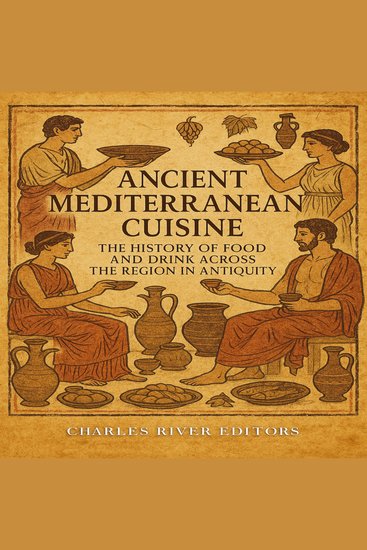
  • Ancient Mediterranean Cuisine: The History of Food and Drink across the Region in Antiquity - cover

    Ancient Mediterranean Cuisine:...

    Charles River Editors

    • 0
    • 0
    • 0
    Despite the strides made in understanding ancient history, there are obvious difficulties in assessing what ancient societies ate and drank, even as advances in technology continue to open up new methods of analysis for food deposits in human remains and archaeological sites. In general, the majority of what ancient individuals ate did not last long, but it’s clear that the fundamental necessity to secure basic food requirements colored all aspects of life, including politics, and only societies that produced enough food to achieve a surplus could turn their attention to matters other than simple survival. For example, one of the most noteworthy things about Egypt was the grain production there, and that was the context in which the Egyptians’ advancements in art, culture, and science became possible. 
    Since food is a biological necessity for everyone, eating and drinking are often at the very center of social life. This was no different in ancient Greece, but, if anything, the social importance placed on food and wine in the Greek world was even more pronounced and had profound consequences for the rest of the world. As one modern historian aptly put it, “How classical Athens was fed is not a matter of marginal importance. Nothing less than the material base of a brilliant civilization is at issue.” Indeed, it was through the ability to create a food surplus that the ancient Greeks were able to establish their poleis and, from these, go on to develop the political and social structures that built the backbone of Western Civilization.   
    Indulgence is at the heart of modern perceptions of eating and drinking for the ancient Romans. The majority of primary sources depicting food and drink that have survived show rich patricians reclining at a table loaded with exotic foods, and Roman diners are often depicted as gorging themselves over numerous courses served over many hours. 
    Zum Buch
  • Don't Take It Personally - The Art of Dealing With Rejection - cover

    Don't Take It Personally - The...

    Elayne Savage

    • 0
    • 0
    • 0
    It doesn't take much for your feelings to get hurt—a look or a tone of voice or certain words can set you ruminating for hours on what that person meant. It's all too easy to take disappointment and rejection personally. You can learn to handle these feelings and create positive options for yourself. 


    Don't Take It Personally! explores all forms of rejection, where it comes from, and how to overcome the fear of it. Most of all, you'll learn some tools for stepping back from those overwhelming feelings. You'll be able to allow space to make choices about how you respond. 


    ● Understand the effect that anxiety, frustration, hurt, and anger have on your interactions. 


    ● Depersonalize your responses and establish safe personal boundaries that protect you. 


    ● Practice making choices about the thoughts you think and the ways you respond to stressful situations. 


    ● Understand and overcome fear of rejection in personal and work relationships. 


    Elayne Savage explores with remarkable sensitivity the myriad of rejection experiences we experience with friends, coworkers, lovers, and family.
    Zum Buch