Begleiten Sie uns auf eine literarische Weltreise!
Buch zum Bücherregal hinzufügen
Grey
Einen neuen Kommentar schreiben Default profile 50px
Grey
Jetzt das ganze Buch im Abo oder die ersten Seiten gratis lesen!
All characters reduced
National Character - cover

National Character

Mira Donnelly

Übersetzer A AI

Verlag: Publifye

  • 0
  • 0
  • 0

Beschreibung

"National Character" explores the complex interplay of factors shaping the collective identities of nations, moving beyond simplistic stereotypes. It examines how geography, historical events, and societal institutions mold distinct behavioral patterns. For instance, the book highlights how environmental factors, like climate and resource availability, historically influenced economic activities and social structures. Similarly, it delves into pivotal moments in a nation's past that forged a shared sense of purpose, impacting its collective consciousness. 

 
The book argues that national character is a dynamic phenomenon influenced by geographic conditions, historical occurrences, and institutional frameworks. It progresses by first defining "national character," then systematically examining the impact of geography, history, and institutions, dedicating chapters to each. The arguments are supported by cross-cultural data, including surveys and historical records, offering insights for international relations, business, and education. This approach fosters cross-cultural understanding while avoiding superficial stereotyping.
Verfügbar seit: 02.05.2025.
Drucklänge: 63 Seiten.

Weitere Bücher, die Sie mögen werden

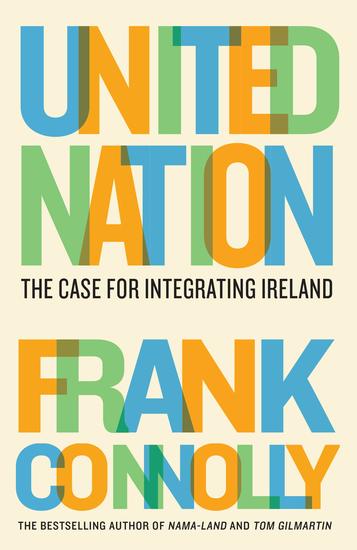
  • United Nation - The case for integrating Ireland - cover

    United Nation - The case for...

    Frank Connolly

    • 0
    • 0
    • 0
    One hundred years after the Anglo-Irish Treaty and partition, after thirty years of Troubles, the Good Friday Agreement and Brexit, the debate on Irish unity has intensified. But what could a united country look like and what would it mean for people north and south of the border?
    Considering health, education, the economy, cultural identity and the arts, constitutional change and international relations, award-winning journalist Frank Connolly asks whether a united Ireland could create a viable, vibrant new country.
    With contributions from President Michael D. Higgins, Paula Meehan, David McWilliams, Linda Ervine, Christy Moore, Mary Lou McDonald, Ian Marshall and Brian Keenan, United Nation is a timely look at the case for integrating Ireland.
    Zum Buch
  • Rich's - A Southern Institution - cover

    Rich's - A Southern Institution

    Jeff Clemmons

    • 0
    • 0
    • 0
    The storied history of the iconic Atlanta department store. 


    In 1867, less than three years after the Civil War left the city in ruins, Hungarian Jewish immigrant Morris Rich opened a small dry goods store on what is now Peachtree Street in downtown Atlanta, Georgia. Over time, his brothers Emanuel and Daniel joined the business; within a century, it became a retailing dynasty. Join historian Jeff Clemmons as he traces Rich's 137-year history. 


    For the first time, learn the true stories behind Penelope Penn, Fashionata, The Great Tree, the Pink Pig, Rich's famous coconut cake and much more, including how events at the downtown Atlanta store helped John F. Kennedy become America's thirty-fifth president. With an eye for accuracy and exacting detail, Clemmons recounts the complete history of this treasured southern institution.
    Zum Buch
  • The Gospel of Wealth Present Day Edition - cover

    The Gospel of Wealth Present Day...

    Andrew Carnegie

    • 0
    • 0
    • 0
    Andrew Carnegie comes down from heaven into the dreams of a billionaire to discuss and highlight the importance of acquiring safety, unity, and brotherhood while living in line and accord with nature. 
    Within this fictional work, you will observe a full presentation and complete breakdown of the safety above all philosophy being presented by Andrew Carnegie himself.
    Zum Buch
  • Hunting Monsters - Cryptozoology and the Reality Behind the Myths - cover

    Hunting Monsters - Cryptozoology...

    Anonym

    • 0
    • 0
    • 0
    The Loch Ness Monster, Bigfoot, and the yeti have long held a fascination for people the world over. Debates about their actual existence or what they might really be have continued for decades, if not centuries. Known also as cryptids, they have spawned a body of research known as cryptozoology. This entertaining book looks at the evidence of these mysterious monsters and others and explores what they might really be (if they exist at all), why they have been represented as they have, and the development of cryptozoology and how it has collected data to discover more about these unknown creatures.
    Zum Buch
  • Great Escapes during the World Wars: The History of the Most Legendary Prisoner Breakouts in World War I and World War II - cover

    Great Escapes during the World...

    Editors Charles River

    • 0
    • 0
    • 0
    War has always led to prisoners. In ancient times, many were turned into slaves by the victorious armies, while in medieval Europe, they were often returned to their families in return for a ransom, leading to fortune or poverty depending upon which side one was on. By the Napoleonic era, as armies grew in size and professionalism, many were kept in camps for the duration of the fighting, their captors not wanting to restore their enemies' manpower while the fate of nations hung in the balance. 
    Prisoners were taken across the world, and prisoners of war were typically comprised of two classes: officers and other ranks. Officers were often treated well, as there was still a sort of aristocratic courtesy among officers, particularly among the Germans, British, French, and somewhat less so for the Russians, Italians, and Turks. Concepts such as honor still held considerable currency, and bravery was greatly admired. Enemy officers as a class often had more in common with each other than with the millions of draftees in their armies, so enlisted men as POWs generally were not as well treated. 
    	Regardless of rank though, throughout the war, many of these men did not sit idle. Many spent their time preparing elaborate escape plans in the hopes of returning to their home nations and back to the fight.  
    The Second World War was full of escape stories, some bold, some tragic, and most filled with courage and ingenuity. The greatest number of successful escapes was made by Allied troops in Europe, including soldiers left behind after the fall of France and airmen shot down in bombing raids, but escapes happened across the world, from Canadian trains to German castles, and from the mountains of Italy to the wilds of Australia. Axis as well as Allied troops made their bids for freedom, keeping both sides on their toes. Everybody was looking to make the next great escape.
    Zum Buch
  • The Norman Conquest - 1066 and Beyond - cover

    The Norman Conquest - 1066 and...

    Harris Ropes

    • 0
    • 0
    • 0
    The Norman Conquest of England in 1066 was not an isolated event but the culmination of complex political, social, and military developments. Understanding the factors that led to this momentous invasion requires an exploration of the Anglo-Saxon world, the rise of Normandy, and the political landscape that shaped the conflict. 
    By the mid-11th century, England was a prosperous but politically volatile kingdom. The Anglo-Saxon rule, established centuries earlier, had seen periods of stability and turmoil. King Edward the Confessor, who reigned from 1042 to 1066, was deeply religious but lacked a direct heir, leading to uncertainty about the kingdom’s future. His court was divided between powerful noble factions, including Earl Harold Godwinson, one of England’s most influential figures. This internal division made England vulnerable to external threats. 
    At the same time, Normandy, a powerful duchy in northern France, had been rising as a formidable force under the leadership of Duke William. The Normans, originally descended from Viking settlers, had adopted French customs, built strong political institutions, and developed an efficient military system. William, known for his ambition and strategic mind, had a close relationship with Edward the Confessor, who had supposedly promised him the English throne. However, this claim was disputed, setting the stage for conflict.
    Zum Buch