Rejoignez-nous pour un voyage dans le monde des livres!
Ajouter ce livre à l'électronique
Grey
Ecrivez un nouveau commentaire Default profile 50px
Grey
Abonnez-vous pour lire le livre complet ou lisez les premières pages gratuitement!
All characters reduced
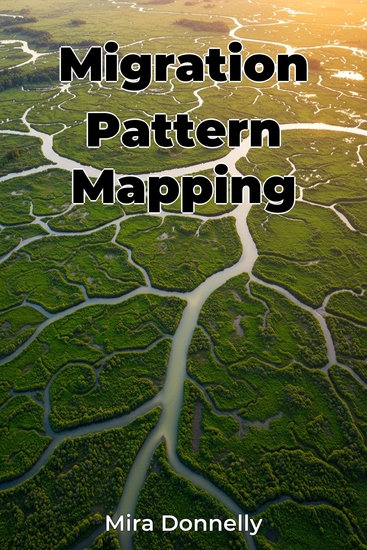
Migration Pattern Mapping - cover

Migration Pattern Mapping

Mira Donnelly

Traducteur A AI

Maison d'édition: Publifye

  • 0
  • 0
  • 0

Synopsis

Migration Pattern Mapping explores how human movement has indelibly shaped our world, focusing on the cultural, economic, and conflict-related impacts of migration throughout history. The book argues that migration isn't a series of isolated incidents but a powerful catalyst for societal transformation. Did you know that migration can lead to the blending of traditions and the formation of new identities, as seen in the cultural exchanges along the Silk Road? Or that it influences labor markets and innovation, as demonstrated by the European colonization and industrial revolution? The book systematically examines these themes, starting with an introduction to migration studies, including types of migration and theoretical frameworks. It then delves into the cultural impacts, economic effects, and the role of migration in triggering conflict, drawing on historical archives, demographic data, and spatial analysis techniques. The book uniquely integrates quantitative data with qualitative narratives, offering a nuanced understanding of migration's complex dynamics. The book progresses across chapters to create a framework for understanding migration's multifaceted consequences. By understanding historical patterns and drivers, we can develop informed responses to the challenges and opportunities it presents, informing immigration policies and promoting intercultural understanding.
Disponible depuis: 05/05/2025.
Longueur d'impression: 71 pages.


D'autres livres qui pourraient vous intéresser

  • Tough Rugged Bastards - A Memoir of a Life in Marine Special Operations - cover

    Tough Rugged Bastards - A Memoir...

    John A. Dailey

    • 0
    • 0
    • 0
    Following the 9/11 attacks, Secretary of Defense Donald Rumsfeld directed the Marine Corps to establish a unit that would answer to US Special Operations Command. The eighty-six-man "Detachment One" was formed with a two-year charter to train and deploy as a "proof-of-concept" to assess the viability of a larger Marine Special Operations contribution in support of the Global War on Terror. 


    For such a departure from the norm, a special leader was needed. The Commanding Officer—Colonel Robert J. Coates, a Marine Force Recon legend—was given his pick of personnel. One of the four team leaders he selected was Gunnery Sergeant John A. Dailey. 


    These men built a unit from nothing, trained for unknown missions in an unknown location, and deployed amid controversy and skepticism. Once in Iraq, they were dubbed "Task Unit Raider" and quickly won over the naysayers who doubted the Marine's ability to operate successfully. 


    This book tells Dailey's story of the creation, training, and volatile 2004 Iraq deployment of Task Unit Raider that led to the creation of the Marine Forces Special Operations Command. Det-1 served as the bridge between the Raiders of WWII and the Marine Raiders of today.
    Voir livre
  • Grey Wolf Grey Sea - Aboard the German Submarine U-124 in World War II - cover

    Grey Wolf Grey Sea - Aboard the...

    E.B. Gasaway

    • 0
    • 0
    • 0
    The inside story of life aboard the deadly Nazi U-Boat that sank forty-nine ships. 


    The history of one of World War II's most successful submarines, U-124, is chronicled in Grey Wolf, Grey Sea, from its few defeats to a legion of victories. Kapitanleutnant Jochen Mohr commanded his German submarine and navigated it through the treacherous waters of one of the most destructive, savage wars the world has known.
    Voir livre
  • Faith Against Evil - Bonhoeffer's Stand in The Shadow of The Third Reich - cover

    Faith Against Evil -...

    Davis Truman

    • 0
    • 0
    • 0
    What makes a person hold steadfast in their Faith amid profound trials? Faith Against Evil, Bonhoeffer's Stand in The Shadow of The Third Reich, delves into this compelling question by examining the life and theology of Dietrich Bonhoeffer, a pastor and theologian whose unwavering convictions led him to resist Nazi tyranny at great personal cost. 
    While Bonhoeffer's story of resistance is extraordinary, this study goes beyond mere biography. It explores the theological framework that fortified his resolve, asking whether specific beliefs or contextual factors provided the strength to endure when Faith was put to the ultimate test. By integrating Bonhoeffer's theological writings with the realities of his activism and suffering, this work illuminates how theology can serve as a source of endurance. 
    This study is not simply an addition to the Bonhoeffer scholarship. Its purpose reaches further, offering insights into systematic theology and contributing to a broader understanding of perseverance in Faith. 
    Faith Against Evil, Bonhoeffer's Stand in The Shadow of The Third Reich, invites readers to reflect on the enduring power of Faith under pressure. It provides a foundation for future theological explorations into what sustains believers in the face of adversity. It is a resource for theologians, historians, and anyone seeking to understand the profound interplay between belief and resilience.
    Voir livre
  • Where To from Here - A Path to Canadian Prosperity - cover

    Where To from Here - A Path to...

    Bill Morneau

    • 0
    • 0
    • 0
    Bill Morneau’s experience as Canada’s finance minister crystalized his vision for the country’s potential for growth and prosperity. Where To from Here looks backward with coolness and candor and forward with a fresh vision of all that Canada can — and must — become.
    		 
    Much of the world reacted with surprise and admiration to the results of the 2015 Canadian federal election and the makeup of the government it produced. Led by a young charismatic leader with a storied family legacy on Parliament Hill, the Liberal government scored a historic victory, rising from third-party status to substantial majority. With a gender-equal cabinet and an ambitious agenda, it heralded a new approach to the country’s federal politics. 
    		 
    After an exciting and productive five years spent focused on domestic and global issues, Finance Minister Bill Morneau decided to take his leave from the same government. What prompted him to abandon one of the most powerful political offices in the country? How much of his decision was based on the often brutal give-and-take of politics? When did the penny drop, persuading one of Trudeau’s brightest lights to shift his talents and energies elsewhere? 
    		 
    In his own persuasive voice, Bill Morneau paints a positive picture, tracing his widely lauded entry into the political arena, the arc of his career in politics, major accomplishments and missed opportunities, his surprising exit, and a host of revealing episodes between the events. Told with measures of both pride and regret, he explores personalities, achievements, and failures with candor. 
    		 
    Morneau’s experience crystalized his vision for Canada and its potential for growth and prosperity. He shares a vision clearly and provocatively expressed, drafting a blueprint for the country’s future. Where To from Here looks backward with coolness and candor and forward with a fresh vision of all that Canada can — and must — become.
    Voir livre
  • Story Behind Every Writer's Secret The: Ignite Your Passion and Perfect Your Craft - "Elevate your writing skills! Discover transformative audio lessons that unveil the secrets to passionate storytelling" - cover

    Story Behind Every Writer's...

    Ronan Ashworthy

    • 0
    • 0
    • 0
    The Story Behind Every Writer's Secret: Ignite Your Passion and Perfect Your Craft 
       
    ⭐⭐ Simple Guide & Explanations Included ⭐⭐ 
    Are you eager to enhance your writing skills and deepen your understanding of the craft? 
    Looking for a comprehensive resource that offers all the crucial components to cultivate your passion for storytelling? 
    Your search ends here! 
    This guide is your ultimate companion for expanding your knowledge, honing your skills, and engaging in practical exercises. With this resource, you're set on the path to success. 
    Updated to reflect the latest in storytelling techniques and insights. 
    Key features of this enriched guide: 
    - In-depth insights into the art of storytelling 
    - Thorough explanations on transforming passion into mastery  
    - Effective strategies for writing preparation and execution 
    Our guide stands out with its extensive coverage, which is vital for your success as a writer. Concepts are not just skimmed over; they are explored in detail with clarity. 
    Please note that this guide is an independent resource and is not connected to any official writing organizations. 
    Crafted with a clear structure and accessible language, our guide ensures seamless transitions between topics. Say goodbye to complicated jargon and embrace clear, precise, and technically accurate content. 
    So, why wait? Click the BUY NOW button, secure your guide, and embark on your journey to mastering the art of storytelling! 
    Unlock your potential and ignite your passion with "The Story Behind Every Writer's Secret"!
    Voir livre
  • Patagonia: The History of the Southernmost Region in South America - cover

    Patagonia: The History of the...

    Editors Charles River

    • 0
    • 0
    • 0
    The name, "Patagonia" comes from an observation made by Ferdinand Magellan, who visited the region during his historic expedition around the world. Marveled by the height of the indigenous people, he referred to the region as a “land of giants.” Those giants were the Tehuelches, named by Magellan’s expedition as Patagones, and the chronicles of that trip, written by Antonio Pigafetta, popularized the term “Patagones,” a term that refers to their big feet (in Spanish, “patones” means "of big feet"). This description would later derive in the name Patagonia. 
    	From its discovery until the 20th century, the borders of Patagonia as well as those elements that define it as such have gone through several changes and names. The main thing for understanding its limits during the Spanish conquest is that Patagonia referred to the land south of the European area of influence. Back then, Patagonia was under control of indigenous inhabitants and, as such, outside European control or only partly influenced. It is no wonder, then, that the earliest limit was the Río de la Plata itself, where in 1536 (and again in 1580) the city of Buenos Aires was founded. Later on, the conquest of the territory, along with the work of cartographers from around the world, gave shape to the region.
    Voir livre