Join us on a literary world trip!
Add this book to bookshelf
Grey
Write a new comment Default profile 50px
Grey
Subscribe to read the full book or read the first pages for free!
All characters reduced
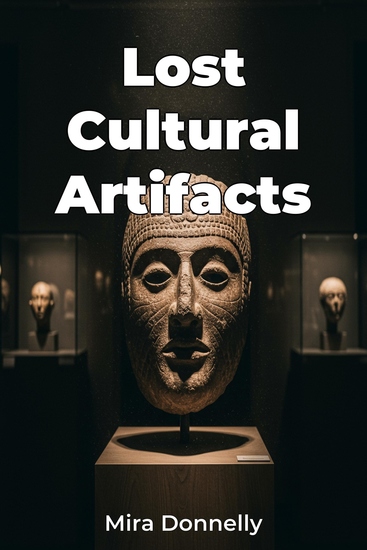
Lost Cultural Artifacts - cover

Lost Cultural Artifacts

Mira Donnelly

Translator A AI

Publisher: Publifye

  • 0
  • 0
  • 0

Summary

Lost Cultural Artifacts explores the complex world of indigenous cultural heritage, focusing on the theft and repatriation of invaluable artifacts. It delves into the profound significance these objects hold for indigenous communities, representing not just art, but a living link to their history and identity. The book highlights the urgent need to address past wrongs and foster reconciliation through the return of these cultural treasures, arguing that repatriation is essential for preserving cultural heritage and empowering indigenous communities to reclaim their narratives.

 
The book examines the historical and social context surrounding artifact theft, including the legacy of colonialism and evolving museum practices. It meticulously documents case studies of artifact displacement from various regions, illustrating the devastating impact on indigenous communities. Furthermore, it explores the legal and ethical frameworks guiding repatriation efforts, including international conventions and indigenous rights declarations.

 
Structured in four parts, Lost Cultural Artifacts begins with an overview of cultural heritage and its importance. It progresses through case studies, legal frameworks, and culminates in a discussion of practical implications for repatriation. By challenging traditional narratives and prioritizing indigenous voices, this book advocates for a more inclusive and participatory approach to cultural preservation and social justice.
Available since: 03/29/2025.
Print length: 74 pages.
Other books that might interest you

  • The Late Medieval Scottish Parliament - Politics and the three Estates 1424–1488 - cover

    The Late Medieval Scottish...

    Roland Tanner

    • 0
    • 0
    • 0
    In this ground-breaking study of the medieval parliament, Roland Tanner gives the Scottish Parliament a human face by examining the actions and motives of those who attended. In the past, the Scottish Parliament was seen as a weak and ineffective institution – damned because of its failure to be more like its English counterpart. But Roland Tanner shows that the old picture of weakness is far from accurate. In its very different way, the Scottish Parliament was every bit as powerful as the English institution. The ‘Three Estates’ (the clergy, nobility and burgh representatives who attended Parliament) were able to wield a surprising degree of control over the Crown during the fifteenth century. For instance, they threatened to lock James I’s taxation in a box to which he, the king, would have no access, made James II swear not to alter acts of Parliament, and prevented him from using his own lands and wealth as patronage for his supporters, and forbade James III to leave the country.  Roland Tanner has avoided a dry constitutional approach. Instead he has sought to bring Parliament to life through the people who attended, the reasons why they attended, and the complex interactions which occurred when all the most wealthy, powerful and ambitious people in the kingdom gathered in one place.
    Show book
  • Churchill and the Crown - cover

    Churchill and the Crown

    Ted Powell

    • 0
    • 0
    • 0
    Winston Churchill was born in a palace and was given a funeral worthy of a king. His family had enjoyed an intimate association with the British monarchy stretching back centuries. As King Edward VIII said of him, "I have never met anyone of royal blood who exemplified in such high degree the ideal of the 'good king.'"Churchill and the Crown tells the story of Churchill's relationship with the various kings and queens he served during his long political career, from young journalist under Edward VII, through his dramatic fall from grace in the First World War under George V, the frustrations of appeasement during the interwar period and his relationship with Edward VIII during the abdication crisis of 1936, culminating in his Finest Hour in the Second World War under George VI and the coda of Churchill's public service to his final monarch: Queen Elizabeth II.Ted Powell analyzes Churchill's writings on monarchy and his role in preserving and establishing monarchies outside Britain. At the core of the book is a series of studies of Churchill's relationships with the monarchs he served. These studies offer a two-way perspective, examining both Churchill's view of individual monarchs and their attitudes towards him. They shed light not only on Churchill's career but also on the changing role of the monarchy in twentieth century Britain.
    Show book
  • Mastering Motivation in the Age of Instant Reward - cover

    Mastering Motivation in the Age...

    Marcus Reed

    • 0
    • 0
    • 0
    Your brain was never built for infinite scroll. Mastering Motivation in the Age of Instant Reward explores the real neuroscience behind dopamine, habit formation, and the modern struggle to stay focused in a world of constant stimulation. Cutting through the myths of “detox culture,” this book explains how dopamine actually works — not as a pleasure chemical, but as the engine of curiosity, learning, and perseverance. It offers a clear, practical framework for rewiring reward systems through deliberate effort, anticipation, and balance, helping you regain control over attention, energy, and purpose. Grounded in modern psychology and motivation science, it’s a guide for anyone seeking meaning in an era of endless distraction — not by rejecting pleasure, but by redefining it.
    Show book
  • Dark Psychology and Gaslighting Manipulation - Utilizing Natural Language Processing to Decode Human Behavior Enhance Emotional Acuity and Refine Persuasive Communication Strategies - cover

    Dark Psychology and Gaslighting...

    Dominique Blake

    • 0
    • 0
    • 0
    Unveiling the Secrets of Influence: A Guide to Healthy Persuasion and Personal Strength 
    This audiobook empowers you to navigate the world of influence with confidence. Learn to discern genuine communication from manipulative tactics, fostering healthier interactions in all areas of life. 
    You'll discover:The Art of Influence: Explore the psychology behind persuasion and how to build strong, authentic connections.Building Resilience: Develop emotional intelligence and tools to recognize and counter manipulation in relationships and the workplace.Empowerment Through Insight: Gain practical strategies to protect yourself from negative influences and foster personal growth.The Power of Self-Defense: Learn powerful mental tools to navigate challenging situations with confidence.Ethical Influence: Understand how to use influence ethically and create positive change in your surroundings. 
    This journey equips you to build a life of resilience and empowers you to contribute to a more positive and ethical environment.  
    Embark on a path of personal growth and transformation – your journey to healthy influence starts now!
    Show book
  • The Problems of Philosophy - cover

    The Problems of Philosophy

    Bertrand Russell

    • 0
    • 0
    • 0
    In this book, Russell tackles some of the most fundamental questions of human existence and provides a clear and concise introduction to the field of philosophy. Throughout the book, Russell's writing is clear, engaging, and accessible, making complex philosophical ideas understandable to readers with little or no background in the field. "The Problems of Philosophy" is a must-read for anyone interested in philosophy, and a great starting point for those new to the subject. Read in English, unabridged.
    Show book
  • The Great Irish Famine - cover

    The Great Irish Famine

    Cathal Poirteir

    • 0
    • 0
    • 0
    This is the most wide-ranging series of essays ever published on the Great Irish Famine, and will prove of lasting interest to the general reader. Leading historians, economists and geographers – from Ireland, Britain and the United States – have assembled the most up-to-date research from a wide spectrum of disciplines including medicine, folklore and literature, to give the fullest account yet of the background and consequences of the Famine. Contributors include Dr Kevin Whelan, Professor Mary Daly, Professor James Donnelly and Professor Cormac Ó Gráda. The Great Irish Famine was the first major series of essays on the Famine published in Ireland for almost fifty years.
    Show book