Rejoignez-nous pour un voyage dans le monde des livres!
Ajouter ce livre à l'électronique
Grey
Ecrivez un nouveau commentaire Default profile 50px
Grey
Abonnez-vous pour lire le livre complet ou lisez les premières pages gratuitement!
All characters reduced
Colonial Impact - cover

Colonial Impact

Mira Donnelly

Traducteur A AI

Maison d'édition: Publifye

  • 0
  • 0
  • 0

Synopsis

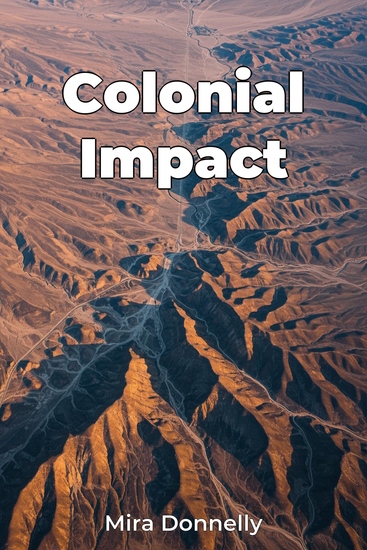
Colonial Impact delves into the enduring consequences of European colonization on Africa, arguing that its legacy continues to shape the continent's political and economic realities. The book highlights how the arbitrary drawing of African borders at the Berlin Conference disregarded existing ethnic and cultural boundaries, leading to lasting political instability. Furthermore, it examines how the systematic exploitation of Africa's resources benefited European economies, often at the expense of African development.

 
The book progresses from pre-colonial African societies to the border creation process, economic policies, and diverse forms of African resistance, providing a comprehensive understanding of colonialism's lasting impact. It argues that the effects of colonialism are not just historical artifacts but living forces that influence political structures and economic inequalities. For example, patterns of resource extraction established during colonization continue to affect economic relations between Africa and the rest of the world, impacting sustainable development.

 
By focusing on the political and economic impacts, Colonial Impact offers a framework for understanding debates about neocolonialism and resource governance. It uniquely emphasizes the agency of African actors in resisting and adapting to colonial rule, providing valuable insights for anyone interested in African history, postcolonial studies, and the challenges facing Africa today. This approach provides a fresh perspective on the history world, making it accessible to students, researchers, and policymakers alike.
Disponible depuis: 19/03/2025.
Longueur d'impression: 69 pages.
D'autres livres qui pourraient vous intéresser

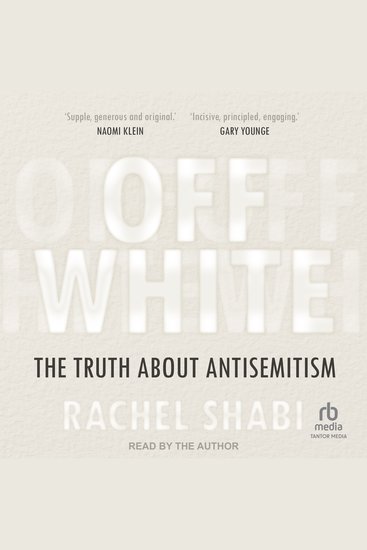
  • Off-White - The Truth About Antisemitism - cover

    Off-White - The Truth About...

    Rachel Shabi

    • 0
    • 0
    • 0
    Why can't we talk about antisemitism? 


    As claims of antisemitism continue to distort our politics at home and abroad, it has become almost impossible to talk about constructively, even in private. Instead, we find ourselves in a storm of misinformation, political mudslinging, and bad-faith accusations. 


    There is, however, a way to deliberate more honestly. Looking beyond our polarizing headlines and interrogating the reasons racism takes hold, Off-White offers urgent analysis of one of the most divisive issues of our time. Taking in the contingency of whiteness, Judeo-Christian mythmaking, pro-Israel antisemitism, and the Palestinian struggle against colonialism, Rachel Shabi lights a hopeful way forward.
    Voir livre
  • Narcissistic Fathers - The Problem with being the Son or Daughter of a Narcissistic Parent and how to fix it A Guide for Healing and Recovering After Hidden Abuse - cover

    Narcissistic Fathers - The...

    Dr. Theresa J. Covert

    • 0
    • 0
    • 0
    Do you think your father might be toxic? Still struggling from the effects of a narcissistic or psychopathically abusive relationship? 
    As a child: 
    - You felt like you were never good enough 
    - Your father seemed wrapped up in themselves and their life 
    - Your father didn’t seem to care about your feelings 
    - Your father was very controlling and manipulative 
    - You were made to feel bad or wrong if you got upset 
    - Your needs weren’t met 
    As an adult: 
    - You still feel like you are not good enough 
    - You feel confused, anxious, sad in your relationship with your father 
    - Your father puts you down, and never celebrates your achievements 
    - You sometimes doubt your perception of events, and feel like you are going crazy 
    - You struggle to make decisions and have difficulty trusting your gut instinct or intuition 
    - Your father is very critical, manipulative, controlling and tells lies 
    - They still don’t seem to care about your feelings or your needs 
    - You feel like you are the one parenting them 
    This Book is for you if you have been in a toxic relationship with your parent and you just want to make sense of it and make some changes. 
    Maybe you have tried to talk to your father or friends about your relationship, but they don’t understand either and they may even tell you that it couldn’t have been that bad. 
    I can’t promise you that reading to this book is going to be a “total cure”, but I can promise that if you APPLY YOURSELF DILLIGENTLY, take notes, read and re-read the chapters, follow all instructions to the letter, with a tenacious resolve to get better you will feel an instant decrease in anxiety within the first 24 hours and should see huge improvements within the first 3 days.
    Voir livre
  • The Divine Comedy - Exploring the Mythic Landscapes of Dante's Vision - cover

    The Divine Comedy - Exploring...

    Odessa Nightshade

    • 0
    • 0
    • 0
    Few works in literary history have shaped the cultural and spiritual imagination of the Western world as profoundly as *The Divine Comedy*. Written in the early 14th century by the Florentine poet Dante Alighieri, this epic journey through Hell, Purgatory, and Paradise is more than just a tale of the afterlife—it is a meditation on justice, redemption, and the human soul’s search for divine truth. As both a poet and a visionary, Dante crafted a work that bridges medieval theology, classical influences, and deeply personal reflections, creating a narrative that continues to resonate with readers across centuries.  
      
    To fully appreciate *The Divine Comedy*, it is essential to understand the world that shaped Dante and the literary traditions that influenced him. Born in 1265, Dante lived in a politically tumultuous Italy, marked by factional strife between the Guelphs and Ghibellines, conflicts that would deeply impact his life and writing. Exiled from his native Florence, he poured his exile’s anguish and his longing for justice into the verses of *The Divine Comedy*, transforming personal suffering into an allegorical masterpiece. His work reflects not only his political frustrations but also his devotion to philosophy, theology, and the poetic traditions of Virgil and the classical world.  
      
    At its core, *The Divine Comedy* is an allegory of the soul’s journey toward God. Each of its three realms—*Inferno*, *Purgatorio*, and *Paradiso*—represents stages of moral and spiritual transformation. *Inferno* exposes the consequences of sin, *Purgatorio* explores the trials of purification, and *Paradiso* reveals the ultimate joy of divine enlightenment. This structure serves not only as a vivid depiction of the afterlife but also as a guide for readers seeking moral and spiritual understanding in their own lives. 
    Voir livre
  • The Nature of the Beast - cover

    The Nature of the Beast

    David J. Anderson

    • 0
    • 0
    • 0
    Does your dog get sad when you leave for the day? Does your cat purr because she loves you? Do bears attack when they’re angry? You can’t very well ask them.  
     
    In fact, scientists haven’t been able to reach a consensus on whether animals even have emotions like humans do, let alone how to study them. Yet studies of animal emotion are critical for understanding human emotion and mental illness. 
     
    In The Nature of the Beast, pioneering neuroscientist David J. Anderson describes a new approach to solving this problem. He and his colleagues have figured out how to study the brain activity of animals as they navigate real-life scenarios, like  
    fleeing a predator or competing for a mate. His research has revolutionized what we know about animal fear and aggression. Here, he explains what studying emotions and related internal brain states in animals can teach us about human  
    behavior, offering new insights into why isolation makes us more aggressive, how sex and violence connect, and whether there’s a link between aggression and mental illness. 
     
    Full of fascinating stories, The Nature of the Beast reconceptualizes how the brain regulates emotions—and explains why we have them at all.
    Voir livre
  • Literature Masterclass: Your Guide To Analyze Fairytales - cover

    Literature Masterclass: Your...

    Niina Niskanen

    • 0
    • 0
    • 0
    Storytelling and fairytales have always been an important part of preserving oral culture and traditions. Fairytale is usually a short story that takes place in a magical setting, with human characters and other beings and they face different kinds of obstacles. Fairytales have worked as moral guides, entertainment, and also as inspirational stories during hard times. In this book, we will go through seven different fairytales. These are Cinderella, Snow White, Rapunzel, Puss in Boots, Hansel and Gretel, Mulan and Red Riding Hood. We will also go through different character archetypes such as the villain and the hero. Different fairytale narratives like A Damsel in Distress and From Rags to Riches. 
    Archetypical characters in fairy tales fall into a certain category by their visual appearance, characteristics, personality traits, and their mission. We will find common archetypes in fairy tales, myths, and folklore. In the world of fairy tales, archetypes are universal and similar archetypes appear in different cultures and fairy tales told in different parts of the world. Classical archetypes in Fairy tales are damsels in distress- types of princesses like Cinderella and Snow White. Evil Stepmother in the stories such as Hansel and Gretel and Sleeping Beauty. A wise old mage whose job is to help the protagonist in their journeys such as Dumbledore in Harry Potter and Merlin the wise guide of King Arthur.
    Voir livre
  • Moral Compass The: Navigating Right and Wrong in Modern Times - cover

    Moral Compass The: Navigating...

    Henry J. Howes

    • 0
    • 0
    • 0
    Description: The Moral Compass: Navigating Right and Wrong in Modern Times 
    In today's fast-paced and complex world, the line between right and wrong often blurs, presenting individuals with ethical dilemmas that challenge their values. The Moral Compass: Navigating Right and Wrong in Modern Times explores the intricate dynamics of morality, offering a guide to understanding and addressing these challenges with integrity and purpose. 
    This book delves into the philosophical foundations of morality, the impact of societal and cultural shifts on ethical behavior, and practical strategies for making sound decisions. With a focus on real-world examples and contemporary issues, it provides readers with the tools to navigate moral complexities in both personal and professional settings. 
    Key themes include:The evolution of morality in the modern era.The influence of technology, globalization, and cultural diversity on ethical standards.Practical frameworks for resolving ethical conflicts.The role of empathy, self-reflection, and personal responsibility in moral decision-making. 
    The Moral Compass inspires readers to reflect on their values, embrace critical thinking, and foster a deeper understanding of right and wrong in a world that often tests the limits of morality.
    Voir livre