Begleiten Sie uns auf eine literarische Weltreise!
Buch zum Bücherregal hinzufügen
Grey
Einen neuen Kommentar schreiben Default profile 50px
Grey
Jetzt das ganze Buch im Abo oder die ersten Seiten gratis lesen!
All characters reduced
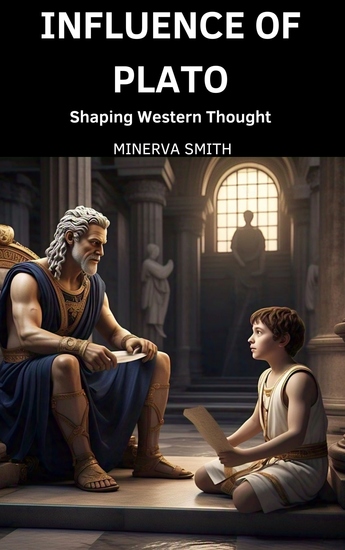
The Influence of Plato - Shaping Western Thought - cover

The Influence of Plato - Shaping Western Thought

Minerva Smith

Verlag: Heritage Books

  • 0
  • 0
  • 0

Beschreibung

Few thinkers have left a mark on history as profound as Plato. His ideas on justice, politics, knowledge, and the nature of reality have shaped philosophy, governance, and education for over two thousand years. This book explores Plato's lasting influence, tracing how his teachings have shaped Western civilization from ancient times to the modern era.


Through an engaging exploration of his most famous works, including The Republic and The Symposium, this book uncovers how Plato's philosophy continues to inspire debates on ethics, democracy, and the search for truth. Whether you are a student of philosophy or simply curious about the origins of Western thought, this book provides a compelling journey into the mind of one of history's greatest philosophers.


Discover how Plato's ideas continue to shape the way we think, govern, and understand the world today.
Verfügbar seit: 10.02.2025.
Drucklänge: 74 Seiten.

Weitere Bücher, die Sie mögen werden

  • Coming to Terms With One’s Shadow - Bodhi Leaves No 77 - cover

    Coming to Terms With One’s...

    Ruth Walshe

    • 0
    • 0
    • 0
    "Though, to some extent, the psychological and the Buddhist way of looking at the shadow is similar, the Buddhist way of seeing, rather than investigating, is far deeper and more penetrating. For if you wash your dirty linen yourself instead of sending it to the laundry, you yourself discover the stains. But unlike with the washing, there is no need to scrub them, it is just the act of seeing which cleanses them. 
     
    In order to explain the shadow, we must first turn the spotlight onto the discrimination of good and bad which starts off our suffering, followed by craving— the second Noble Truth—which in its turn is brought about by our erroneous I-am-I consciousness. I want!—I don’t want! I want the good!—I don’t want the bad! This is outward-bound but exactly the same applies to our emotions too."
    Zum Buch
  • The Gap Between - Loving and Supporting Someone with Alzheimer's - cover

    The Gap Between - Loving and...

    Mary Moreland

    • 0
    • 0
    • 0
    One woman shares her emotional experience navigating her parents’ declining health, culminating in her mother’s years-long struggle with Alzheimer’s. Mary Moreland details her journey through the stages of grief as she comes to terms with her father’s death, followed by her mother’s Alzheimer’s diagnosis. As her mother’s disease progresses over eight years, Mary walks readers through the earliest phase and all the way to her mother’s deathbed. She provides insightful advice on grieving and caring for loved ones with dementia or Alzheimer’s, alongside her own story of loss.
    Zum Buch
  • Conquer Your Imposter - Dismantle the fear that undermines your success Unlock your true potential Free yourself from Imposter Syndrome for good - cover

    Conquer Your Imposter -...

    Alison Shamir

    • 0
    • 0
    • 0
    Are you a high achiever battling feelings of inadequacy? Do you feel undeserving of your accomplishments? Do you consider yourself a fraud just waiting to be found out? You’re not alone. 
    Alison Shamir was at the top of her game—corporate leadership role, large salary, financial freedom—when a crippling panic attack almost brought her to her knees. Fraud. Deceiver. Imposter. In her mind, she had faked her way into her position, and it was only a matter of time before she was “found out.” But guess what? None of it was true. 
    During her mission to understand her anxiety and feelings of inadequacy, Alison discovered Imposter Syndrome, and the pieces all fell into place. Finally, her life made sense. She wasn’t alone—and neither are you. 
    Conquer Your Imposter™ is a journey of self-discovery and self-mastery. Through her personal story, eye-opening anecdotes, and practical tools and research, Alison—now a global leading expert on the Imposter Phenomenon with over a decade of experience—guides you to understand and conquer your own unfounded fear, doubt, and anxious feelings of not being “good enough.” 
    Don’t let your inner imposter hold you back anymore. It’s time to take back control and unleash the most authentic, empowered, and unapologetically confident version of you. 
    It’s Time to Conquer Your Imposter For Good.  
    www.alisonshamir.com 
    www.conqueryourimposter.com
    Zum Buch
  • The Secret Listener - An Ingenue in Mao's Court - cover

    The Secret Listener - An Ingenue...

    Yuan-Tsung Chen

    • 0
    • 0
    • 0
    The history of China in the twentieth century is comprised of a long series of shocks: the 1911 revolution, the civil war between the communists and the nationalists, the Japanese invasion, the revolution, the various catastrophic campaigns initiated by Chairman Mao between 1949 and 1976, its great opening to the world under Deng, and the Tiananmen Square Massacre. 


    Yuan-tsung Chen lived through most of it, and at certain points in close proximity to the seat of communist power. Born in Shanghai in 1929, she came to know Zhou En-Lai as a young girl while living in Chongqing, where Chiang Kai-Shek's government had relocated to, during the war against Japan. That connection to Zhou helped her save her husband's life in Cultural Revolution. After the communists took power, she obtained a job in one of the culture ministries. She frequently engaged with the upper echelon of the party and was a first-hand witness to some of the purges that the regime regularly initiated. Eventually, the commissar she worked under was denounced in 1957, and she barely escaped being purged herself. Later, during Cultural Revolution, she and her husband were purged and sent to live in a rough, poor area. They finally moved to Hong Kong, with Zhou's permission, in 1971. Chen gives a first-hand account of what life was like in the period before the revolution and in Mao's China.
    Zum Buch
  • Sparkle's Story - Thrown Away Children Book 8 - cover

    Sparkle's Story - Thrown Away...

    Louise Allen

    • 0
    • 0
    • 0
    Louise gets a frantic call to take in a damaged and destructive young girl. Separated from her siblings, Sparkle is hostile and angry. 
     
    A short while after settling in, Sparkle begins to identify as pansexual. A revolution is underway in the Allen household, with Sparkle’s transition motivating all of the young people to explore what becoming an adult means for them. 
     
    But it’s Sparkle’s escalating behaviour that causes concern. 
     
    Discovering a dark fact about Sparkle’s birth and the shocking events that the children in her house were part of, Louise is desperate for more help – and not just for the child in her care. As Sparkle’s erratic and violent behaviour increases, Louise finds herself and her homelife under serious threat.
    Zum Buch
  • Byzantium and Constantinople: The History of the Ancient Greek City that Became the Byzantine Empire’s Capital - cover

    Byzantium and Constantinople:...

    Editors Charles River

    • 0
    • 0
    • 0
    Due to the importance of the Roman Empire and the offshoot Byzantine Empire, it’s often forgotten that Constantinople wasn’t chosen at random; in fact, the city already existed, and it lent its name to the empire that was subsequently centered there. Byzantium, known originally as Byzantion, was an ancient Greek city centuries before it became known as Constantinople, and the etymology of Byzantion/Byzantium is still unknown. It has been suggested that Byzantion is of Thracian origin and may be derived from the Thracian personal name Byzas, which means “he-goat.” Ancient Greek legend refers to King Byzas as the leader of the Megaran colonists and the founder of the city, but the earliest name for a city on the site is “Lygos,” which likely corresponds to an earlier Thracian settlement described by Pliny the Elder in his seminal work, Natural History: “On leaving the Dardanelles we come to the Bay of Casthenes, ...and the promontory of the Golden Horn, on which is the town of Byzantium, a free state, formerly called Lygos; it is 711 miles from Durazzo.” 
    Pliny went on to explain that Lygos was a Thracian settlement founded between the 13th and 11th centuries BCE. The site, however, was probably abandoned well before Megara founded Byzantion around 657 BCE across from Chalcedon on the Asiatic side of the Bosphorus. The city was briefly renamed Augusta Antonina in the early 3rd century CE by the Emperor Septimius Severus, who razed the city to the ground in 196 CE for supporting a rival contender in the civil war and had it rebuilt in honor of his son and successor, Marcus Aurelius Antoninus, known as Caracalla. This new name appears to have been quickly forgotten and abandoned, with the city reverting to Byzantium after the assassination of Caracalla in 217 CE, and that’s how it would be known when Constantine fatefully moved the seat of power there over a century later.
    Zum Buch