Join us on a literary world trip!
Add this book to bookshelf
Grey
Write a new comment Default profile 50px
Grey
Subscribe to read the full book or read the first pages for free!
All characters reduced
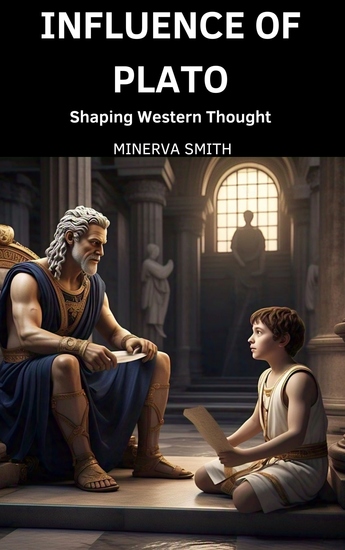
The Influence of Plato - Shaping Western Thought - cover

The Influence of Plato - Shaping Western Thought

Minerva Smith

Publisher: Heritage Books

  • 0
  • 0
  • 0

Summary

Few thinkers have left a mark on history as profound as Plato. His ideas on justice, politics, knowledge, and the nature of reality have shaped philosophy, governance, and education for over two thousand years. This book explores Plato's lasting influence, tracing how his teachings have shaped Western civilization from ancient times to the modern era.


Through an engaging exploration of his most famous works, including The Republic and The Symposium, this book uncovers how Plato's philosophy continues to inspire debates on ethics, democracy, and the search for truth. Whether you are a student of philosophy or simply curious about the origins of Western thought, this book provides a compelling journey into the mind of one of history's greatest philosophers.


Discover how Plato's ideas continue to shape the way we think, govern, and understand the world today.
Available since: 02/10/2025.
Print length: 74 pages.

Other books that might interest you

  • The Fall of Communism - Understanding the Collapse of the Soviet Union and Its Impact - cover

    The Fall of Communism -...

    Arlo Holders

    • 0
    • 0
    • 0
    The origins of communism can be traced back to the mid-19th century, largely shaped by the theories of Karl Marx and Friedrich Engels. Marx's writings, particularly The Communist Manifesto (1848), presented a vision for a classless society where the working class, or proletariat, would overthrow the capitalist bourgeoisie and establish a dictatorship of the proletariat. Marx believed this revolution would lead to the eventual abolition of private property, creating a system where resources and wealth were shared equally among all people. Engels, Marx’s collaborator, helped to spread these ideas, laying the theoretical foundation for communism as a political ideology. 
    In the early 20th century, the ideas of Marxism found fertile ground in Russia, where economic disparity and social unrest were widespread. The Russian Empire, under Tsar Nicholas II, faced increasing pressure from industrialization, a growing working class, and a largely disenfranchised peasantry. The Russian Revolution of 1917, led by the Bolshevik Party under Vladimir Lenin, marked the beginning of communism’s practical implementation. The Bolsheviks sought to establish a socialist state where the working class would control the means of production and dismantle the old Tsarist monarchy. 
    Following the revolution, the Soviet Union was formed in 1922, uniting the Russian Federation and several other Soviet republics under a single communist government. The new government, however, faced significant challenges, including civil war, foreign intervention, and the task of restructuring a country that had been predominantly agrarian into a socialist industrialized state. Lenin’s death in 1924 led to the rise of Joseph Stalin, who consolidated power through brutal purges and policies such as forced collectivization and rapid industrialization.
    Show book
  • Utilitarianism - cover

    Utilitarianism

    John Stuart Mill

    • 0
    • 0
    • 0
    Discover the groundbreaking philosophy of Utilitarianism by John Stuart Mill — a timeless exploration of ethics, happiness, and the greater good. In this influential essay, Mill defends the principle that actions are right if they promote the greatest happiness for the greatest number. Blending moral insight with logical clarity, Utilitarianism remains essential reading for students of philosophy, ethics, political science, and anyone seeking to understand how we determine right from wrong. Perfect for deep thinkers and curious minds alike, this classic text continues to shape modern moral debate.
    Show book
  • The Rule of Law - A Very Short Introduction - cover

    The Rule of Law - A Very Short...

    Aziz Z. Huq

    • 0
    • 0
    • 0
    Politicians, judges, and citizens commonly use the phrase "rule of law" to describe some good that flows from a legal system. But what precisely is that good? Even in Aristotle's time, there was no agreement on either its nature, and on whether it counted as an unqualified good. Even now, a core rule-of-law aspiration is that law can constrain how power is flexed. But how or when? Disagreement persists as to whether the rule of law is a matter of how law is used or why it is deployed. In consequence, the World Bank, the leaders of Singapore's one-party state, and the Communist Party in China can all offer their own spins on the concept. 


    By charting these disagreements and showing the overlap and the conflicts between different understandings of the concept, Aziz Z. Huq shows how the rule of law can still be used as an important tool for framing and evaluating the goals and functions of a legal system. He traces the idea's historical origins from ancient Greece to the constitutional theorist Albert Venn Dicey to the economist and political philosopher Friedrich Hayek. And he explores how that value is coming under pressure from terrorist threats, macroeconomic crisis, pandemics, autocratic populism, and climate change.
    Show book
  • The Conquest of Bread - cover

    The Conquest of Bread

    Peter Kropotkin

    • 0
    • 0
    • 0
    The Conquest of Bread  is an 1892 book by the Russian anarcho-communist Peter Kropotkin.
    Peter Kropotkin was born a Russian prince whose father owned 1,200 serfs. But he became  a Russian activist, writer, revolutionary, scientist, economist, sociologist, historian, essayist, researcher, political scientist, biologist, geographer  and philosopher.
    The Conquest of Bread has become a classic of political anarchist literature. It was heavily influential on both the Spanish Civil War and the Occupy movement.
    In the work, Kropotkin goes on to propose a more decentralized economic system based on mutual aid and voluntary cooperation, asserting that the tendencies for this kind of organization already exist, both in evolution and in human society.
    Show book
  • I Am the Law - How Judge Dredd Predicted Our Future - cover

    I Am the Law - How Judge Dredd...

    Michael Molcher

    • 0
    • 0
    • 0
    He is the law—and you better believe it! 


    Judge, jury, and executioner, Judge Dredd is the brutal comic book cop policing the chaotic future urban jungle of Mega-City One, created by John Wagner and Carlos Ezquerra and launching in the pages of 2000 AD in 1977. 


    But what began as a sci-fi action comic quickly evolved into a searing satire on hardline, militarized policing and "law and order" politics, its endless inventiveness and ironic humor acting as a prophetic warning about our world today—and with important lessons for our future. 


    Blending comic book history with contemporary radical theories on policing, I Am The Law takes key Dredd stories from the last forty-five years and demonstrates how they provide a unique wake up call about our gradual, and not so gradual, slide towards authoritarian policing. 


    From the politicization of policing to "zero tolerance," from violent suppression of protest to the rise of the surveillance state, I Am The Law examines how a comic book warned us about the chilling endgame of today's "law and order" politics.
    Show book
  • Korea - A New History of South and North - cover

    Korea - A New History of South...

    Victor Cha, Ramon Pacheco Pardo

    • 0
    • 0
    • 0
    A major new history of North and South Korea, from the late nineteenth century to the present day 


    Korea has a long, riveting history—it is also a divided nation. South Korea is a vibrant democracy, the tenth largest economy, and is home to a world-renowned culture. North Korea is ruled by the most authoritarian regime in the world, a poor country in a rich region, and is best known for the cult of personality surrounding the ruling Kim family. But both Koreas share a unique common history. 


    Victor Cha and Ramon Pacheco Pardo draw on decades of research to explore the history of modern Korea, from the late nineteenth century, Japanese occupation, and Cold War division to the present day. A small country caught amongst the world's largest powers—including China, Japan, Russia, and the United States—Korea's fate has been closely connected to its geography and the strength of its leadership and society. This comprehensive history sheds light on the evolving identities of the two Koreas, explaining the sharp differences between North and South, and prospects for unification.
    Show book