Begleiten Sie uns auf eine literarische Weltreise!
Buch zum Bücherregal hinzufügen
Grey
Einen neuen Kommentar schreiben Default profile 50px
Grey
Jetzt das ganze Buch im Abo oder die ersten Seiten gratis lesen!
All characters reduced
C soprano Flute 2: 3 Variations on a theme from "Die Zauberflöte" - Flute Quartet - cover

C soprano Flute 2: 3 Variations on a theme from "Die Zauberflöte" - Flute Quartet

Mikhail Ivanovich Glinka, a cura di Francesco Leone

Verlag: Glissato Edizioni Musicali

  • 0
  • 0
  • 0

Beschreibung

C soprano Flute 2 part of "3 Variations on Die Zauberflöte"  (The Magic Flute by Mozart), arranged for Flute Quartet (SSSA) Intermediate/advanced level, key concert G, duration 5.30 (+-) . Score and Parts available in series. Scan Qr code for audio demo or visit www.glissato.it. product code: EG0996
____________________________
Parte di Flauto 2 in Do : 3 variazioni su un tema da "Il Flauto Magico" (Mozart) per Quartetto di Flauti s.s.s.a. di livello medio/avanzato. Partitura e Parti staccate disponibili nella collana.
Verfügbar seit: 10.02.2022.

Weitere Bücher, die Sie mögen werden

  • Songhai Empire - The Largest Empire in African History - cover

    Songhai Empire - The Largest...

    Rolf Hedger

    • 0
    • 0
    • 0
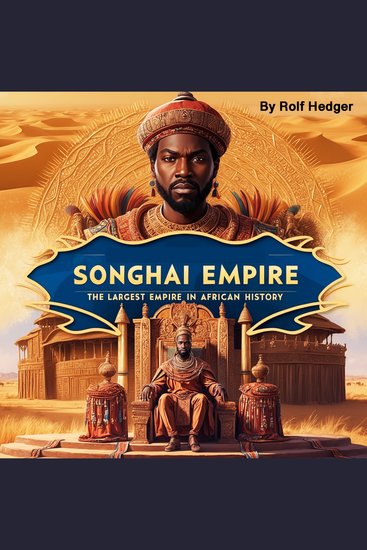
    The Songhai people trace their origins to the fertile banks of the Niger River, an area that has supported human settlement and civilization for thousands of years. Their early history is closely tied to the region of Gao, which would later become the heart of one of Africa’s most powerful empires. The Niger River provided the necessary resources for agriculture, fishing, and trade, enabling the growth of organized communities that would form the foundation of Songhai society. 
    The earliest known inhabitants of the region were the proto-Songhai, who are believed to have settled along the Niger River as early as the first millennium CE. These people were primarily farmers, herders, and fishermen, utilizing the rich floodplains of the river to cultivate crops and sustain livestock. Over time, they developed a distinct cultural identity, characterized by their language, traditions, and spiritual beliefs. Their society was structured around small communities led by local chieftains, who governed based on kinship ties and communal customs. 
    Gao, the most significant early settlement of the Songhai people, emerged as a crucial trading hub by the eighth century. Arab and Berber merchants, who traveled along the trans-Saharan trade routes, recognized its strategic importance as a commercial center. The exchange of goods such as gold, salt, ivory, and kola nuts attracted traders from North Africa and beyond, integrating Gao into the wider economic networks of the region. As commerce flourished, the settlement expanded, and its rulers gained influence by controlling trade and forming alliances with neighboring peoples.
    Zum Buch
  • Great Expectations - cover

    Great Expectations

    Charles Dickens

    • 0
    • 0
    • 0
    In this unflaggingly suspenseful story of aspirations and moral redemption, humble, orphaned Pip, a ward of his short-tempered older sister and her husband, Joe, is apprenticed to the dirty work of the forge but dares to dream of becoming a gentleman. And, indeed, it seems as though that dream is destined to come to pass — because one day, under sudden and enigmatic circumstances, he finds himself in possession of "great expectations." In telling Pip's story, Dickens traces a boy's path from a hardscrabble rural life to the teeming streets of 19th-century London, unfolding a gripping tale of crime and guilt, revenge and reward, and love and loss. Its compelling characters include Magwitch, the fearful and fearsome convict; Estella, whose beauty is excelled only by her haughtiness; and the embittered Miss Havisham, an eccentric jilted bride. 
    Great Expectations, written in Dickens' final decade of life, received widespread acclaim and worldwide admiration. It was his final great novel, and many critics consider it to be his best. Readers and critics alike commended it for its excellent plot, which rises above the melodrama of some of his earlier works, as well as its three-dimensional, psychologically realistic characters, which are far deeper and more engaging than the one-note caricatures of earlier novels. "In none of his other works," noted the reviewer in the 1861 Atlantic, "does he evince a shrewder insight into real life, and a cheaper perception and knowledge of what is called the world." 
     Swinburne thought the novel was the best in all of English fiction, with flaws "as nearly imperceptible as spots on the sun or shadows on a sunlit sea." Shaw considered it Dickens' "most completely perfect book." This low-cost edition encourages current readers to experience Dickens' timeless masterwork, which is brimming with colorful characters, unexpected narrative twists, and Dickens' vivid depiction of mid-Victorian England.
    Zum Buch

  • Sketchbook Explorations - for mixed-media and textile artists - cover

    Sketchbook Explorations - for...

    Shelley Rhodes

    • 0
    • 0
    • 0
    A practical and inspirational guide to help embroiderers and textile artists make the most of sketchbooks to inform their creative work.
    The artist's sketchbook offers an exciting platform to explore a host of mixed media techniques. Using a combination of paper, textiles, found objects, pencil, ink and paint, Shelley Rhodes shows how a sketchbook can act as an illustrated diary, a visual catalogue of a journey or experience or as a starting point for more developed work. 
    Whether out on location or in the studio, Rhodes explores every stage of the creative process, from initial inspiration to overcoming the fear of a blank page, manipulating paper and images and incorporating 'found' objects to build a sketchbook that is both beautiful and inspiring. Sketchbook Explorations is the ideal companion for everyone from the beginner to the more experienced artist looking for exciting techniques to expand their repertoire in mixed media.
    The book explores:
    
    - Why work in sketchbooks? The importance and joy of working in a sketchbook.
    - Ways of recording and investigating ideas that inspire.
    - Techniques in mixed media from found objects and layers to three-dimensional sketching.
    - Creating on location.
    - Using electronic devices to develop ideas.
    Zum Buch
  • Keeping It Active: A Practical Guide to Rhetoric in Performance - cover

    Keeping It Active: A Practical...

    Jeannette Nelson

    • 0
    • 0
    • 0
    Every time you open your mouth on stage you are trying to persuade somebody of something.
    Sometimes referred to as 'the art of persuasion', rhetoric means using language to communicate your ideas and intentions to other people – and to make sure you are heard, understood and believed. This clear and concise guide explains how it works in plays, and how actors can use it to bring their performances to life on stage.
    Drawing on her decades of experience working with actors on major productions, including as Head of Voice at the National Theatre, Jeannette Nelson introduces all the major rhetorical techniques and devices that playwrights use. She offers fascinating breakdowns of dialogue and speeches from across the theatrical canon – from Shakespeare and Ibsen, to Tennessee Williams, Lorraine Hansberry and Arthur Miller, right up to contemporary playwrights such as Helen Edmundson and Tanika Gupta. Each chapter also includes a series of practical exercises which combine spoken word with physical action to help you explore and understand these techniques, and harness their power in performance.
    Whether you're an actor, a director or a drama teacher, Keeping It Active will empower you with a greater understanding of the ways that language underpins all dramatic works, and will give you the tools you need to unlock the text, understand characters, connect with the audience, and perform with greater confidence, focus and authenticity.
    'As this excellent book outlines, rhetoric is everywhere. It's not simply in the parliament, the press conference and the court; it's in the workplace, the home and the family. There's no argument, classical or modern, in a play that isn't informed and helped by Jeannette's work' Josie Rourke, from her Foreword
    'A great resource for actors and directors' Ralph Fiennes
    'Jeannette Nelson's revelatory relationship to language is, quite simply, life-changing' Simon Godwin
    'Jeannette taught me so much... I felt like I could persuade anybody to do anything' Sophie Okonedo
    Zum Buch
  • Mali Empire - Gold Mansa Musa and the Wealth of West Africa - cover

    Mali Empire - Gold Mansa Musa...

    Rolf Hedger

    • 0
    • 0
    • 0
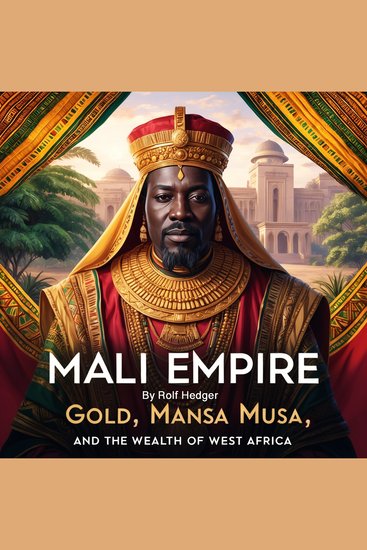
    The Mali Empire emerged in the early 13th century, rising from the remnants of the Ghana Empire and the consolidation of the Malinke people under a visionary leader, Sundiata Keita. The region that would become Mali was already a center of commerce, culture, and political organization, benefiting from its strategic position along the trans-Saharan trade routes. However, it was the collapse of Ghana and the subsequent struggle for power that allowed Mali to emerge as a dominant force in West Africa. 
    The Ghana Empire, which had once controlled vast gold reserves and major trade routes, began to decline due to internal conflicts, overexpansion, and pressure from external forces such as the Almoravid invasions. As Ghana weakened, many of its vassal states and ethnic groups, including the Malinke people, sought independence and new opportunities for leadership. The Malinke, a subgroup of the Mande-speaking people, inhabited the area along the upper Niger River and had long engaged in trade and farming. Their political organization had been fragmented, but under Sundiata Keita, they would come together to form a unified and powerful state. 
    Sundiata Keita’s rise to power is deeply rooted in legend and oral tradition, preserved in the Epic of Sundiata. According to the narrative, Sundiata was born into the Keita royal family but faced exile due to political rivalries. During this time, the Sosso Kingdom, under the rule of Sumanguru Kanté, expanded its influence and sought to dominate the Malinke. Sundiata, gathering allies among different clans and neighboring groups, returned from exile to lead a coalition against Sumanguru at the Battle of Kirina around 1235. His victory in this decisive conflict not only ended Sosso rule but also laid the foundation for the Mali Empire.
    Zum Buch
  • Jung and Active Imagination with James Hillman - cover

    Jung and Active Imagination with...

    James Hillman

    • 0
    • 0
    • 0
    James Hillman is the father of Archetypal Psychology. This rare program focuses on Education, Imagination and Myth with James Hillman. 
     
    The emergence of C.G. Jung’s Red Book from years of storage in a Swiss vault has re-kindled interest in active imagination. This method of self-exploration involves actively engaging one’s own imagination in dialogue, through writing, art, or the spoken word. 
     
    In this 2.5 -hour streaming video program, James Hillman —noted author, psychologist, and the first Director of Studies at the Jung Institute in Zurich — introduces the method and delves deeply into the therapeutic value it offers in an increasingly noisy and demanding world. 
     
    Hillman considers the history and theory of active imagination in Jung, its relationship to making art, and offers examples for scrutiny and discussion. He discusses the fear of inviting demons and opening wounds, and addresses the difference between the voices of inner figures and auditory hallucinations. 
     
    The major re-examination of Jung’s original ideas and inspiration doesn’t stop there, though. Hillman goes on to examine the role of imagination in contemporary culture, and whether imagination itself might need re-imagining. 
     
    Hillman’s seminar was taped December 9, 2009, in California. 
     
    ISBN: 9781637570593
    Zum Buch