




ÉCOUTER EXTRAIT

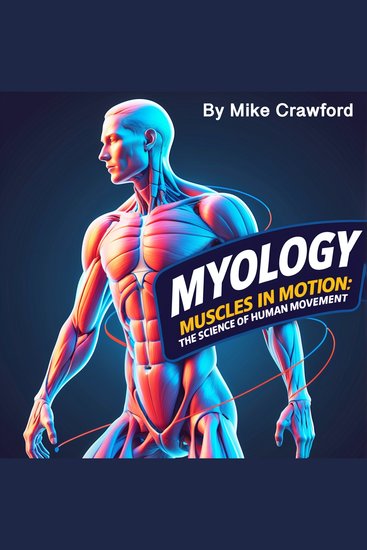
Myology - Muscles in Motion: The Science of Human Movement
Mike Crawford
Narrateur Brigit Henderson
Maison d'édition: Ron Carver LLC
Synopsis
Myology is the scientific study of muscles, their structure, function, and role in movement. Muscles are fundamental to human life, enabling everything from basic motions such as breathing and walking to complex athletic performances. Without muscles, the human body would be incapable of movement, stability, or even essential functions such as circulation and digestion. Understanding myology provides valuable insight into how the body operates, adapts, and responds to physical demands.
The importance of studying muscles extends beyond movement. Myology is crucial in various fields, including medicine, sports science, physical therapy, and rehabilitation. Muscle health affects overall well-being, influencing strength, endurance, posture, and even metabolic function. For athletes, understanding muscle mechanics helps optimize performance and prevent injuries. In the medical field, myology plays a key role in diagnosing and treating muscular disorders, ranging from simple strains to complex neuromuscular diseases.
The study of muscles dates back thousands of years. Ancient Greek physicians, including Hippocrates and Galen, laid the groundwork for myology, describing muscle function in relation to human anatomy. Leonardo da Vinci’s anatomical drawings provided further insights into muscle structure and movement. As medical knowledge advanced, scientists discovered the microscopic components of muscles, leading to a deeper understanding of their biochemical and physiological properties. Today, modern technology, such as electromyography (EMG) and imaging techniques, allows researchers to study muscle function in greater detail than ever before.
Durée: environ 3 heures (03:16:53)
Date de publication: 06/03/2025; Unabridged; Copyright Year: — Copyright Statment: —




