Begleiten Sie uns auf eine literarische Weltreise!
Buch zum Bücherregal hinzufügen
Grey
Einen neuen Kommentar schreiben Default profile 50px
Grey
Jetzt das ganze Buch im Abo oder die ersten Seiten gratis lesen!
All characters reduced
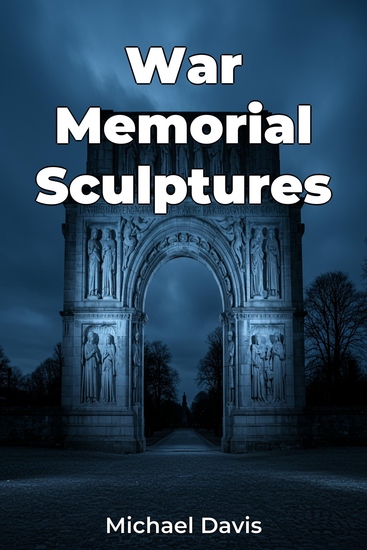
War Memorial Sculptures - cover

War Memorial Sculptures

Michael Davies

Übersetzer A Ai

Verlag: Publifye

  • 0
  • 0
  • 0

Beschreibung

War Memorial Sculptures examines how societies remember and represent war through public monuments, revealing the stories etched in stone and bronze. These sculptures, often seen as objective tributes, are actually complex narratives reflecting values, ideologies, and power dynamics. The book argues that war memorials are never neutral; they are carefully crafted to shape national identity and promote specific interpretations of military history.

 
The book delves into the evolution of war memorial design, tracing its path from classical triumphal arches to modern abstract forms, showcasing how artistic styles mirror shifting attitudes towards war. Case studies from various locations and time periods analyze the choices sculptors make in portraying heroism, sacrifice, and the human cost of conflict.

 
Controversies surrounding war memorials, including debates over historical accuracy and representation, are also explored, offering insight into why some public monuments spark intense debate. The approach is both academic and accessible, using archival documents, photographs, and critical analyses to unpack the sociopolitical context of these monuments.

 
Structured into three major sections, the book progresses from introducing design evolution to examining specific monuments and analyzing controversies, providing a comprehensive understanding of how public art shapes our collective memory of military events.
Verfügbar seit: 26.02.2025.
Drucklänge: 54 Seiten.

Weitere Bücher, die Sie mögen werden

  • Swapped at College - Gender Swap - cover

    Swapped at College - Gender Swap

    Kinky Press

    • 0
    • 0
    • 0
    Alex is flunking science, and he’ll fail out of college if he doesn’t get his act together soon. His professor helps him create a ‘swap chemical’ that turns male mice into females. Then Alex accidentally drinks it … and turns into a beautiful young woman! 
      
    However, he misses the hand-in deadline and has to go plead to his professor, and show him how the potion worked! His professor has another idea how he can make up the grade...
    Zum Buch
  • The Most Fascinating Man in the World - The Life and Biography of Peter Freuchen - cover

    The Most Fascinating Man in the...

    John Harpoon

    • 0
    • 0
    • 0
    Peter Freuchen was born on February 2, 1886, in the small town of Nykøbing Falster, Denmark. Raised in a well-off family, his early life was marked by an environment that fostered curiosity and exploration. From a young age, Freuchen exhibited a strong interest in adventure and the natural world. He was inspired by his father, a civil engineer, and his mother, who instilled in him a love for literature and storytelling. These early experiences would play a crucial role in shaping his adventurous spirit and intellectual curiosity, which would define much of his later life. 
    Freuchen's education was broad and varied. Initially attending school in his hometown, he soon showed an aptitude for science and geography. However, his desire to explore the world beyond the classroom eventually led him to study at the University of Copenhagen, where he focused on medicine and natural sciences. Although Freuchen did not complete his medical degree, his time at the university was pivotal in forming his understanding of the natural world and fostering his interest in Arctic exploration. 
    During his student years, Freuchen was drawn to the literature of explorers such as Fridtjof Nansen and Roald Amundsen. These accounts of Arctic adventures ignited a deep passion in him to experience such feats firsthand. While still a young man, he decided to leave behind his academic pursuits and embark on an adventure that would change his life forever. At the age of 22, Freuchen sailed to Greenland, where he would spend the next several years of his life living among the Inuit people. It was here that Freuchen learned the skills necessary to survive in one of the harshest environments on Earth. His time in Greenland was not just a physical trial but also an intellectual journey, as he immersed himself in the culture, language, and survival techniques of the Inuit.
    Zum Buch
  • The Shocking Truth about Legal Rights - cover

    The Shocking Truth about Legal...

    Zoey Fraisers

    • 0
    • 0
    • 0
    Legal rights are the foundation of the modern world, influencing every aspect of our lives. From the moment we are born, we are subject to a complex web of rights that protect our freedoms, safeguard our interests, and ensure our ability to live our lives in a fair and just society. But what exactly are legal rights, and how have they evolved over time? The shocking truth is that many people don’t fully understand the legal rights they are entitled to, nor do they realize how these rights impact them on a daily basis. In this book, we aim to uncover the truths behind legal rights, shedding light on their importance and how they shape the world we live in. 
      
    Legal rights are not a recent concept; they have been developed over centuries, evolving with society's changing needs and values. In early civilizations, rights were often limited and dictated by rulers, leaving little room for individual freedoms. It wasn’t until the rise of democratic societies that the idea of legal rights for all people began to take shape. The Magna Carta, signed in 1215, is one of the earliest examples of a legal document that set the foundation for individual freedoms and legal protections. However, it wasn’t until much later that such rights would become enshrined in the constitutions and laws of nations across the world. 
      
    The significance of legal rights today cannot be overstated. From voting rights to free speech, from the right to a fair trial to protection from discrimination, legal rights play a crucial role in ensuring equality and justice. Without these rights, individuals would have no means of holding authorities accountable or protecting themselves from abuse. In the digital age, the scope of legal rights continues to expand, with new laws aimed at safeguarding personal privacy, intellectual property, and access to technology.
    Zum Buch
  • Cicero - Biography of a Roman Lawyer Writer and Statesman - cover

    Cicero - Biography of a Roman...

    Kelly Mass

    • 0
    • 0
    • 0
    Marcus Tullius Cicero was a Roman statesman, lawyer, scholar, philosopher, and Academic skeptic who became a prominent figure in the political and intellectual life of the late Roman Republic. He is best remembered for his eloquence and his staunch defense of ethical ideals in the face of political turmoil, a period that ultimately led to the rise of the Roman Empire. Cicero’s influence extended far beyond his time as he became one of Rome's most revered orators and prose stylists, producing an extensive body of work encompassing treatises on rhetoric, philosophy, and politics. His works remain fundamental to the study of Latin and Western philosophy today. 
    Cicero was born into a wealthy municipal family within the Roman equestrian order and held the esteemed office of consul in 63 BC, a significant achievement in his career. His oratorical prowess was unrivaled, and his skill in public speaking earned him a reputation that endured through the centuries. His publications spanned a broad range of subjects, from the theoretical aspects of rhetoric to the practical concerns of governance and philosophy. Cicero’s mastery of the Latin language was profound—he is said to have written over three-quarters of all surviving Latin literature from his time. His works, characterized by their clarity and depth, formed the foundation for subsequent Latin prose, influencing European languages and thinkers well into the 19th century.
    Zum Buch
  • 20 First Legislative Acts of the Russian Bolshevik Revolution - cover

    20 First Legislative Acts of the...

    Vladimir Lenin

    • 0
    • 0
    • 0
    Decrees were legislative acts of the highest Soviet institutions, primarily of the Council of People's Commissars (the highest executive body — Sovnarkom) and of VTsIK (the highest legislative body between sessions of the Congress of Soviets).
    The Bolshevik Initial Decrees were announced as soon as the Bolsheviks declared their success in the October Revolution (October 26, 1917). The Decrees seemed to conform to the popular Bolshevik slogan "Peace, Land and Bread". The slogan succinctly articulated the grievances of the Russian peasantry, armed forces and proletariat.
    The Bolsheviks were not opportunists but benevolent idealists; the point of the Decrees was to bring about a better quality of life for the Russian people. Regardless of which view is the more accurate account, it is clear from these opposing perspectives that the history of the Initial Decrees is a politically charged issue. This is perhaps because historians use the Decrees to try to discern whether the implementation of Marxist thought has totalitarian tendencies.
    Zum Buch
  • Mikhail Gorbachev: A short biography - 5 Minutes: Short on time – long on info! - cover

    Mikhail Gorbachev: A short...

    5 Minutes, 5 Minute Biographies,...

    • 0
    • 0
    • 0
    Mikhail Gorbachev, Russian president and Nobel Peace prize laureate: Life and work in a short biography! Everything you need to know, brief and concise. Infotainment, education and entertainment at its best!
    Zum Buch