Rejoignez-nous pour un voyage dans le monde des livres!
Ajouter ce livre à l'électronique
Grey
Ecrivez un nouveau commentaire Default profile 50px
Grey
Abonnez-vous pour lire le livre complet ou lisez les premières pages gratuitement!
All characters reduced
Unintended Consequences - cover

Unintended Consequences

Michael Davies

Traducteur A AI

Maison d'édition: Publifye

  • 0
  • 0
  • 0

Synopsis

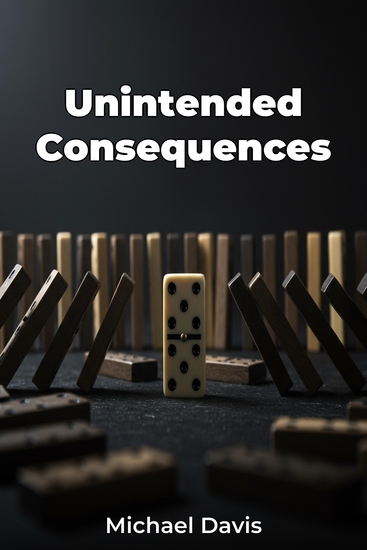
Unintended Consequences explores the ironic phenomenon where well-intentioned actions lead to disastrous results. It examines how policies, laws, and inventions meant to improve society can backfire spectacularly, producing outcomes opposite to those intended. This book highlights how even the most carefully crafted plans can go awry when confronted with real-world complexities.

 
For example, the Prohibition era, intended to curb crime, instead fueled organized crime. Similarly, the introduction of cane toads in Australia, aimed at pest control, became a major ecological problem.

 
The book analyzes historical, social, and political factors contributing to these unintended consequences. It emphasizes the need for foresight, adaptability, and iterative evaluation in policymaking and innovation. By incorporating feedback mechanisms and risk assessment, the book suggests, we can mitigate adverse outcomes.

 
Beginning with an introduction to the concept, the book progresses through case studies and policy decisions, culminating in practical applications for managing unintended consequences in various contexts.
Disponible depuis: 29/03/2025.
Longueur d'impression: 71 pages.
D'autres livres qui pourraient vous intéresser

  • Energy is Life - Why Environmentalism Went Nuclear - cover

    Energy is Life - Why...

    Zion Lights

    • 0
    • 0
    • 0
    Energy is Life: Why Environmentalism Went Nuclear follows Zion Lights's personal and powerful journey: from grassroots green activism to becoming one of the UK's leading advocates for nuclear energy. In a time of climate crisis, energy poverty and growing demand for clean power, she examines why long-established environmentalists like herself once feared nuclear energy, why many have since come to embrace it, and makes a compelling case for why nuclear energy must be part of the solution. Accessible, evidence-based, and deeply human, this book challenges common myths and invites readers to rethink what it really means to care for people and planet alike. If you believe in a greener, fairer future, this book just might change your mind – and give you hope.
    Voir livre
  • FEARLESS! - Vincent Browne's Magill and Ireland in the 1980s - cover

    FEARLESS! - Vincent Browne's...

    Kevin Rafter

    • 0
    • 0
    • 0
    This book is not just the story of a magazine. It's the history of a crucial and contentious decade in Irish life. The 1980s were years of political turbulence, economic decline and bitter referendums on abortion and divorce. Magill and its founding editor, Vincent Browne, was at the heart of all these stories.
    Kevin Rafter uncovers the drama behind Magill from its launch in 1977 to becoming the magazine that the Sunday Times said dragged Irish journalism out of its 'comfortable, questioning dullness'.
    Magill was home to great writing and explosive investigations. Many exceptional journalists made an impression on the pages of the magazine including Colm Tóibín, Fintan O'Toole, Brian Trench and John Waters, who each filled the editor's seat at different times in these rollercoaster years.
    Drawing on extensive interviews and rich archival material, Fearless! reveals a society in upheaval and one magazine's ambition to hold those in power to account for Ireland's future.
     
    'Magill excited, and there was great loyalty. It was never just a job.' - Colm Tóibín
    'People saw the magazine as having authority.' - Fintan O'Toole
    'Magill was fashionable and it had Vincent Browne.' - Eamon Dunphy
    'Are there words to describe Vincent Browne?' - Olivia O'Leary
    'He was a dictator.' - John Waters
    'It was an investigative magazine that held to account people in power, the Church, people in politics, in business and in the media. We tried to do that. Sometimes we did it well.' - Vincent Browne
     
    Voir livre
  • Battle of White Mountain The: The History and Legacy of the First Major Battle of the Thirty Years’ War - cover

    Battle of White Mountain The:...

    Editors Charles River

    • 0
    • 0
    • 0
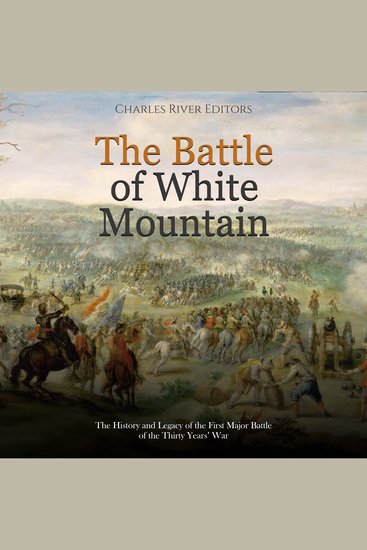
    It has been famously pointed out that the Holy Roman Empire was neither holy, nor Roman, but it was also not an empire in the sense people expect when hearing the term. In theory, the emperor was the highest prince in Christendom, and his dominion extended the length and breadth of Western Europe. The tensions between the Holy Roman Empire and Church over the power to invest bishops with authority led to decades of civil war in Germany on the way to establishing the relationship between Church and State, elevating the status of the papacy and weakening the Holy Roman Empire. 
    	The Thirty Years' War was one of the most horrific conflicts in history, resulting in the deaths of nearly two-thirds of Germany's population, and the Battle of White Mountain in 1620 was the first major battle of that war. The battle was fought mainly due to Holy Roman Emperor Ferdinand II’s dealings with the Bohemians and their new king, Frederick of the Palatinate, who Ferdinand regarded as illegitimate. It was also partly a struggle between the centralizing attempts of the Habsburg dynasty conflicting with the traditional regional autonomy that existed within the legislative institutions called the Estates. What gave it an emotional element was the enmity between Bohemian Protestantism and Ferdinand II’s zealous Catholicism, and that would help draw in several European powers. At the Battle of White Mountain, the armies of the Bohemian Confederation and the Habsburgs met each other near Prague, and the combatants included officers and soldiers from nearly every nation in Europe, including the Netherlands, Germany, Italy, Poland, Bohemia, Moravia, Bavaria, Italy, Spain, Hungary, Transylvania, England, Scotland, and Ireland. The decisive result would permanently affect the course of the conflict over the coming decades, and with it the fate of modern Europe. 
    Voir livre
  • Against Technoableism - Rethinking Who Needs Improvement - cover

    Against Technoableism -...

    Ashley Shew

    • 0
    • 0
    • 0
    When Ashley Shew became a self-described "hard-of-hearing chemobrained amputee with Crohn's disease and tinnitus," there was no returning to "normal." Suddenly well-meaning people called her an "inspiration" while grocery shopping or viewed her as a needy recipient of technological wizardry. Most disabled people don't want what the abled assume they want—nor are they generally asked. 


    In vibrant prose, Shew shows how we can create better narratives and more accessible futures by drawing from the insights of the cross-disability community. To forge a more equitable world, Shew argues that we must eliminate "technoableism"—the harmful belief that technology is a "solution" for disability; that the disabled simply await being "fixed" by technological wizardry; that making society more accessible and equitable is somehow a lesser priority. 


    This badly needed introduction to disability expertise considers mobility devices, medical infrastructure, neurodivergence, and the relationship between disability and race. The future, Shew points out, is surely disabled—whether through changing climate, new diseases, or even through space travel. It's time we looked closely at how we all think about disability technologies and learn to envision disabilities not as liabilities, but as skill sets enabling all of us to navigate a challenging world.
    Voir livre
  • Them Days 54 - From soup to the lure of Labrador enjoy stories from around the Big Land - cover

    Them Days 54 - From soup to the...

    Doris Saunders, Kate Hettasch,...

    • 0
    • 0
    • 0
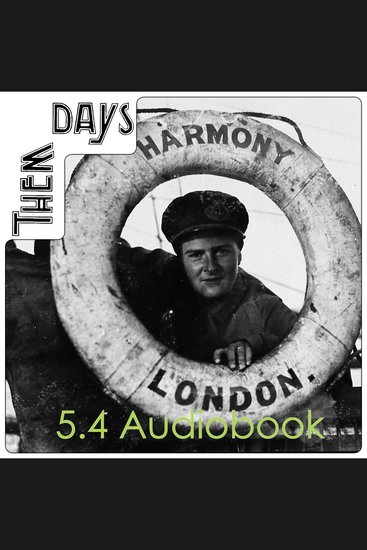
    Enjoy stories about knits, nets, ropes, spooky stories northern Labrador and more in this edition of Them Days magazine, recorded for a modern audiobook audience.
    Voir livre
  • The British Constitution - A Very Short Introduction Second Edition - cover

    The British Constitution - A...

    Martin Loughlin

    • 0
    • 0
    • 0
    The British constitution is regarded as unique among the constitutions of the world. What are the main characteristics of Britain's peculiar constitutional arrangements? How has the British constitution altered in response to the changing nature of its state—from England, to Britain, to the United Kingdom? What impact has the UK's developing relations with the European Union caused? 


    These are some of the questions that Martin Loughlin addresses in this Very Short Introduction. As a constitution, it is one that has grown organically in response to changes in the economic, political, and social environment, and which is not contained in a single authoritative text. By considering the nature and authority of the current British constitution, and placing it in the context of others, Loughlin considers how the traditional idea of a constitution came to be retained, what problems have been generated as a result of adapting a traditional approach in a modern political world, looking at what the future prospects for the British constitution are. 


    In this new edition of the Very Short Introduction, Loughlin includes a discussion of the impact of developments over the decade since its first publication, examining Brexit, the Scottish independence referendum of 2014, and the settlement in Northern Ireland.
    Voir livre