Rejoignez-nous pour un voyage dans le monde des livres!
Ajouter ce livre à l'électronique
Grey
Ecrivez un nouveau commentaire Default profile 50px
Grey
Abonnez-vous pour lire le livre complet ou lisez les premières pages gratuitement!
All characters reduced
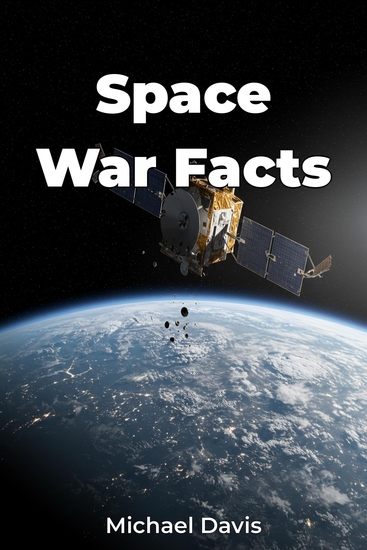
Space War Facts - cover

Space War Facts

Michael Davies

Traducteur A AI

Maison d'édition: Publifye

  • 0
  • 0
  • 0

Synopsis

Space War Facts investigates the escalating potential for conflict in space, an arena increasingly vital to modern military strategy and global security. The book explores the history, technology, and future possibilities of space warfare, emphasizing how our dependence on space assets makes them vulnerable targets. Readers gain insights into the weaponization of space and the strategic significance of achieving space dominance, examining how control in space can influence terrestrial conflicts. 

 
The narrative traces the evolution of military thought on space, from Cold War competition to contemporary doctrines, highlighting the development of anti-satellite weapons and the gradual militarization of space. It examines the technology driving satellite warfare, including kinetic and directed-energy weapons, along with cyber warfare techniques. 

 
Space War Facts uniquely combines technological analysis with geopolitical considerations, offering a comprehensive perspective on the challenges and opportunities in this emerging domain. The book begins by defining key concepts and the strategic importance of space assets, dissecting the technology of satellite warfare and culminating by addressing future challenges, such as AI weaponization. 

 
Using government reports and expert analyses, it provides a clear, unbiased account of the issues, appealing to policymakers, military professionals, academics, and anyone interested in the nexus of technology, military history, and global security.
Disponible depuis: 20/02/2025.
Longueur d'impression: 73 pages.
D'autres livres qui pourraient vous intéresser

  • Alternative Dimensions & the Otherworld - cover

    Alternative Dimensions & the...

    Martin K. Ettington

    • 0
    • 0
    • 0
    In this book the theory of multiverses, ancient cultures which came from other dimensions, dimensional shifting testimonies, and a lot more are included for your review and discussion.The Multiverse was proposed long ago by the ancient Greeks. In modern times this subject has become very active among physicists. There is also some real modern evidence that the Multiverse exists.My curiosity about alternative dimensions is the result of research for my first book on ancient Ireland which recorded that the Tutha Da Dannan (forebears of the Elves and Druids) who came from “The Otherworld”.I have also collected many testimonies and stories about people who experienced dimensional shifts which appear in this book too.It is also possible that many reports of Bigfoot, Thunderbirds, Dragons, and more all also tied up in the potential reality of the Multiverse.After reading this book you may become convinced that the multiverse really exists and this would explain many of the strange events in our lives. The world we live in is a much stranger place than most of us would believe.
    Voir livre
  • Ugh! As If! - Clueless - cover

    Ugh! As If! - Clueless

    Veronica Litt

    • 0
    • 0
    • 0
    A sweet and sly exploration of the Jane Austen–inspired teen movie and its evergreen imperative to be kind, do better, and find the activist within
    		 
    We are totally butt-crazy in love with Clueless. Since the movie’s premiere in 1995, pop culture has mined Amy Heckerling’s high school comedy for inspiration, from Iggy Azalea and Charli XCX’s “Fancy” music video to Cher’s iconic yellow plaid suit appearing at every Halloween party.
    		 
    In Ugh As If!, Veronica Litt argues that this seemingly fluffy teen romp is the quintessential thinking woman’s movie, one in which the audience is asked to seriously consider the beauty and power of naïveté. Cher Horowitz’s gradual pivot from oblivious it girl to burgeoning activist is a powerful reminder that even the most unlikely people can change for the better and contribute to their communities. In this bright, shiny film, pursuing a more just society isn’t just possible — it’s enjoyable. This fun, feminine, feel-good movie is a counter-narrative to nihilism, a refusal to give into cynicism, hopelessness, and passivity. Almost without viewers noticing, Clueless teaches Cher, and us, how to become better. Like the film it examines, Ugh As If! nudges even the most jaded viewer into feeling hopeful about the future.
    		 
    About the Pop Classics Series
    		 
    Short books that pack a big punch, Pop Classics offer intelligent, fun, and accessible arguments about why a particular pop phenomenon matters.
    Voir livre
  • TV Lobotomy The Scientific Truth About the Effects of Television - cover

    TV Lobotomy The Scientific Truth...

    Michel Desmurget

    • 0
    • 0
    • 0
    "TV unleashes the imagination and feeds intelligence." • "A child deprived of TV risks social isolation." • "TV dumbs you down." • "TV makes you obese." It seems that everything—and its opposite—has already been said about TV. But what is it really? How can we distinguish between the radical "No TV" of some and the supposedly entertaining virtues touted by others? Michel Desmurget, a doctor in neuroscience, has sifted through and synthesized thousands of research articles published over the last fifty years in the most rigorous international journals. The conclusion is unequivocal—we must stop watching television for good, whatever the program. All content, even that meant to teach, can never come close to any other learning method. The data is clear—television viewing is detrimental to school performance. For a child in elementary school, for example, every hour spent daily watching television increases the likelihood that he or she will one day leave the school system without any qualifications. For specialists, there is no doubt that television has a negative influence, not only on intellectual development but also on behavior. Thus, certain eating disorders (anorexia, bulimia) are related to a frantic consumption of—television programs! In short, watching television has an impact on our life expectancy. However, the harmful impact of this risk is largely underestimated, because of the large sector of the public exposed to television (more than 85% of Western households have at least one television set), and because of a debate on the subject that has become inaudible and confused. Moreover, the results of the research initiated by the big media groups on the subject remain "proprietary," i.e., closed to the general public. Believing that we is facing a real public health problem, Michel Desmurget wants to act as a responsible scientist—with a clear, concise and rigorously referenced book, the message cannot go unnoticed. Michel Desmurget is a doctor of neuropsychology. He attended several major American universities (MIT, Emory, UCSF) and is now a research director at INSERM in cognitive neuroscience. He is particularly interested in the problems of brain organization and plasticity. He is the author of the book TV Lobotomy (Max Milo, 2022), which is based in part on his personal history. Exasperated by having to constantly justify the choice not to have television at home—and to prevent his children from having access to it—and not to be seen as a sociopath in the eyes of those around him, he has done a massive job to argue his point. 
    This audiobook is read by a synthesized voice.
    Voir livre
  • Uniquely Human - Raising Leaders and Creators in an AI World - cover

    Uniquely Human - Raising Leaders...

    Aubrey Schmalle

    • 0
    • 0
    • 0
    In Uniquely Human: Raising Leaders and Creators in an AI World, occupational therapist and parenting expert Aubrey Schmalle delivers a transformative roadmap for raising empowered kids in a world increasingly shaped by screens, algorithms, and artificial intelligence. With warmth, clarity, and over 20 years of professional experience, Aubrey blends neuroscience, sensory integration, and real-world family dynamics into a guide that feels like both a deep breath and a call to action. 
    Inside you’ll discover: 
    How technology is impacting your child’s brain and what to do about it 
    The Five Pillars that cultivate emotional intelligence, curiosity, and creativity 
    Strategies for developing your own Family Playbook, tailored to your unique values and goals 
    Simple, science-backed tools to help your kids build real-life confidence, leadership, and adaptability 
    Perfect for parents, educators, therapists, and caregivers, this book will help you raise children who are not only prepared for the future—but bold enough to shape it.
    Voir livre
  • Tocharians The: The Enigmatic History of the Ancient Ethnic Groups in East Asia - cover

    Tocharians The: The Enigmatic...

    Editors Charles River

    • 0
    • 0
    • 0
    Located in the Tarim Basin of Asia during the first few centuries CE, a people and a kingdom grew to prominence in medieval central and east Asian geopolitics. The people are known today as the Tocharians, and their primary kingdom was Kucha, but despite their longevity, this incredible kingdom and its people have been overlooked and misunderstood by modern societies and historians for centuries. The lack of in-depth studies on the Tocharians largely stems from the fact that they are relatively newcomers to the modern academic scene - it was only in the late 19th century that historians identified them as a distinct ethnic group, and even today, philologists, historians, and archaeologists still have much to uncover about these enigmatic people and their kingdom. A potential early misidentification caused much of this confusion, yet scholars were also left wondering how the Tocharians came to occupy the Tarim Basin, which was perhaps based on the biases of 19th century historians. What has been uncovered so far is truly fascinating and important in the larger picture of Asian and Indo-European history. 
    When scholars first discovered the Tocharians in the late 19th century, they were amazed that Caucasian people who spoke an Indo-European language flourished so far away from the Indo-European homeland and other Indo-European peoples. Scholars immediately developed several theories to explain this apparent anomaly: some were quite logical and formed the basis for current models, while others were quickly and rightfully forgotten. An examination of the textual, archaeological, and art history sources reveals that the Tocharians played a major impact in the affairs of East and Central Asia, indirectly through their predecessors and their descendants, but also directly through trade, diplomacy, and most of all, religion. 
    Voir livre
  • Oceans of Grain - How American Wheat Remade the World - cover

    Oceans of Grain - How American...

    Scott Reynolds Nelson

    • 0
    • 0
    • 0
    An "incredibly timely" global history journeys from the Ukrainian steppe to the American prairie to show how grain built and toppled the world's largest empires (Financial Times). To understand the rise and fall of empires, we must follow the paths traveled by grain—along rivers, between ports, and across seas. In Oceans of Grain, historian Scott Reynolds Nelson reveals how the struggle to dominate these routes transformed the balance of world power. Early in the nineteenth century, imperial Russia fed much of Europe through the booming port of Odessa, on the Black Sea in Ukraine. But following the US Civil War, tons of American wheat began to flood across the Atlantic, and food prices plummeted. This cheap foreign grain spurred the rise of Germany and Italy, the decline of the Habsburgs and the Ottomans, and the European scramble for empire. It was a crucial factor in the outbreak of the First World War and the Russian Revolution. A powerful new interpretation, Oceans of Grain shows that amid the great powers’ rivalries, there was no greater power than control of grain.“American cotton changed the world in the first half of the nineteenth century, American wheat in its second half. Scott Reynolds Nelson’s globe-spanning exploration of the powers of a humble grain to topple empires, enable industrialization, build cities, and redirect trade flows is the kind of commodity history one wishes for: attentive to politics, connected as well as comparative in perspective, and with a knack for telling details. After reading this fast-paced book, the wars, revolutions, and empires of the nineteenth century will never seem the same.”―Sven Beckert, author of Empire of Cotton
    Voir livre