Begleiten Sie uns auf eine literarische Weltreise!
Buch zum Bücherregal hinzufügen
Grey
Einen neuen Kommentar schreiben Default profile 50px
Grey
Jetzt das ganze Buch im Abo oder die ersten Seiten gratis lesen!
All characters reduced
Sacred Land Rights - cover

Sacred Land Rights

Michael Davies

Übersetzer A AI

Verlag: Publifye

  • 0
  • 0
  • 0

Beschreibung

Sacred Land Rights explores the complex history of indigenous land rights, examining how legal systems have both dispossessed and, at times, protected indigenous communities. It delves into the historical dispossession of indigenous lands through legal doctrines, the emergence of indigenous rights movements, and the impacts of landmark legal decisions. Understanding these battles is crucial for comprehending contemporary issues of social justice and environmental conservation. The book reveals how legal systems, often used as instruments of oppression, can also be strategically employed by indigenous communities to reclaim their ancestral lands. For instance, the concept of terra nullius was historically used to justify the seizure of indigenous territories. However, indigenous groups have utilized legal strategies to assert land claims and protect their cultural heritage. Through case studies spanning North America, Australia, and Latin America, the book illustrates the diverse legal strategies employed and their varying degrees of success.

 
Beginning with the historical context of indigenous land dispossession, Sacred Land Rights transitions into detailed case studies, culminating in an analysis of broader implications for international law, environmental policy, and indigenous self-determination. By drawing from legal documents, court records, and firsthand accounts, the book provides a nuanced perspective on the human impact of these legal struggles, making it valuable for anyone interested in history, politics, and indigenous rights movements.
Verfügbar seit: 27.02.2025.
Drucklänge: 69 Seiten.
Weitere Bücher, die Sie mögen werden

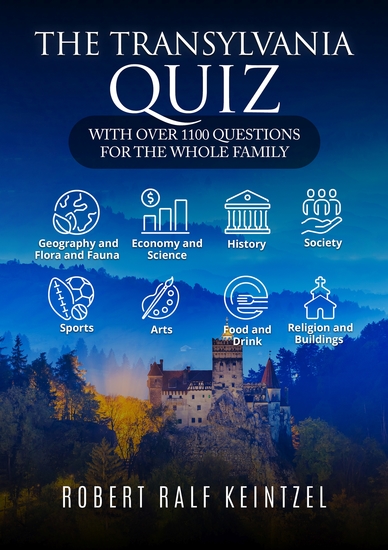
  • The Transylvania Quiz - With over 1100 questions for the whole family - cover

    The Transylvania Quiz - With...

    Robert Ralf Keintzel

    • 0
    • 0
    • 0
    The Transylvania Quiz lets you immerse yourself in a history that is little known and even less told. The quiz contributes to international understanding between Germans, Hungarians and Romanians and gives insight into the different perspectives on Transylvania in a playful way.
    Despite its rich history, culture, landscape and personalities, Transylvania is often associated with Dracula, the film Hotel Transylvania, which takes place in Dracula's castle, or vampires. However, Transylvania is so much more.
    Transylvania has a unique culture and history. The land of Transylvania is a melting pot of many peoples and has produced great personalities such as musicians, poets, scientists as well as Olympic champions. However, it is not only rich in culture, history and personalities, but also in a picturesque landscape, which is home to a great treasure of raw materials.
    Learn more about the history, culture, language, coexistence of Germans, Hungarians, Szekler and Romanians, the geography, economy, political situation and generally about the current situation in Transylvania in the Transylvania Quiz. The quiz highlights the living situation of the Transylvanian Saxons, Szekler, Hungarians and Romanians in Transylvania. However, the quiz does not only exemplarily illustrate the life situation of the population groups in Transylvania, but also of the Transylvanian Saxons, Hungarians, Romanians and Szekler outside of Transylvania. For example, the player learns about the Transylvanian Saxons in Germany, Switzerland, Austria, Canada or the USA.
    Transylvania has a lot to offer and the Transylvanian quiz awaits you with many questions. History is more than just the past, it explains the present and gives us ideas for the future.
    The quiz game is a game for young and old. It can be guessed and puzzled with the whole family and friends. But Transylvania Quiz as a tool can also be used by teachers to accompany and complement lessons.
    Zum Buch
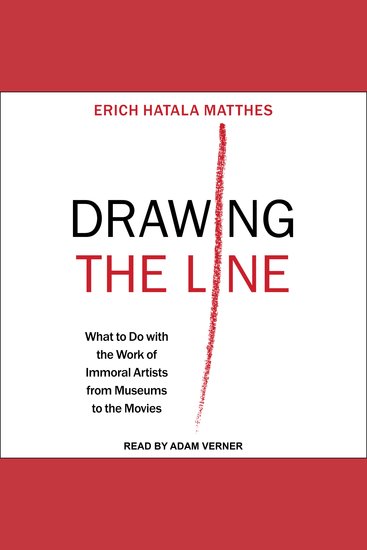
  • Drawing the Line - What to Do with the Work of Immoral Artists from Museums to the Movies - cover

    Drawing the Line - What to Do...

    Erich Hatala Matthes

    • 0
    • 0
    • 0
    Recent years have proven rife with revelations about the misdeeds, objectional views, and, in some instances, crimes of popular artists. Given more access than ever thanks to social media and the internet in general, the public has turned an alert and critical eye upon the once-hidden lives of previously cherished entertainers. But what should we members of the public do, think, and feel in response to these artists' actions or statements? It's a predicament that many of us face: whether it's possible to disentangle the deeply unsettled feelings we have toward an artist from how we respond to the art they produced. As consumers of art, and especially as fans, we have a host of tricky moral question to navigate: do the moral lives of artists affect the aesthetic quality of their work? Is it morally permissible for us to engage with or enjoy that work? Can we separate an artist from their art? 


    In Drawing the Line, Erich Hatala Matthes offers insight and clarity to the ethical questions that dog us. He argues that it doesn't matter whether we can separate the art from the artist, because we shouldn't. Matthes argues both that the lives of artists can play an important role in shaping our moral and aesthetic relationship to the artworks that we love and that these same artworks offer us powerful resources for grappling with the immorality of their creators.
    Zum Buch
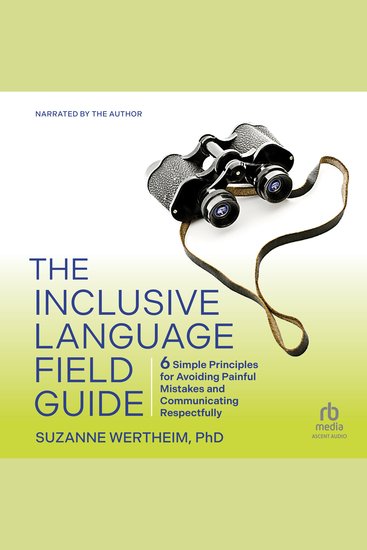
  • The Inclusive Language Field Guide - 6 Simple Principles for Avoiding Painful Mistakes and Communicating Respectfully - cover

    The Inclusive Language Field...

    Suzanne Wertheim

    • 0
    • 0
    • 0
    Avoid inadvertently offending or alienating anyone by following six straightforward communication guidelines developed by a no-nonsense linguistic anthropologist and business consultant. 
     
    In today's fast-moving and combative culture, language can feel like a minefield. Terms around gender, disability, race, sexuality and more are constantly evolving. Words that used to be acceptable can now get you "cancelled." People are afraid of making embarrassing mistakes. Or sounding outdated or out of touch. Or not being as respectful as they intended. 
      
    But it's not as complicated as it might seem. Linguistic anthropologist Suzanne Wertheim offers six easy-to-understand principles to guide any communication-written or spoken-with anyone: 
      
    - Reflect reality 
    - Show respect 
    - Draw people in 
    - Incorporate other perspectives 
    - Prevent erasure 
    - Recognize pain points 
      
    This guide clarifies the challenges-and the solutions-to using "they/them," and demonstrates why "you guys" isn't as inclusive as many people think. If you follow the principles, you'll know not to ask a female coworker with a wedding ring about her husband-because she might be married to a woman. And you'll avoid writing things like "America was discovered in 1492," because that's just when Europeans found it. 
     
    Filled with real-world examples, high-impact word substitutions, and exercises that boost new skills, this book builds a foundational toolkit so people can evaluate what is and isn't inclusive language on their own.
    Zum Buch
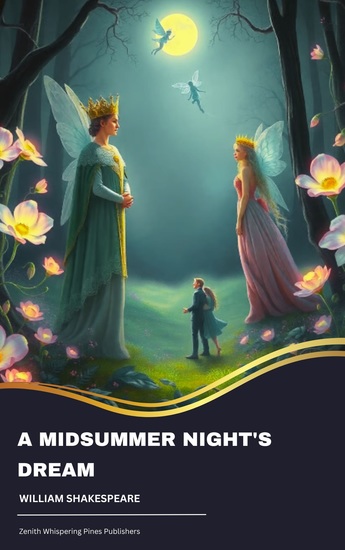
  • A Midsummer Night's Dream - cover

    A Midsummer Night's Dream

    William Shakespeare

    • 0
    • 0
    • 0
    "The course of true love never did run smooth."
    
    Step into a moonlit forest where the lines between reality and illusion blur. William Shakespeare's A Midsummer Night's Dream is a dazzling celebration of love, magic, and the hilarious unpredictability of the human heart. When four young lovers flee the rigid laws of Athens for an enchanted wood, they unwittingly stumble into a civil war between the King and Queen of the Fairies.
    
    With the mischievous Puck pulling the strings and a magical flower juice causing havoc, the lovers find themselves in a tangled web of mistaken identities and sudden passions. Meanwhile, a group of bumbling amateur actors, led by the unforgettable Nick Bottom, prepares a play for the Duke's wedding—only to have Bottom transformed into a donkey by the playful sprites.
    
    This definitive edition captures the lyrical beauty and slapstick humor that has made this play a favorite for over four centuries. From the ethereal beauty of the fairy kingdom to the high-stakes drama of the Athenian court, A Midsummer Night's Dream remains the ultimate exploration of the madness of love.
    
    Lose yourself in the magic. Buy "A Midsummer Night's Dream" today and experience the world's greatest comedy.
    Zum Buch
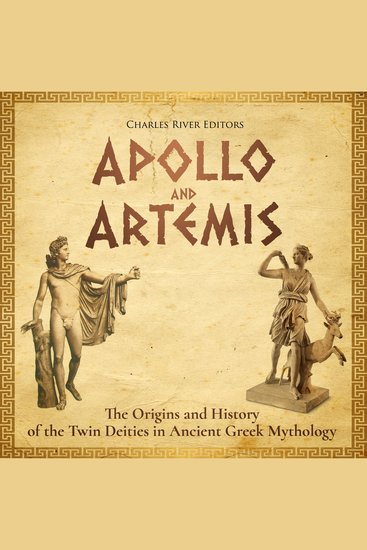
  • Apollo and Artemis: The Origins and History of the Twin Deities in Ancient Greek Mythology - cover

    Apollo and Artemis: The Origins...

    Editors Charles River

    • 0
    • 0
    • 0
    “Apollo’s history is a confusing one,” said the renowned poet and mythologist Robert Graves. This notion is also illustrated in the above quote from the 6th century BCE Homeric Hymn to Apollo, which gives the reader a brief glimpse into the confusion surrounding Apollo’s multi-faceted nature. The quote comes from the end of an episode in which Apollo is traversing the known world, looking for a place to build a temple to himself. Once he lands upon a place of his liking, however, he realizes that he needs to populate it with priests who would ‘guard’ and care for its ceremonies. Rather than depend upon those ‘glorious tribes’ to supply his temple with sycophants, Apollo has no patience for chance, and flies down to a Cretan merchant ship, landing on it in the form of a timber-shaking dolphin. After terrifying the merchants, he tells them that their lives in the sea trade are over, and they are to be priests at his temple from then on. Cautioning the merchants to eschew piracy and ‘keep righteousness’ in their hearts, while simultaneously confronting and sequestering them captures the youthful god’s capricious character quite well. 
    Artemis had one of the most widespread cults in the Greek world, perhaps due to her connection to nature, which can be a ubiquitous antagonist or boon-giver. Her association with nature may also explain why she was one of the oldest deities in the Greek pantheon, although her appearance in the Mycenaean Linear B script is still contested. Etymology often gives modern readers a better idea of the earliest form of a deity, but Artemis's is confusing. She is often associated with mythic qualities (such as "maidenhood" and "purity") and even non-Greek origins. The latter is as unsurprising as the former, since Artemis had a large following throughout Greece and across Asia Minor, where her most famous temple, one of the Seven Wonders of the World, resided. It was in the Near East where Artemis represented wilder characteristics.
    Zum Buch
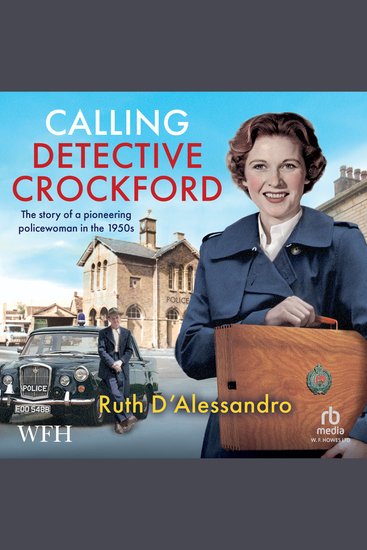
  • Calling Detective Crockford - cover

    Calling Detective Crockford

    Ruth D'Alessandro

    • 0
    • 0
    • 0
    This nostalgic and absorbing memoir tells the story of a real-life female police detective in post-war Britain, as she navigates a man's world. 
     
    It's 1956, and the Berkshire Constabulary has never had a woman detective before. That is, until bright and ambitious WPC Gwen Crockford passes out of Hendon Detective Training School with flying colours... 
     
    After five years serving as one of Britain's first policewomen, Gwen Crockford becomes one of its first female detectives. Swapping crime prevention for detection, she must soon become comfortable with attending murder scenes and post-mortems, investigating sex crimes and going undercover. Her police work is diverse and challenging: dealing with Teddy boy violence, arson, a paedophile 'war hero', and solving an unexplained death are all part of her remit. 
     
    Gwen is sharp and quick to learn, considered 'one of the boys' by her colleagues, DS Kinch and DS Le Mercier. Until, that is, the traumatizing death of a child, the arrival of a new sexist DS, and near-zero opportunity for promotion force Gwen to reevaluate her career. 
     
    Written and researched by Gwen's daughter Ruth from family papers, remembered stories from her mother and contemporary newspapers, this is a fascinating insight into late-1950s society and the challenges faced by female police officers. 
     
    This is the second book in the Crockford series, following Calling WPC Crockford – Gwen's time as a pioneering uniform policewoman in the early 1950s.
    Zum Buch