Begleiten Sie uns auf eine literarische Weltreise!
Buch zum Bücherregal hinzufügen
Grey
Einen neuen Kommentar schreiben Default profile 50px
Grey
Jetzt das ganze Buch im Abo oder die ersten Seiten gratis lesen!
All characters reduced
Revolutionary Symbols - cover

Revolutionary Symbols

Michael Davies

Übersetzer A AI

Verlag: Publifye

  • 0
  • 0
  • 0

Beschreibung

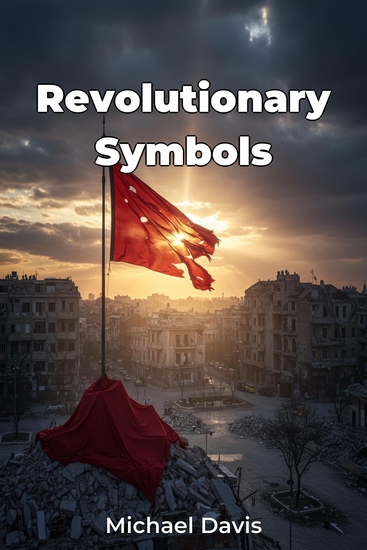
Revolutionary Symbols explores the powerful role of visual and cultural language in shaping political revolutions and social movements throughout history. It examines how seemingly simple images and phrases become potent tools that ignite movements, reshape nations, and redefine ideologies. The book delves into the origins, evolution, and impact of flags, slogans, and cultural symbols, offering insights into the dynamics of power, collective identity, and social change.For example, the hammer and sickle came to represent the Russian Revolution, and national flags became rallying points in anti-colonial struggles. The book uniquely focuses on the agency of symbols, demonstrating how they actively shape political consciousness and mobilize collective action rather than merely reflecting underlying ideologies. It analyzes the semiotics and historical context of these symbols to reveal their power to galvanize support and legitimize new regimes.Starting with core concepts of symbolism and propaganda, the book progresses through case studies of specific revolutions, culminating in a discussion of the enduring legacy of revolutionary symbols and their reinterpretations in subsequent political movements. This approach provides a comprehensive understanding of the strategic use of symbols in shaping narratives, public opinion, and collective action.
Verfügbar seit: 29.03.2025.
Drucklänge: 53 Seiten.

Weitere Bücher, die Sie mögen werden

  • The Antonine Wall - cover

    The Antonine Wall

    David J. Breeze

    • 0
    • 0
    • 0
    As the most advanced frontier construction of its time, and as definitive evidence of the Romans' time in Scotland, the Antonine Wall is an invaluable and fascinating part of this country's varied and violent history. For a generation, from about AD 140 to 160, the Antonine Wall was the north-west frontier of the Roman Empire. Constructed by the Roman army, it ran from modern Bo'ness on the Forth to Old Kilpatrick on the Clyde and consisted of a turf rampart fronted by a wide and deep ditch.
    At regular intervals were forts connected by a road, while outside the fort gates clustered civil settlements. Antoninus Pius, whom the wall was named after, reigned longer than any other emperor with the exception of its founder Augustus. Yet relatively little is known about him.
    In this meticulously researched book, David Breeze examines this enigmatic life and the reasons for the construction and abandonment of his Wall.
    Zum Buch
  • Elections - A Very Short Introduction - cover

    Elections - A Very Short...

    L. Sandy Maisel, Jennifer A. Yoder

    • 0
    • 0
    • 0
    Elections occur in all democracies and many nondemocratic regimes as well. They determine who will hold public office and who will have the power to govern. They connect citizens to those whom they choose to make decisions on their behalf and who regulate their behavior. This book looks comparatively at the key aspects of elections. In addition to describing types of electoral systems, it discusses the implications of the various systems for the administration of elections, voter participation, representation, government stability, and other factors. Where appropriate, it examines efforts to reform a nation's (or a sub-national entity's) system, exploring the impetus for reform and the effects of those reforms when implemented. 


    L. Sandy Maisel and Jennifer A. Yoder lay out the variety of electoral systems in the broadest terms—single-member district plurality systems; proportional systems; and mixed systems. They discuss voting and the various electoral institutions used to implement the ways in which voting occurs and how votes are tabulated across electoral systems. They analyze the consequences of each system, first for the functioning of the democracy, and second for the electoral strategies politicians employ, closing with a discussion of reforms under consideration in a number of countries.
    Zum Buch
  • The Old Lore of the Moon - Lunar Folklore & Folk Wisdom - cover

    The Old Lore of the Moon - Lunar...

    Timothy Harley

    • 0
    • 0
    • 0
    Explore the Magic of the Moon Once upon a time, minister, lecturer, and astronomer Rev. Timothy Harley published Moon Lore, a culmination of his understanding of the moon and its many myths. Now lovingly updated and reproduced for a modern audience, this book is the perfect reference for everything about lunar folklore. Contained within are different concepts about the moon that span time, religion, and nationality, covering many different interpretations of the moon’s entities and inhabitants. A charming addition to any library, The Old Lore of the Moon stands out among older books as a highly readable, informative, and entertaining entry.
    Zum Buch
  • The Deep State - A History of Secret Agendas and Shadow Governments - cover

    The Deep State - A History of...

    Ian Fitzgerald

    • 0
    • 0
    • 0
    Beneath the outward appearance of legitimate government and accountable officials there lurk hidden agendas, shadowy personalities and special interest groups seeking to seize control of the nation for their own ends. These 'states within a state', unfettered by legal norms and unworried by public opinion, are known as 'deep states'. 
     
    In this fascinating account, Ian Fitzgerald examines what a deep state really is and how they have emerged in various places across the world and throughout history. Ranging from the police state of East Germany in the 1950s to the narco states of Latin America in the 1970s to the institutional corruption of 21st century Nigeria, he explores the many ways people have sought to seize the apparatus of power for themselves while remaining out of sight. 
     
    Now the subject of modern conspiracy theories the world over as a worrying trend toward unelected power emerges, this book is more timely than ever, and helps separate fact from fiction.
    Zum Buch
  • Thai History - Facts and Background of the Siamese and the Khmer Empire (2 in 1) - cover

    Thai History - Facts and...

    Kelly Mass

    • 0
    • 0
    • 0
    Learn more about the history of those countries. The topics addressed will be the following: 
    The Khmer Empire--Historians describe Cambodia as the Khmer State or the Angkorian Empire (Khmer:) from the 9th century to the 15th century, when it was a Hindu/Buddhist empire in Southeast Asia. The empire, which developed from the old societies of Funan and Chenla, governed and/or "vassalized" the majority of mainland Southeast Asia and parts of Southern China, covering from the suggestion of the Indochinese Peninsula northward to modern-day Yunnan province in China, and from Vietnam westward to Myanmar. The Khmer Empire was greater at its peak than the Byzantine Empire (Eastern Roman Empire) that existed at the exact same period. 
    The Siamese-- Siam was just a much different name for what's now referred to as Thailand. The Siamese are the people who live there, though they're never ever called as such any longer. 
    Thailand is a fascinating country, with its own culinary arts, culture, history, royalty, infrastructure, and influence on the world. To learn more about these “Thai” people before they were called Thai, when they were Siamese, is to learn about those people’s roots.
    Zum Buch
  • The Self-Led Educator - An IFS-Inspired Guide to Create Calm Compassionate and Confident Learning Communities - cover

    The Self-Led Educator - An...

    LMFT Joanna Curry-Sartori

    • 0
    • 0
    • 0
    You chose to be an educator because you felt a sense of purpose, a wish to serve—it's not just a profession. 
     
    Teaching is a role that demands emotional presence, relational skill, and boundless energy. If you're feeling burned out, overwhelmed, and more disconnected from your purpose, then chances are your students are feeling that way too. In The Self-Led Educator, Joanna Curry-Sartori is leading the movement to help teachers and school leaders use the transformative tools of Internal Family Systems (IFS) to reclaim their love of teaching, work compassionately with their own "parts" to better serve students, and build a resilient and connected community. 
     
    Becoming self-led means that your thoughts, emotions, and actions will be guided by the core self, rather than your reactive impulses, self-protective tendencies, or desire to people-please. Curry-Sartori will help you identify the root causes of collective stress, student disengagement, and interpersonal conflict at school, while also providing proven tools to prioritize your own mental health and emotional well-being. Let this powerful book be your guide to becoming a more calm, clear, compassionate, creative, curious, and connected educator. You can lead your school community toward excellence . . . starting with yourself.
    Zum Buch