Rejoignez-nous pour un voyage dans le monde des livres!
Ajouter ce livre à l'électronique
Grey
Ecrivez un nouveau commentaire Default profile 50px
Grey
Abonnez-vous pour lire le livre complet ou lisez les premières pages gratuitement!
All characters reduced
Quick Survival Hacks - cover

Quick Survival Hacks

Michael Davies

Traducteur A AI

Maison d'édition: Publifye

  • 0
  • 0
  • 0

Synopsis

Quick Survival Hacks provides a comprehensive guide to using everyday items in emergency situations, drawing from military survival techniques and historical accounts of resourcefulness. It emphasizes that survival isn't just about specialized gear, but about creatively repurposing ordinary objects. For example, the book details how a soda can can be transformed into a signaling device, highlighting the ingenuity needed when conventional resources are scarce. 

 
The book focuses on resourcefulness, improvisation, and adaptation, teaching readers to identify potential survival tools in their surroundings and modify them for essential functions. Exploring the art of improvisation, it demonstrates turning overlooked objects into lifesavers, a practice refined over centuries in military history. 

 
Quick Survival Hacks progresses from establishing a survival mindset and assessing available resources to building emergency shelters, mastering fire-starting techniques, and creating signaling devices. Ultimately, this book offers a unique perspective by emphasizing accessible survival skills. It provides practical, step-by-step instructions, supported by diagrams and case studies, to foster self-reliance in outdoor survival scenarios and emergency preparedness.
Disponible depuis: 19/02/2025.
Longueur d'impression: 100 pages.
D'autres livres qui pourraient vous intéresser

  • How to Analyze People - Master The Process And Tools Of Speed Reading And Analyzing People - cover

    How to Analyze People - Master...

    Kevin Hallstone

    • 0
    • 0
    • 0
    All of us judge people when we see them, and even if we aren't consciously aware of the conclusions that we make about people, we still do make them, as that determines our actions towards people. Reading people is a human habit and one that we cannot get rid of. We read people because we are threatened by new people that we meet, we want to determine if this person is someone that we can trust or not and a lot of times we end up making the wrong decisions. 
    The purpose of this book is to make this inexact science of judging people a little more exact. By giving you some standards based on which you can judge people, you will become consciously aware of how people function, and more importantly, you'll have a guideline according to which you can read body language. It'll also help you to be sure about the conclusions you come to because a lot of times, our intuition tells us that something is wrong with a person, but we just shut it off because we are too scared of coming off as judgmental. 
    Analyzing people is not only good for protecting yourself but also helps you to communicate better with your loved ones. You can notice small things once you start looking at people, and you will know how to manufacture a situation where everyone can feel comfortable. Being able to read body language also gives you a sense of control since you have information about people that you can use to judge their intentions, control their behavior, and even your behavior. 
    In this book, we're going to take a look at how the process of analyzing people works, why self-awareness is important and the role it plays in analyzing others, the basics of nonverbal and verbal communication, some intricacies of human psychology and lastly, the practical applications that you can derive out of all this knowledge.
    Voir livre
  • Once Upon a Place - Forests Caverns & Other Places of Transformation in Myths Fairy Tales & Film - cover

    Once Upon a Place - Forests...

    Holly Bellebuono, Jack Zipes

    • 0
    • 0
    • 0
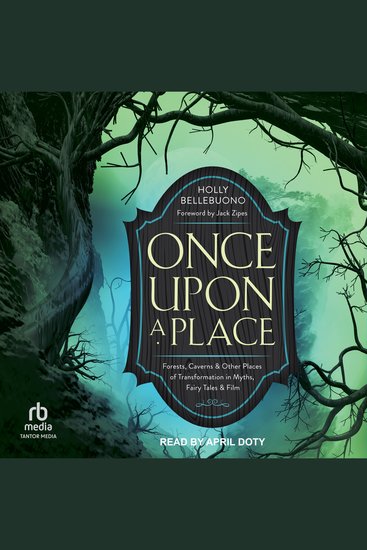
    Once Upon a Place explores narratives from modern film, famous fairy tales, and ancient mythology to define the five core locations that shape every story: the Cavern, the Deep, the Vessel, the Forest, and the Labyrinth. 


    Popularized by Joseph Campbell, the hero's journey features narrative stages along which a person matures and transforms. But where heroes transform is just as important as what they do to get there. Holly Bellebuono shows you how the location of each hero's journey step is intimately tied to the challenges faced, setting the tone for the entire adventure. 


    To illustrate each location, Bellebuono shares fifteen original adaptations—such as the tales of Persephone, Gilgamesh, Cerridwen, and Alice—to explore how the "sense of place" drives the adventure and outcome. From Innana's descent into the Cavern to Snow White entering the Forest, this book offers powerful wisdom about personal growth, life's purpose, and the origins of creativity.
    Voir livre
  • Transform Your Relationships: Unmasking Manipulative Strategies for Deeper Connections - "Elevate your connections! Unlock insightful audio lessons to navigate manipulation and build deeper relationships today!" - cover

    Transform Your Relationships:...

    Harlan Vexley

    • 0
    • 0
    • 0
    Transform Your Relationships: Unmasking Manipulative Strategies for Deeper Connections   
    ⭐⭐ Simplified Guide & Explanations Included ⭐⭐ 
    Are you ready to enhance your personal relationships and break free from manipulative behaviors? 
    Searching for a thoroughly curated guide that equips you with the tools needed to empower yourself against manipulation in personal relationships? 
    Your quest ends here! 
    This audiobook serves as your ultimate companion for gaining a profound understanding of manipulative dynamics, applying effective skills, and engaging in practical exercises. With this resource, you're poised for success. 
    Updated to reflect contemporary insights and strategies. 
    Key Features of This Enhanced Guide: 
    - In-depth knowledge about unmasking manipulative strategies in personal relationships. 
    - Comprehensive explanations of the psychological tactics often employed in personal interactions. 
    - Effective strategies for recognizing manipulation and fostering genuine connections. 
    Our guide sets itself apart through extensive coverage, essential for achieving clarity and mastery in your relationships. Concepts are not just touched upon; they are explored in detail with accuracy. 
    Crafted with a clear outline and accessible language, our audiobook ensures effortless navigation between topics. Say goodbye to confusing terminology and embrace clear, precise, and technically sound content. 
    Why hesitate? Click the BUY NOW button, secure your audiobook, and embark on your journey to transforming your relationships today!
    Voir livre
  • A Letter Concerning Toleration - cover

    A Letter Concerning Toleration

    John Locke

    • 0
    • 0
    • 0
    Letter Concerning Toleration by John Locke was originally published in 1689. Its initial publication was in Latin, though it was immediately translated into other languages. In this "letter" addressed to an anonymous "Honored Sir" (actually Locke's close friend Philip von Limborch, who published it without Locke's knowledge) Locke argues for a new understanding of the relationship between religion and government. One of the founders of Empiricism, Locke develops a philosophy that is contrary to the one expressed by Thomas Hobbes in Leviathan, primarily because it supports toleration for various Christian denominations. Locke's work appeared amidst a fear that Catholicism might be taking over England, and responds to the problem of religion and government by proposing toleration as the answer. Unlike Hobbes, who saw uniformity of religion as the key to a well-functioning civil society, Locke argues that more religious groups actually prevent civil unrest. Locke argues that civil unrest results from confrontations caused by any magistrate's attempt to prevent different religions from being practiced, rather than tolerating their proliferation. Locke's primary goal is to "distinguish exactly the business of civil government from that of religion." He makes use of extensive argument from analogy to accomplish his goal, and relies on several key points. The thing that he wants to persuade the reader of is that government is instituted to promote external interests, relating to life, liberty, and the general welfare, while the church exists to promote internal interests, i.e., salvation. The two serve separate functions, and so, must be considered to be separate institutions. (Summary from Wikipedia)
    Voir livre
  • Göbekli Tepe: The History and Mystery of One of the World’s Oldest Neolithic Sites - cover

    Göbekli Tepe: The History and...

    Editors Charles River

    • 0
    • 0
    • 0
    The Neolithic period came before the Bronze Age and is generally regarded as the final subdivision of the Stone Age. During this time, communities domesticated plants and certain animals but still relied on hunting and gathering to a considerable extent, and beginning sometime around 7000 BCE, handmade pottery was developed, along with more advanced stone axes that enabled people to clear vast forests. Thanks to tools like that, the sizes of these Neolithic communities ranged from thousands to as few as a hundred, and they spread across the world with a variety of cultures and languages. One aspect these cultures had in common was that they relied on similar tools made of stone, wood, and bone. 
    Despite the fact some Neolithic communities grew to considerable sizes, they’re typically not considered when people think of the first ancient civilizations or the first major cities, so when German archaeologists discovered the archaeological site of Göbekli Tepe in southeastern Turkey in the 1990s, it created an academic firestorm that is still raging. Far from being just another settlement, Göbekli Tepe has been described as the world’s first temple and perhaps one of the locations where human civilization began. Subsequent archaeological work at Göbekli Tepe has revealed that the site was a spiritual center for the local population during a time when humans were undergoing a transition as hunter-gatherers in the Paleolithic Period to a more sedentary lifestyle in the Neolithic Period, more than 10,000 years ago. Further research in the disciplines of anthropology, religion, and history indicate that the activity at Göbekli Tepe subsequently set the tone for elements of Neolithic and Bronze Age religion and ideology in the Near East, especially in Anatolia (roughly equivalent with modern Turkey).
    Voir livre
  • How God Thinks - Revealing God's Heart through the Language of Symbolism - cover

    How God Thinks - Revealing God's...

    David Vancelette

    • 0
    • 0
    • 0
    God created us in his image. This places a great burden on each person to not break that image of God within us. God thinks in symbols and so do we. There is always punishment for broken symbolism. Questions considered are, what does God think about: Gender, marriage, sex, the Cross as broken, not fulfilled symbolism? Why did God punish Moses so harshly when he struck the Rock in the wilderness the second time? Why is God allowing seemingly innocent victims to die by random shooters? Why does God see the climate change movement as idolatry? Why did Satan devise homosexuality? Why did God assign the death penalty for male but not female homosexuality? Why is having multiple wives acceptable in the Old Testament, but not having multiple husbands? All these topics, and many others, have to do with symbolism and are explained by How God Thinks.
    Voir livre