Begleiten Sie uns auf eine literarische Weltreise!
Buch zum Bücherregal hinzufügen
Grey
Einen neuen Kommentar schreiben Default profile 50px
Grey
Jetzt das ganze Buch im Abo oder die ersten Seiten gratis lesen!
All characters reduced
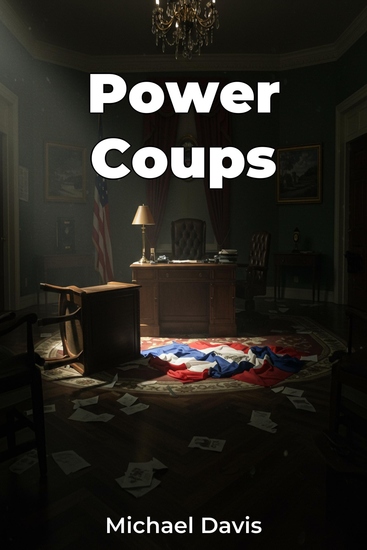
Power Coups - cover

Power Coups

Michael Davies

Übersetzer A AI

Verlag: Publifye

  • 0
  • 0
  • 0

Beschreibung

"Power Coups" examines the volatile phenomenon of sudden government overthrows, delving into the preconditions, operational tactics, and diverse outcomes that characterize these events. Understanding power coups is crucial, as they often reshape political landscapes, ignite conflicts, and redefine international relations. The book explores how factors like economic grievances, social divisions, and the erosion of democratic institutions create environments ripe for upheaval. It also dissects strategies used by coup leaders, such as military mobilization and manipulation of public opinion.

 
The book distinguishes itself through a systematic analysis of both the micro-level tactics and the macro-level conditions shaping coups. For instance, the book highlights that the success of a coup isn't solely determined by force, but also by establishing legitimacy. Furthermore, the analysis draws from political science, history, sociology, and economics to provide a comprehensive understanding. Beginning with a definition and categorization of coups, the book progresses through historical context and case studies, offering a comparative perspective on regime change across diverse regions and political systems.
Verfügbar seit: 29.03.2025.
Drucklänge: 67 Seiten.

Weitere Bücher, die Sie mögen werden

  • The Pursuit of Dominance - 2000 Years of Superpower Grand Strategy - cover

    The Pursuit of Dominance - 2000...

    Christopher J. Fettweis

    • 0
    • 0
    • 0
    The United States is the most powerful actor in the international system, but it is facing a set of challenges that might lead to its decline as this century unfolds. 


    In The Pursuit of Dominance, Christopher J. Fettweis examines the grand strategy of previous superpowers to see how they maintained, or failed to maintain, their status. Over the course of six cases, from Ancient Rome to the British Empire, he seeks guidance from the past for present US policymakers. Like the United States, the examples Fettweis uses were the world's strongest powers at particularly moments in time, and they were hoping to stay that way. Rather than focusing on those powers' rise or how they ruled, however, Fettweis looks at how they sought to maintain their power. From these cases, one paramount lesson becomes clear: Dominant powers usually survive even the most incompetent leaders. Fettweis is most interested in how these superpowers defined their interests, the grand strategies these regimes followed to maintain superiority over their rivals, and how the practice of that strategy worked. 


    A sweeping history of grand strategy, The Pursuit of Dominance looks at the past 2,000 years to highlight what—if anything—current US strategists can learn from the experience of earlier superpowers.
    Zum Buch
  • The Crusader States - Kingdoms in the Holy Land - cover

    The Crusader States - Kingdoms...

    Nova Ashford

    • 0
    • 0
    • 0
    The story of the Crusader States begins with a cry for help and a call to arms that would echo across Christendom. In 1095, at the Council of Clermont, Pope Urban II delivered a fiery sermon urging the Christian knights of Europe to take up arms and reclaim the Holy Land from Muslim control. This call to crusade was not merely a military summons—it was framed as a sacred duty, a spiritual journey that promised the remission of sins and eternal reward for those who participated. The response was overwhelming. Nobles, peasants, and knights alike took up the cross, inspired by religious fervor, promises of salvation, and, for some, the allure of land and glory. 
    The roots of the crusading movement were complex. The Byzantine Empire, under threat from the Seljuk Turks, had appealed to the West for military support. Urban II seized the opportunity not only to assist a fellow Christian empire but also to assert papal authority, redirect knightly violence away from Europe, and perhaps reunite the Eastern and Western Churches. His appeal resonated deeply in a Europe rife with feudal conflict, religious devotion, and a growing warrior culture. The concept of "holy war" gave new legitimacy to warfare as a religious act, transforming knights into pilgrims with a sword. 
    The First Crusade, launched in 1096, was both chaotic and remarkable. It was not a single army but a series of loosely organized forces, including the infamous People's Crusade led by Peter the Hermit, which was largely destroyed before reaching the Holy Land. The main crusading armies followed, composed of powerful lords such as Godfrey of Bouillon, Raymond of Toulouse, Bohemond of Taranto, and others. These forces traversed hostile territory, besieged cities, and faced hunger, disease, and internal divisions. Yet, against the odds, they succeeded in capturing Jerusalem in July 1099.
    Zum Buch
  • How It Feels To Be Colored Me - cover

    How It Feels To Be Colored Me

    Zora Neale Hurston

    • 0
    • 0
    • 0
    How It Feels To Be Colored Me was first published in "The World Tomorrow" in May 1928. In this autobiographical piece that focuses on race and 1920s America, Hurston reflects on her early childhood in an all-black Florida town and her first experiences in life where she felt "different."Hurston focuses on the similarities we all share and on her own self-identity in the face of difference. "Through it all," she says, "I remain myself."
    Zum Buch
  • State of the Union 1982 - cover

    State of the Union 1982

    Ronald Reagan

    • 0
    • 0
    • 0
    In the 1982 State of the Union address on January 26, 1982, Reagan invokes his self-deprecating humor and calls for “a new spirit of partnership between this Congress and this administration”. Reagan cites the “stagflation” of the 1970s: double digit inflation, interest rates over 21%, and over 8 million unemployed.  
    Reagan notes economic improvement and calls for reduced federal spending, further tax reductions, and fewer regulations, saying our economic problems “are the inheritance of decades of tax and tax and spend and spend.”  
    Reagan calls for dismantling the Departments of Energy and Education but keeping a reliable safety net for those in need by rooting out waste and fraud in the food stamp, Medicare, and Medicaid programs. Reagan decries the growth in federal grant programs to state and local governments and calls for major reforms. 
    A short paragraph was lost at 23:15 of the Ronald Reagan presidential library recording. The missing words can be seen in the text version. 
    In meetings with foreign leaders, Reagan “spoke of the strength of the free marketplace system and how that system could help them realize their aspirations for economic development and political freedom.” Reagan endorses sanctions against the Soviet Union for its actions in Poland and Afghanistan, and urges “that we rebuild our defenses.”  
    Reagan concludes with a call to work together to preserve “the sacred flame of liberty -- this last, best hope of man on Earth.” This address followed the assassination attempt and the applause at the start and end was extensive.
    Zum Buch
  • TSA Exam Secrets: Unveil the Path to Your Success - “Crack the TSA Exam with our powerful audio lessons the key to your success awaits!” - cover

    TSA Exam Secrets: Unveil the...

    Ronan Faldor

    • 0
    • 0
    • 0
    TSA Exam Secrets: Unveil the Path to Your Success 
    ⭐⭐ Simplified Guide & Explanations Included ⭐⭐ 
    Are you aiming to advance in your career and solidify your expertise by successfully passing the TSA Exam 2024-2025?  
    Are you searching for a thorough guide that covers everything you need to excel in the TSA Exam 2024-2025?  
    Your search ends here!  
    This guide is your ultimate companion for enhancing your understanding, honing your skills, and engaging in practical exercises. With this resource, you'll be set for success.  
    Updated for the TSA 2024-2025 Exam Structure.  
    Key Features of This Comprehensive Guide: 
    - In-depth insights into the TSA Exam 2024-2025 Certification  
    - Detailed explanations regarding unlocking your potential for a rewarding security career  
    - Effective strategies for exam preparation and execution  
    Our guide stands out through its extensive coverage, which is crucial for your exam success. Concepts are explored thoroughly, not just skimmed over. 
    Please note, this guide is not associated with any official TSA organization and serves purely as an independent resource for your advantage.  
    Crafted with a straightforward structure and accessible language, our TSA Exam Guide 2024-2025 ensures seamless transitions between topics. Say goodbye to complex jargon and embrace clear, precise, and technically accurate content.  
    So, why wait? Click the BUY NOW button, secure your guide, and embark on your journey to TSA Exam 2024-2025 success!  
    TSA Exam Secrets: Unveil the Path to Your Success awaits you!
    Zum Buch
  • Battleground - 10 Conflicts that Explain the New Middle East - cover

    Battleground - 10 Conflicts that...

    Christopher Phillips

    • 0
    • 0
    • 0
    The essential guide to geopolitics in the modern Middle East 


    The Middle East is in crisis. The shocking events of the war in Gaza have rocked the entire region. More than a decade ago, the Arab Spring had raised hopes of a new beginning but instead ushered in a series of civil wars, coups, and even harsher autocracies. Tensions were exacerbated by the meddling of outsiders, as regional and global powers sought to further their interests. The United States, for so long the dominant actor, had stepped back, leaving a vacuum behind it to be fought over. 


    Christopher Phillips explores geopolitical rivalries in the region, and the major external powers vying for influence: Russia, China, the European Union, and the United States. Moving through ten key flashpoints, from Syria to Palestine, Phillips argues that the United States' overextension after the Cold War, and retreat in the 2010s, has imbalanced the region. Today, the Middle East remains blighted by conflicts of unprecedented violence and a post-American scramble for power—leaving its fate in the balance.
    Zum Buch