Begleiten Sie uns auf eine literarische Weltreise!
Buch zum Bücherregal hinzufügen
Grey
Einen neuen Kommentar schreiben Default profile 50px
Grey
Jetzt das ganze Buch im Abo oder die ersten Seiten gratis lesen!
All characters reduced
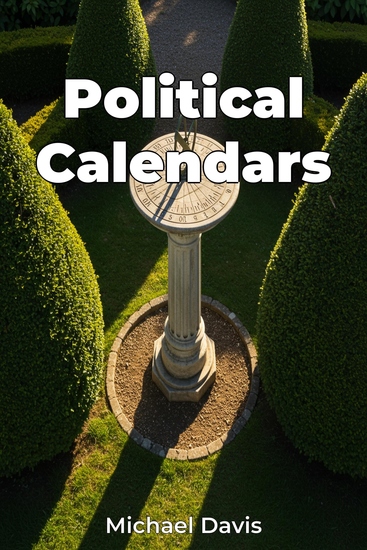
Political Calendars - cover

Political Calendars

Michael Davies

Übersetzer A AI

Verlag: Publifye

  • 0
  • 0
  • 0

Beschreibung

Political Calendars explores the surprising influence of calendars on politics, demonstrating how they shape governance and policy. Governments strategically use calendars to time elections, legislative sessions, and national events, influencing political outcomes in ways we often overlook. For example, the timing of elections can significantly impact voter turnout and campaign strategies. The book reveals that calendars are not neutral; they are active instruments of power. Legislative agendas are often dictated by calendrical constraints like fiscal years, impacting which laws can be passed. National holidays also serve a political purpose, reinforcing narratives and mobilizing support. This book adopts a multidisciplinary approach, drawing from political science, history, and other fields to examine the ethical implications of using calendars as tools of power. Starting with the basics of political time and different calendar systems, Political Calendars progresses through electoral cycles, legislative agendas, and national events, offering a unique perspective on the temporal dimensions of power.
Verfügbar seit: 05.03.2025.
Drucklänge: 61 Seiten.

Weitere Bücher, die Sie mögen werden

  • Small Farm Republic - Why Conservatives Must Embrace Local Agriculture Reject Climate Alarmism and Lead an Environmental Revival - cover

    Small Farm Republic - Why...

    John Klar

    • 0
    • 0
    • 0
    From farmer, lawyer, and political activist John Klar comes a bold, solutions-based plan for Conservatives that gets beyond the fatuous pipe dreams and social-justice platitudes of the dominant, Liberal “Green” agenda—offering a healthy way forward for everyone.  
    While many on the Left have taken up the mantle of creating a “green” future through climate alarmism, spurious new energy sources, and technocratic control, many on the Right continue to deny imminent environmental threats while pushing for unbridled deregulation of our most destructive industrial forces. Neither approach promises a bright future.  
    In a time of soil degradation, runaway pollution, food insecurity, and declining human health, the stakes couldn’t be higher, and yet the dominant political voices too often overlook the last best hope for our planet—supporting small, regenerative farmers. In fact, politicians on all sides continue to sell out the interests of small farmers to the devastating power of Big Ag and failed “renewable energy” incentives.   
    It’s time for a new vision. It’s time for bold new agriculture policies that restore both ecosystems and rural communities.  
    In Small Farm Republic, John Klar, an agrarian conservative in the mold of Wendell Berry and Joel Salatin, offers an alternative that puts small farmers, regenerative agriculture, and personal liberty at the center of an environmental revival—a message that everyone on the political spectrum needs to hear.
    Zum Buch
  • Tenskwatawa: The Life of the Shawnee Prophet and Tecumseh’s Brother - cover

    Tenskwatawa: The Life of the...

    Editors Charles River

    • 0
    • 0
    • 0
    As settlers continued to encroach further west, the Shawnee, who were attempting to put together a confederacy of Native Americans to resist, stood firm and ready to fight them. Before America fought Britain in the War of 1812, they were engaged in Tecumseh’s War around the Great Lakes. The fighting made him famous and made a military hero (and eventually a president) out of William Henry Harrison, whose victory at Tippecanoe is considered the end of that war.  
    	Despite being one of their most tenacious opponents, Tecumseh almost immediately became a celebrated folk hero and respected leader in American history, all while continuing to be one of the most poignant symbols of resistance among Native Americans. He continues to be a household name across the United States today, nearly 200 years after his death.  
    	What makes Tecumseh’s legacy ironic is that the Shawnee were nominally led by a different man altogether, and that man just so happened to be Tecumseh’s brother. Lalawethika’s early life mostly consisted of abject failures, and he became an alcoholic, but in one of his alcohol-soaked stupors, he began to have visions of the Master of Life that turned him into the Open Door, the prophet named Tenskwatawa. It was Tenskwatawa who brought a new vision to the Shawnee, transforming himself from an object of pity and contempt into a religious leader who had thousands of followers. When the Americans fought at Tippecanoe, the gathering of Native Americans who they were attempting to disperse had congregated at a place colloquially known as Prophetstown. 
    Zum Buch
  • Why Psychosis Is Not So Crazy - A Road Map to Hope and Recovery for Families and Caregivers - cover

    Why Psychosis Is Not So Crazy -...

    Stijn Vanheule

    • 0
    • 0
    • 0
    An expert's guide to humanizing psychosis through communication offers key insights for family and friends to support loved ones during mental health crises. 


    Are we all a little crazy? Roughly fifteen percent of the population will have a psychotic experience, in which they lose contact with reality. Yet we often struggle to understand and talk about psychosis. Interactions between people build on the stories they tell each other—stories about the past, about who they are or what they want. In psychosis we can no longer rely on these stories, this shared language. So how should we communicate with someone experiencing reality in a radically different way than we are? 


    Drawing on his work in psychoanalysis, Stijn Vanheule seeks to answer this question, which carries significant implications for mental health as a whole. With a combination of theory from Freud to Lacan, present-day research, and compelling examples from his own patients and well-known figures such as director David Lynch and artist Yayoi Kusama, he explores psychosis in an engaging way that can benefit those suffering from it as well as the people who care for and interact with them.
    Zum Buch
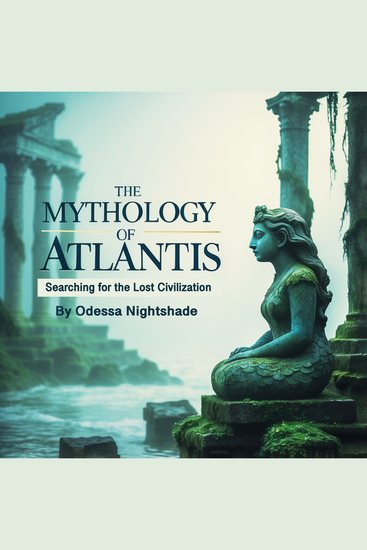
  • The Mythology of Atlantis - Searching for the Lost Civilization - cover

    The Mythology of Atlantis -...

    Odessa Nightshade

    • 0
    • 0
    • 0
    The legend of Atlantis has fascinated historians, philosophers, and adventurers for centuries. First described by the ancient Greek philosopher Plato, Atlantis was said to be a powerful and advanced civilization that mysteriously vanished beneath the sea. Despite being written over 2,000 years ago, Plato’s account continues to inspire countless theories, books, and even modern expeditions in search of this lost world. But was Atlantis ever real, or was it simply a metaphor for human folly? Understanding the origins of this myth is crucial to separating historical possibility from pure fantasy.  
      
    Plato’s dialogues, Timaeus* and *Critias, provide the earliest known description of Atlantis. According to him, the island was a technologically superior and wealthy society that existed around 9,000 years before his time. It was said to be located beyond the "Pillars of Hercules," now known as the Strait of Gibraltar. However, due to the moral corruption of its people, the gods allegedly punished Atlantis by submerging it beneath the waves. This dramatic tale has led to endless speculation about whether Plato based it on real events or simply crafted it as an allegory about the dangers of hubris and imperial overreach.  
      
    Interestingly, Atlantis is not the only story of a lost civilization. Cultures around the world have myths of great lands that disappeared under the ocean. In Hindu mythology, the ancient city of Dwarka was said to have been swallowed by the sea. The biblical tale of the Great Flood and even the legends of Lemuria and Mu suggest a shared human fascination with lost worlds. Some researchers argue that these stories could be echoes of real historical disasters, such as the sudden sinking of landmasses due to earthquakes, tsunamis, or rising sea levels. Could Atlantis be another version of these global flood myths? 
    Zum Buch
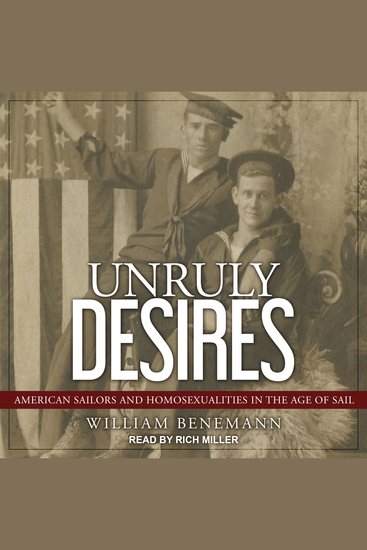
  • Unruly Desires - American Sailors and Homosexualities in the Age of Sail - cover

    Unruly Desires - American...

    William Benemann

    • 0
    • 0
    • 0
    In its voracious hunger to fill its decks and spars with the bodies of strong young sailors, the nineteenth century US Navy and the commercial maritime industry welcomed eccentrics, criminals, outcasts, and misfits into a community of the marginalized, one that held very different values and expectations than the towns and villages from which the young men fled, a community that offered a tentative refuge to men who were sexually attracted to other men. 


    Drawing from biographies and autobiographies, diaries, newspapers, government reports, Congressional hearings, religious tracts, pornography, ships' logs, medical treatises, maritime fiction, court-martial reports, personal letters and business correspondence, Benemann provides an in-depth examination of nineteenth century LGBTQ culture as it developed at sea and in America's port cities.
    Zum Buch
  • American Hero - The Life and Death of Audie Murphy - cover

    American Hero - The Life and...

    Charles Whiting

    • 0
    • 0
    • 0
    As a teenager Audie Murphy left his home in Texas to join in the fight against the Nazis. By the end of the war, he had fought in the bloody battle of Anzio, helped liberate Rome, marched his way across France, repelled German counterattacks in Alsace, before finishing in Germany. He was wounded three times, killed over two hundred enemies, and won every medal for valor that the United States had to offer. 


    Charles Whiting charts Murphy's journey through World War Two, shedding light on his courageous actions. 


    Yet what price did young Audie Murphy pay for becoming America's most decorated soldier of the Second World War? 


    Rather than simply focusing on Murphy's achievements in combat, Whiting also explores his life after the war when he struggled with post-traumatic stress disorder, addiction problems, and even twenty years after the war slept with the lights on and a loaded Walther pistol beneath his pillow. 


    American Hero draws upon numerous contemporary sources and a wealth of information drawn from interviews with Murphy's friends and comrades to provide insight into the rise and fall of Audie Murphy.
    Zum Buch