Begleiten Sie uns auf eine literarische Weltreise!
Buch zum Bücherregal hinzufügen
Grey
Einen neuen Kommentar schreiben Default profile 50px
Grey
Jetzt das ganze Buch im Abo oder die ersten Seiten gratis lesen!
All characters reduced
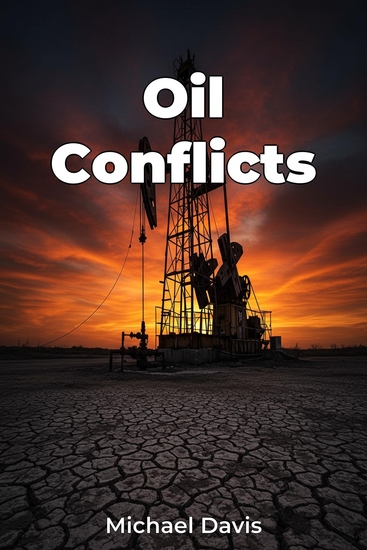
Oil Conflicts - cover

Oil Conflicts

Michael Davies

Übersetzer A Ai

Verlag: Publifye

  • 0
  • 0
  • 0

Beschreibung

Oil Conflicts examines how the pursuit and control of oil resources have fueled conflict and shaped political landscapes across the Americas. It reveals the deep connections between economic struggles, foreign intervention, and political instability tied to this crucial commodity. The book provides historical context, tracing the evolution from the rise of the oil industry through nationalization movements to neoliberal reforms, and analyzes the ongoing impact on resource-rich nations.

 
The book dives into the economic battles for resource control, highlighting the pervasive influence of external powers seeking to secure their energy interests. One intriguing aspect is how nationalization movements, intended to reclaim sovereignty over resources, often provoked strong reactions from international actors.

 
The book unfolds chronologically and thematically, analyzing early exploitation, the era of nationalizations, and the consequences of neoliberal reforms, offering a nuanced perspective on the history of oil-related conflicts in the Americas. Oil Conflicts offers a unique perspective by situating local conflicts within the context of global power struggles and by examining the intersection of economic, political, and environmental factors. Supported by diverse evidence, it challenges conventional narratives, revealing the complex interplay of social, cultural, and political forces.

 
Ultimately, the book provides valuable insights into the challenges facing oil-producing nations and the debates surrounding energy security and sustainable development.
Verfügbar seit: 19.03.2025.
Drucklänge: 68 Seiten.


Weitere Bücher, die Sie mögen werden

  • The Fall of Rome - End of a Superpower - cover

    The Fall of Rome - End of a...

    Nick Holmes

    • 0
    • 0
    • 0
    A skilled storyteller, Holmes presents a riveting account of the wars, intrigues and personalities that contributed to Rome's decline, with entire chapters devoted to single battles.' Kirkus Reviews 


    Why did Rome Fall? 


    In this gripping retelling of one of the most momentous chapters in history, Nick Holmes presents a new interpretation of an old story. The fate of Rome was decided not just by emperors, soldiers, and barbarians but also by an environmental disaster. 


    A catastrophic megadrought on the Asian steppes in the fourth century AD forced the migration of entire peoples—Huns, Goths, Vandals, and others—west into the Roman Empire. They met an empire weakened from war with Persia. Rome's misfortunes multiplied as it made tactical errors on the battlefield. Civil war, religious unrest, and political incompetence compounded a worsening situation. The result was one of the greatest disasters in the ancient world—the sack of Rome by the Goths in AD 410.
    Zum Buch
  • Voices From The Ashes - The Buried Testimonies of Auschwitz's Sonderkommando - cover

    Voices From The Ashes - The...

    Davis Truman

    • 0
    • 0
    • 0
    Buried in the soil of Auschwitz lay fragments of voices the Nazis tried to silence forever. They belonged to the Sonderkommando, Jewish prisoners forced into the darkest role of all: to witness and endure the machinery of mass murder. Knowing they would not survive, some risked everything to leave behind their words, their truths, and their warnings for the future. 
    Voices From The Ashes unveils these extraordinary clandestine writings, preserved against time and oblivion. With raw honesty and unbearable clarity, they recount not only the brutality of the camp but also the unbroken will to testify, an act of defiance stronger than death itself. 
    Both harrowing and profoundly human, this book does more than preserve history—it restores the dignity of the silenced, carrying their words across generations. It is a testament to resilience, memory, and the unyielding demand that the world must never forget. 
    Perfect for readers of Holocaust history, survivor testimony, and those drawn to the enduring power of the human spirit, Voices From The Ashes stands as both a memorial and a warning, an urgent reminder carved out of silence and buried in ashes.
    Zum Buch
  • The Era of Liberation - 1862-1894 - cover

    The Era of Liberation - 1862-1894

    Louis Kossuth, Abraham Lincoln,...

    • 0
    • 0
    • 0
    The late 19th Century was a time of liberation. After the collapse of empires, people of all creeds demanded their equality.We begin with two speeches that represent the old order, by Bismarck. Between the two speeches he went from being Prussia’s last Minister President to being the Germany’s first Chancellor. A statesman in the oldest mold, he argues for nationalist dominance against forces temporal and religious.The counter is given by Sullivan, who excoriates the British government for the Zulu war, asking why the country supported wars of aggression in foreign lands.From there, we move to the liberation of nations and peoples. Louis Kossuth embodied Hungary’s struggle against imperial oppression, Castelar argues for a Spanish republic, and Gambetta for the education of the peasantry in France. Across Europe, a tide rose demanding the government serve the people rather than use them.In America, Lincoln defined the struggle between the Union and Confederacy as the start of universal emancipation and freedom for all men. In contrast, Chief Joseph’s speech drips with pathos, as he lays down his spear forever, desperate to find what is left of his massacred and desolate peoples in the wilderness. After the Civil War ends, Susan Anthony’s speech demands that women should have the vote, as guaranteed in the constitution for all citizens.A series of speeches by Swami Vivekananda follow, given at the first World’s Parliament of Religions. These speeches brought Buddhism and Hinduism into the Anglosphere, and began a trend of searching for spiritual liberation alongside the more material demands of the time.We finish on a lighter tone, as Mark Twain bemoans the decay of the art of lying. In an age of such seriousness, the tall tale fell out of fashion, and the simple joy of telling a fisherman’s tale was lost.
    Zum Buch
  • Eastern Han Dynasty The: A History of China - cover

    Eastern Han Dynasty The: A...

    Hui Wang

    • 0
    • 0
    • 0
    The Eastern Han Dynasty: A History of China, PART ONE takes you on an unforgettable journey through one of China's most transformative eras. Once fractured by war, the Han Empire finds hope in Liu Xiu—a noble who rises through chaos to become Emperor Guangwu of Han. But claiming the throne is only the beginning. To rebuild an empire torn apart, he must outmaneuver rivals, crush rebellions, and restore order. 
    From the fall of the Chimei Army to the eruption of the Three Rebellions, Liu Xiu's reign is marked by endless trials. Allies become threats, and loyalty is tested—especially for Wei Xiao, a trusted officer with dangerous ambitions. Meanwhile, the empire expands into Longyou and sets its sights on resource-rich Shu, where political intrigue runs deep. 
    Military legends like General Ma Yuan rise, shaping China's future with brilliant campaigns. As peace returns, loyal ministers help rebuild the government. But power shifts within the court, and when the crown prince unexpectedly steps down, the influential Yin Family begins to dominate the throne's inner circle. 
    A new era begins with Emperor Ming, who faces his own battles—reforms, alliances, and unrest. Yet Han is no longer limited by borders. Ban Chao’s bold expeditions to the Western Regions spark a wave of imperial ambition, paving the way for the rise of a new conqueror who will take Han’s influence farther than ever before. 
    This is not just a chronicle of events—it's a sweeping epic of ambition, war, strategy, and legacy. If you’re drawn to tales of empire-building, battlefield brilliance, and court intrigue, The Eastern Han Dynasty: Part One is a journey you won’t want to miss.
    Zum Buch
  • Do the Hard Things First: Master Self-Control - Resist Instant Gratification Build Mental Toughness and Master the Habits of Self Control - cover

    Do the Hard Things First: Master...

    Scott Allan

    • 0
    • 0
    • 0
    Master the Art of Self-Control and Achieve Lasting Success 
    Are you tired of being held back by self-sabotaging behaviors? Do you find yourself constantly giving in to instant gratification instead of staying focused on your goals? 
    If you're ready to break free from these internal limitations, it's time to master the art of self-control. 
    Success isn't just about talent or intelligence—it requires a powerful mindset and unwavering willpower. In Do The Hard Things First: Master Self-Control, renowned Personal Development Leader and Mindset Optimization Strategist Scott Allan, presents a proven framework to overcome immediate gratification, conquer compulsive behavior, and cultivate the habits of self-control. 
    Inside Master Self-Control, you'll discover invaluable strategies to:Conquer compulsions that hinder your progress toward your goals.Harness your willpower effectively, knowing when to persist and when to let go.Develop unstoppable perseverance through four powerful techniques.Defeat temptation using proven delay strategies.Attain success in relationships, finances, and happiness by delaying instant gratification.Break free from your inner saboteur and take absolute control of your life using the Master Self-Control framework. 
    Scott Allan's transformative process trains your mind to focus on internal factors rather than external circumstances. By mastering your thoughts and actions, you will develop an unbreakable character rooted in mental toughness, facilitating long-term growth and sustainable habits. 
    Unlock your full potential and seize control of your destiny. With Master Self-Control as your guide, you'll embark on a transformative journey toward lasting success, leaving behind old habits and embracing a future of unbounded possibilities.
    Zum Buch
  • Georgy Zhukov: The Life and Legacy of the Soviet Union’s Greatest General during World War II - cover

    Georgy Zhukov: The Life and...

    Editors Charles River

    • 0
    • 0
    • 0
    In the warm predawn darkness of June 22, 1941, 3 million men waited along a front hundreds of miles long, stretching from the Baltic coast of Poland to the Balkans. Ahead of them in the darkness lay the Soviet Union, its border guarded by millions of Red Army troops echeloned deep throughout the huge spaces of Russia. This massive gathering of Wehrmacht soldiers from Adolf Hitler's Third Reich and his allied states – notably Hungary and Romania – stood poised to carry out Operation Barbarossa, Hitler's surprise attack against the country of his putative ally, Soviet dictator Joseph Stalin.  
    Of the Soviet generals, none played as crucial a role in the war as Georgy Konstantinovich Zhukov, one of the most highly decorated army officers in Russian military history. At critical stages during the Second World War, it seemed as if it was Zhukov alone who stood between Russian defeat and German victory. Zhukov was ultimately involved in all the major battles on the Eastern Front, including Moscow, Leningrad, Stalingrad, Kursk, Bagration, and the final assaults into Poland and Germany to capture Berlin.  
    Stalin came to depend on Zhukov’s ruthless military skills for victory, but in the cut-throat Soviet Union, that was always a double-edged sword, because it seemed that Stalin envied Zhukov and feared him as well. Zhukov, who could be as aggressive and blunt as Stalin, was one of the few people prepared to stand up to the Soviet dictator and argue with him, and as many Soviet politicians and generals learned to their detriment, going toe to toe with one of the most brutal leaders of the 20th century was a highly risky venture. However, the mutual understanding they forged as they confronted the Germans may have played the biggest role in Hitler’s demise. 
    Zum Buch