Junte-se a nós em uma viagem ao mundo dos livros!
Adicionar este livro à prateleira
Grey
Deixe um novo comentário Default profile 50px
Grey
Assine para ler o livro completo ou leia as primeiras páginas de graça!
All characters reduced
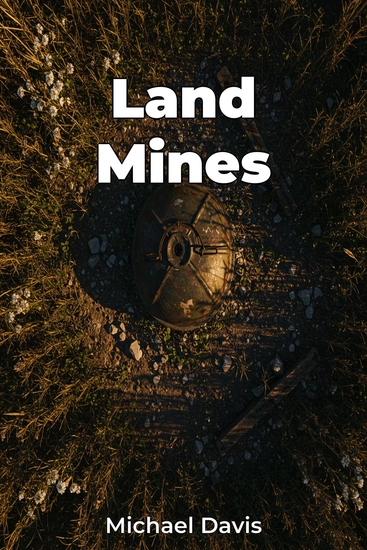
Land Mines - cover
LER

Land Mines

Michael Davies

Tradutor A AI

Editora: Publifye

  • 0
  • 0
  • 0

Sinopse

“Land Mines” explores the multifaceted history and impact of these weapons, examining their military utility alongside their devastating humanitarian consequences. Land mines, initially intended for territorial defense and hindering enemy advances, have become a global threat, disproportionately affecting civilian populations long after conflicts subside. The book highlights the ethical dilemmas inherent in their deployment and the ongoing international efforts, such as the Ottawa Treaty, aimed at their eradication.

 
The book meticulously traces the evolution of land mine technology and strategy, analyzing their use in major conflicts through detailed case studies. It addresses the immense challenges of post-conflict mine clearance and victim assistance, while also examining the debates around anti-personnel versus anti-tank mines. Readers gain a comprehensive understanding of how these weapons have shaped military history, politics, and humanitarian issues, underscored by the tragic statistics of casualties and socio-economic disruption.

 
Progressing chronologically, the book utilizes military archives, humanitarian reports, and legal documents to offer a nuanced perspective. It connects land mine usage to broader themes within international law, human rights, and development studies, enriching its analysis and appealing to a diverse audience.

 
The book culminates by assessing the future of landmine policy and the pursuit of a mine-free world, making it a valuable resource for policymakers and those interested in military strategy.
Disponível desde: 29/03/2025.
Comprimento de impressão: 83 páginas.

Outros livros que poderiam interessá-lo

  • The Ink is Dry - God's Distinctive Word on Marriage Family and Sexual Responsibility - cover

    The Ink is Dry - God's...

    Rubel Shelly

    • 0
    • 0
    • 0
    The book in your hands is for people seeking to understand what the Bible says to Christians of every generation and cultural placement about marriage, family, and sexual responsibility. This book is not a political appeal to bind Christian morality through law. It is an appeal, instead, for Christians to live the distinctive life to which God has called us in Christ Jesus. 
     
    Paul’s rhetorical question in 1 Corinthians 5:12 still rings in our ears: “While we are not responsible for what outsiders to the faith may do with their lives, do we not have a duty to those people who are members of our congregations of believers?” The ink is dry on the critical issue of what Christians are to regard as marriage. The ink is dry on the fidelity Christian husbands and wives are expected to exhibit toward each other. Equally, the ink is dry on the present-day disputes around same-sex behaviors. 
     
    With love and respect for those in our culture who adopt and live to other standards, the norm for Christian behavior is fixed within a tradition that is more than 3,000 years old. While denouncing homophobia and verbal or physical abuse against the LGBTQ+ community, Shelly makes a cogent case from Scripture, history, and reason for Christians to honor God’s design for sex and marriage.
    Ver livro
  • Underground Railroad to Mexico The: The History and Legacy of the Southern Routes to Freedom for American Slaves - cover

    Underground Railroad to Mexico...

    Editors Charles River

    • 0
    • 0
    • 0
    The Underground Railroad is one of the most taught topics to young schoolchildren, and every American is familiar with the idea of fugitive slaves escaping to Canada and the North with the help of determined abolitionists and even former escaped slaves like Harriet Tubman. The secrecy involved in the Underground Railroad made it one of the most mysterious aspects of the mid-19th century in America, to the extent that claims spread that 100,000 slaves had escaped via the Underground Railroad. Of course, from a practical standpoint, the Underground Railroad had to remain covert not only for the sake of thousands of slaves, but for a small army of men and women of every race, religion and economic class who put themselves in peril on an ongoing basis throughout the first half of the 19th century, and in the years leading up to the war.  
    	Over 150 years later, that same secrecy has helped the Underground Railroad become so romanticized and mythologized that people often visualize it in ways that were far different from reality. Before the American Civil War eliminated slavery, it was a fixture in North America for over 200 years, and by 1850 a trained slave was worth approximately $2,500, around 10 times the sum of a typical annual salary in that day. As a result, the economic dependence on slavery in the South was an extreme one, and in the wake of the Fugitive Slave Act, black people in the North were under constant pressure to defend their “credentials” to bounty hunters and owners. Between the value of slaves in America, rising abolitionist sentiment at home and overseas, and political debates promoting or hindering the movement toward equality, the era in which the Underground Railroad operated cannot be easily fit into a concise body of principles, actions or geography. 
    Ver livro
  • Ottoman Empire’s Worst Defeats The: The History and Legacy of the Decisive Battles that Checked the Ottomans’ Expansion into Europe - cover

    Ottoman Empire’s Worst Defeats...

    Editors Charles River

    • 0
    • 0
    • 0
    In the wake of taking Constantinople, the Ottoman Empire would spend the next few centuries expanding its size, power, and influence, bumping up against Eastern Europe and becoming one of the world’s most important geopolitical players. It was a rise that would not truly start to wane until the 19th century. 	The long agony of the “sick man of Europe,” an expression used by the Tsar of Russia to depict the falling Ottoman Empire, could almost blind people to its incredible power and history. Preserving its mixed heritage, coming from both its geographic position rising above the ashes of the Byzantine Empire and the tradition inherited from the Muslim Conquests, the Ottoman Empire lasted more than six centuries. Its soldiers fought, died, and conquered lands on three different continents, making it one of the few stable multiethnic empires in history, and likely one of the last. Thus, it’s somewhat inevitable that the history of its decline is at the heart of complex geopolitical disputes, as well as sectarian tensions that are still key to understanding the Middle East, North Africa and the Balkans.  
    	When studying the fall of the Ottoman Empire, historians have argued over the breaking point that saw a leading global power slowly become a decadent empire. The defeat in the Battle of Lepanto stopped the Ottomans from pushing further into the Mediterranean, and the Battle of Vienna in 1683 was certainly an important turning point for the expanding empire, as the defeat of Grand Vizier Kara Mustafa Pasha at the hands of a coalition led by the Austrian Habsburg dynasty, Holy Roman Empire and Polish-Lithuanian commonwealth marked the end of Ottoman expansionism. It was also the beginning of a slow decline during which the Ottoman Empire suffered multiple military defeats, found itself mired by corruption, and had to deal with the increasingly mutinous Janissaries (the Empire’s initial foot soldiers).
    Ver livro
  • The Last Wilderness - cover

    The Last Wilderness

    Murray Morgan, Tim McNulty

    • 0
    • 0
    • 0
    Murray Morgan's classic history of the Olympic Peninsula, originally published in 1955, evokes a remote American wilderness "as large as the state of Massachusetts, more rugged than the Rockies, its lowlands blanketed by a cool jungle of fir and pine and cedar, its peaks bearing hundreds of miles of living ice that gave rise to swift rivers alive with giant salmon." 


    Drawing on historical research and personal tales collected from docks, forest trails, and waterways, Morgan recounts vivid adventures of the area's settlers—loggers, hunters, prospectors, homesteaders, utopianists, murderers, profit-seekers, conservationists, Wobblies, and bureaucrats—alongside stories of coastal first peoples and striking descriptions of the peninsula's wildlife and land. 


    Freshly redesigned and with a new introduction by poet and environmentalist Tim McNulty, this humor-filled saga and landmark love story of one of the most formidably beautiful regions of the Pacific Northwest will inform and engage a new generation of listeners.
    Ver livro
  • World War 2 Facts for Sleep - cover

    World War 2 Facts for Sleep

    Atlas History

    • 0
    • 0
    • 0
    This audiobook is narrated by an AI Voice. What if you could learn the most extraordinary and lesser-known stories from World War II while drifting peacefully into sleep? This captivating collection of fascinating wartime facts transforms bedtime into an educational journey through history's most pivotal conflict. Each carefully selected story reveals remarkable tales of courage, ingenuity, and human resilience that textbooks rarely mention. Discover the Polish bear who became a decorated soldier, the Hollywood actress who invented wireless technology, and the Japanese soldier who fought his own war for thirty years. Learn about the brave spies with wooden legs, the musicians who performed under siege, and the Native American code talkers whose language helped win the Pacific theater. These incredible stories span from the European resistance movements to the Pacific islands, from secret bunkers to concentration camps, revealing the extraordinary individuals who shaped history. Perfect for history enthusiasts, students, and anyone seeking relaxing educational content before sleep, each fact is presented with gentle pacing and natural breaks. The amazing tales of heroism, innovation, and survival will captivate your mind while helping you unwind. Whether you're interested in military strategy, espionage, scientific breakthroughs, or human courage, these meticulously researched stories provide fascinating insights into the Second World War's most remarkable moments. Transform your nightly routine into an opportunity to explore history's greatest conflict through its most compelling human stories.
    Ver livro
  • Espionage - A Concise History - cover

    Espionage - A Concise History

    Kristie Macrakis

    • 0
    • 0
    • 0
    A concise introduction to the history and methods of espionage, illustrated by spy stories from antiquity to today's high-tech world. 


    Espionage is one of the most secret of human activities. It is also, as the popularity of spy stories suggests, one of the most intriguing. This book pulls the veil back on the real world of espionage, revealing how spying actually works. In a refreshingly clear, concise manner, Kristie Macrakis guides listeners through the shadowy world of espionage, from the language and practice of spycraft to its role in international politics, its bureaucratic underpinnings, and its transformation in light of modern technology. Espionage is a mirror of society and human foibles with the added cloak of secrecy and deception. Accordingly, Espionage traces spying all the way back to antiquity, while also moving beyond traditional accounts of military and diplomatic intelligence to shine a light on industrial espionage and the new techno-spy. As thorough—and thoroughly enjoyable—as it is compact, the book is an ideal introduction to the history and anatomy of espionage.
    Ver livro