Rejoignez-nous pour un voyage dans le monde des livres!
Ajouter ce livre à l'électronique
Grey
Ecrivez un nouveau commentaire Default profile 50px
Grey
Abonnez-vous pour lire le livre complet ou lisez les premières pages gratuitement!
All characters reduced
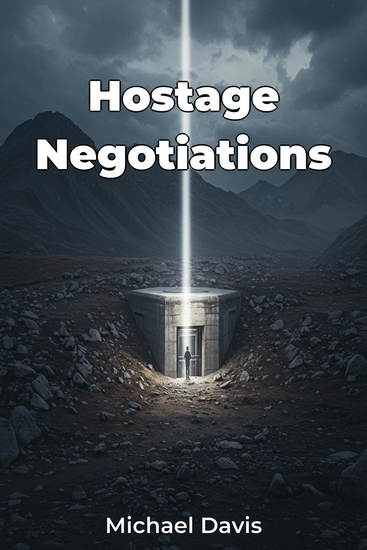
Hostage Negotiations - cover

Hostage Negotiations

Michael Davies

Traducteur A Ai

Maison d'édition: Publifye

  • 0
  • 0
  • 0

Synopsis

Hostage Negotiations explores the intricate world of hostage crises, where diplomacy falters and lives hang precariously in the balance. It delves into negotiation strategies, the political ramifications, and the historical impact of these events on national security. The book analyzes how a purely military approach can be counterproductive, emphasizing the need to balance life preservation with potential long-term political consequences. The book draws upon historical precedents, like the Iranian hostage crisis, to provide context while examining the psychological elements influencing hostage takers and negotiators. It presents a comprehensive analysis, beginning with the fundamentals of hostage negotiation, including communication strategies and trust-building. Major themes, such as intelligence gathering and ethical dilemmas, are explored, culminating in an analysis of the long-term political and military implications. What sets this book apart is its balanced approach, considering the tactical aspects of negotiation and the broader political and historical context. It offers a fresh perspective on conflict resolution and crisis management, providing valuable insights for policymakers, military strategists, and students of political science interested in international relations. Chapters progress to analyze case studies, tactics used, and outcomes achieved, ultimately providing recommendations for future policy and training.
Disponible depuis: 21/03/2025.
Longueur d'impression: 90 pages.

D'autres livres qui pourraient vous intéresser

  • Decoding the Crisis: What History's Cycles Reveal About Our Future - "Elevate your knowledge! Dive into *Decoding the Crisis* audio for future insights through historical cycles" - cover

    Decoding the Crisis: What...

    Randall Thorne

    • 0
    • 0
    • 0
    Decoding the Crisis: What History's Cycles Reveal About Our Future 
    ⭐⭐ Simplified Guide & Explanations Included ⭐⭐ 
    Are you looking to progress in your career and solidify your knowledge by successfully understanding cyclical crises and how they guide us toward future solutions? 
    Seeking a comprehensive guide that provides all necessary elements to grasp the patterns and lessons from historical cycles? 
    Your search ends here! 
    This guide serves as your definitive companion for deepening your understanding, applying your skills, and engaging in hands-on exercises. With this, you're geared for success. 
    Updated for the Latest Insights into Cyclical Crises and Future Predictions. 
    Key features of this enriched guide: 
    - Profound insights about Understanding Cyclical Crises 
    - Detailed explanation of Historical Cycles and Their Implications 
    - Fruitful strategies for Analyzing Patterns and Predicting Future Outcomes 
    Our guide distinguishes itself through comprehensive coverage, which is essential for your mastery of cyclical crises. Concepts aren't merely skimmed; they are delved into with precision. 
    Designed with a clear structure and easy-to-understand language, our Guide to Understanding Cyclical Crises ensures smooth transitions between topics. Say goodbye to dense jargon and welcome clear, precise, and technically accurate content. 
    So, why wait? Click the BUY NOW button, secure your guide, and begin your journey to mastering the insights from historical cycles and how they can shape our future!
    Voir livre
  • United States in World War II The: The History and Legacy of American Involvement in the War - cover

    United States in World War II...

    Charles River Editors

    • 0
    • 0
    • 0
    All Americans are familiar with the “day that will live in infamy.” At 9:30 a.m. on Sunday, December 7, 1941, Pearl Harbor, the advanced base of the United States Navy’s Pacific Fleet, was ablaze. It had been smashed by aircraft launched by the carriers of the Imperial Japanese Navy. All eight battleships had been sunk or badly damaged, 350 aircraft had been knocked out, and over 2,000 Americans lay dead. Indelible images of the USS Arizona exploding and the USS Oklahoma capsizing and floating upside down have been ingrained in the American conscience ever since. In less than an hour and a half the Japanese had almost wiped out America’s entire naval presence in the Pacific.  
    	The United States began 1942 determined to avenge Pearl Harbor, but the Allies, now including the Soviet Union by necessity, did not agree on the war strategy. In 1941, both the Germans and British moved armies into North Africa, where Italy had already tried and failed to reach the Suez Canal. The British sought American help in North Africa, where British General Bernard Montgomery was fighting the legendary “Desert Fox,” General Erwin Rommel. At the same time, Stalin was desperate for Allied action on the European continent that could free up the pressure on the besieged Soviets.  
    	President Roosevelt had a consequential decision to make, and he eventually decided to land American forces on North Africa to assist the British against Rommel, much to Stalin’s chagrin. While the Americans and British could merely harass the Germans with air power and naval forces in the Atlantic, Stalin’s Red Army had to take Hitler’s best shots in Russia throughout 1942. But the Red Army’s tenuous hold continued to cripple the Nazi war machine while buying the other Allies precious time. 
    	As it turned out, Roosevelt’s decision to first fight in North Africa would make an Allied invasion of the European continent possible in 1943.
    Voir livre
  • The Divine Comedy Paradise - cover

    The Divine Comedy Paradise

    Dante Alighieri

    • 0
    • 0
    • 0
    Paradiso (Italian: [paraˈdiːzo]; Italian for "Paradise" or "Heaven") is the third and final part of Dante's Divine Comedy, following the Inferno and the Purgatorio. It is an allegory telling of Dante's journey through Heaven, guided by Beatrice, who symbolises theology. In the poem, Paradise is depicted as a series of concentric spheres surrounding the Earth, consisting of the Moon, Mercury, Venus, the Sun, Mars, Jupiter, Saturn, the Fixed Stars, the Primum Mobile and finally, the Empyrean. It was written in the early 14th century. Allegorically, the poem represents the soul's ascent to God.While the structures of the Inferno and Purgatorio were based around different classifications of sin, the structure of the Paradiso is based on the four cardinal virtues (Prudence, Justice, Temperance, and Fortitude) and the three theological virtues (Faith, Hope, and Charity).
    Voir livre
  • The Woketopus - The Dark Money Cabal Manipulating the Federal Government - cover

    The Woketopus - The Dark Money...

    Tyler O'Neil

    • 0
    • 0
    • 0
    Why did the Biden White House celebrate Transgender Day of Visibility on Easter Sunday? Why is the bureaucracy prioritizing electric vehicles and less reliable forms of energy when Americans struggle to pay the bills amid historic inflation and higher gas prices? 


    America's bureaucrats appear to live on a different planet from the working class in this country, and that's no accident. The Woketopus explains how America's elites are pulling the strings in Washington to prioritize their pet projects over the needs of the American people. O'Neil's prose reveals how the left's NGO apparatus pursues its woke agenda, maneuvering like an octopus by circumventing Congress and entrenching its interests in the federal government. 


    Discover how the donors who helped prop up the anti-Israel protests on college campuses are impacting policy in Washington; pull back the curtain on how federal agencies became engines of cultural change; and find out how the Left's dark money influences federal law enforcement to demonize conservatives in an attempt to silence anyone who wants to criticize this agenda.
    Voir livre
  • Joan of Arc - The Historical Heroine of France during the French Revolution - cover

    Joan of Arc - The Historical...

    Kelly Mass

    • 0
    • 0
    • 0
    The painting of her on the battlefield with only one breast covered and holding a flag is probably one of the most famous paintings from European history. Many people have heard of Joan of Arc, but only few know what she did or how her life was. 
    Joan of Arc (French: Jeanne d' Arc) is a French heroine who was venerated as a saint for her role in the Lancastrian part of the Hundred Years' War. She was born in Domrémy, in the Vosges area of northeast France, to Jacques d' Arc and Isabelle Romée, a peasant family. Joan said she saw visions of the archangel Michael, Saint Margaret, and Saint Catherine of Alexandria telling her to support Charles VII and free France from English supremacy late in the Hundred Years' War. Joan was sent out as part of a relief army to the siege of Orléans by the as-yet-unanointed King Charles VII. After the siege was raised only 9 days later, she rose to fame. 
    She ended up being a sign of the Catholic League in the 16th century, and Napoleon Bonaparte called her a nationwide sign of France in 1803. 
    In 1909, she was beatified, and in 1920, she was canonized. One of France's 9 secondary tutelary saint is Joan of Arc. 
    Since her death, Joan of Arc has stayed a popular character in literature, painting, sculpture, and other cultural works, with many popular authors, playwrights, filmmakers, artists, and composers creating and continuing to produce cultural representations of her.
    Voir livre
  • Same Ground - Chasing Family Down the California Gold Rush Trail - cover

    Same Ground - Chasing Family...

    Russell Wangersky

    • 0
    • 0
    • 0
    “Read him.” — George Elliott Clarke, author of I & I and George and Rue
    		 
    An award-winning author goes looking for the meaning of family and belonging on a glorious wild-goose-chase road trip across middle America
    		 
    Wangersky’s great-great-grandfather crossed the continent in search of gold in 1849. William Castle Dodge was his name, and he was 22 years old. He wrote a diary of that eventful journey that comes into the author’s hands 160 years later. And typically, quixotically, Wangersky decides to follow Dodge’s westward trail across the great bulging middle of America, not in search of gold but something even less likely: that elusive thing called family.
    		 
    What ensues becomes this story, by turns hilarious and profound, about a very long trip — by car, in Wangersky’s case, and on mule and foot in Dodge’s. Interweaving his experiences on the road with Dodge’s diary, the author contemplates the human need to hunt for roots and meaning as he — and Dodge — encounter immigrants who risk everything to be somewhere else, while only glimpsing those who are there already and who want to hold onto their claim in the stream of human migration.
    		 
    Same Ground is a story about what time washes away and what persists — and what we might find, unexpectedly, if we go looking.
    Voir livre