Begleiten Sie uns auf eine literarische Weltreise!
Buch zum Bücherregal hinzufügen
Grey
Einen neuen Kommentar schreiben Default profile 50px
Grey
Jetzt das ganze Buch im Abo oder die ersten Seiten gratis lesen!
All characters reduced
FDR Radio Talks - cover

FDR Radio Talks

Michael Davies

Übersetzer A AI

Verlag: Publifye

  • 0
  • 0
  • 0

Beschreibung

"FDR Radio Talks" examines Franklin Delano Roosevelt's innovative use of radio, specifically his "fireside chats," to connect with the American public during the Great Depression and World War II. These broadcasts were more than just presidential addresses; they were carefully constructed to inspire confidence and garner support for the New Deal. Roosevelt masterfully used the emerging medium of mass communication to bridge the gap between the government and the governed, creating a sense of unity and trust during times of crisis. The book highlights how FDR's rhetorical strategies, including his tone and simple language, shaped public opinion and bolstered national morale. Roosevelt's approach was particularly effective in reassuring citizens during the banking crisis and explaining complex policies in accessible terms. By analyzing transcripts, recordings, and listener responses, the book illustrates the immediate impact of these radio talks on American society and political discourse. The book progresses chronologically, beginning with the socio-political backdrop of the 1930s and concluding with an assessment of the long-term impact of fireside chats on presidential communication and American political culture. This exploration also acknowledges the criticisms and controversies surrounding Roosevelt's policies, offering a balanced perspective on his complex legacy and his lasting influence on American politics.
Verfügbar seit: 27.02.2025.
Drucklänge: 59 Seiten.

Weitere Bücher, die Sie mögen werden

  • Chunin Menage - Yaoi Anime - cover

    Chunin Menage - Yaoi Anime

    Rainbow Press

    • 0
    • 0
    • 0
    Nurato, Sucara, and Susaci have finally graduated the academy and are on their way to being true ninjas. Little did this tumultuous trio know that their new life would have them working together as a team… and living together. 
      
    Kikicha Sensei puts his students to the test to see if they can work together, a task which they fail at first. It takes breaking the tension between them to bring them together as one unit. And the tension breaking doesn’t stop on the training field. 
      
    Back at their shared apartment, it’s time to explore their new bond… filling all the holes the three never could have imagined would be filled. 
      
    The trio’s union is cemented even further as they go on their very first bodyguard mission… and recuperate with one another afterward.
    Zum Buch
  • Meiji Era - Modernization Westernization and the Fall of the Shogunate - cover

    Meiji Era - Modernization...

    Rolf Hedger

    • 0
    • 0
    • 0
    The Tokugawa Shogunate, which had ruled Japan for over two centuries, faced a gradual but inevitable decline in the mid-19th century. Although the regime had maintained stability and peace through strict social hierarchy and isolationist policies, internal weaknesses and external pressures ultimately led to its downfall. The combination of economic struggles, social unrest, and increasing foreign intervention exposed the shogunate’s vulnerabilities, setting the stage for a dramatic political transformation. 
    One of the major factors behind the decline was Japan’s rigid economic system. The Tokugawa rulers relied heavily on a feudal structure in which the daimyo, or regional lords, maintained their own domains under the authority of the shogun. However, the economy began to shift from an agrarian-based system to one influenced by commerce and trade. The samurai class, who traditionally depended on fixed stipends from their lords, found themselves in financial hardship as inflation and economic instability grew. Meanwhile, wealthy merchants gained power, disrupting the established social order and creating tensions between classes. 
    In addition to economic issues, political dissatisfaction increased within Japan. Many daimyo and samurai resented the centralized control of the shogunate, believing it had become ineffective in governing the country. Corruption and inefficiency within the government further weakened public trust. While some reform-minded leaders proposed changes, the rigid nature of the Tokugawa system made meaningful reform difficult to achieve. This frustration contributed to the rise of movements advocating for a return to imperial rule under Emperor Meiji.
    Zum Buch
  • The Cultural Revolution - China's Radical Change - cover

    The Cultural Revolution -...

    Nova Ashford

    • 0
    • 0
    • 0
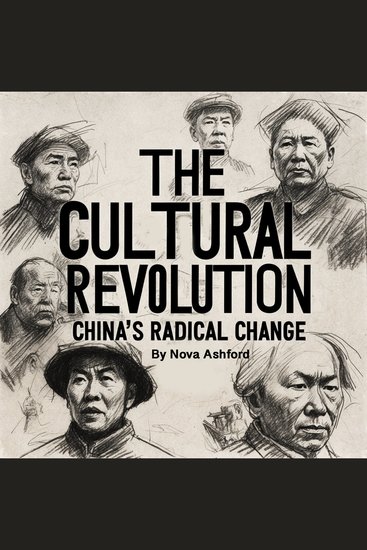
    The Cultural Revolution, which took place in China from 1966 to 1976, was one of the most tumultuous and transformative periods in the country’s history. Initiated by Mao Zedong, the founding father of the People’s Republic of China, the movement sought to preserve Chinese communism by removing capitalist, traditional, and cultural elements from Chinese society. At its core, the Cultural Revolution aimed to enforce Maoist ideology, reaffirm his leadership, and transform the cultural, social, and political fabric of China. It was a radical attempt to reshape Chinese society by addressing perceived corruption and ideological impurity within the Communist Party and broader society. 
    Mao’s motivations for launching the Cultural Revolution were multifaceted. After the failure of the Great Leap Forward (1958-1962), which had resulted in widespread famine and economic chaos, Mao’s position within the Communist Party had been weakened. The Cultural Revolution provided Mao with an opportunity to reassert his control over the party and eliminate rivals, many of whom were seen as too moderate or resistant to his vision of a truly communist society. It also reflected Mao’s concern that China was veering away from the revolutionary ideals that had initially driven the Communist Party. 
    The movement was largely propelled by the Red Guards, a youth-based movement that encouraged the younger generation to challenge authority and remove perceived counter-revolutionary influences. Under the banner of Maoism, the Red Guards sought to destroy the "Four Olds"—old customs, old culture, old habits, and old ideas. This led to widespread destruction of cultural heritage, including temples, books, and artworks. Intellectuals, teachers, and perceived enemies of the revolution were subjected to violent persecution, public humiliation, and forced labor, with many being sent to the countryside for "re-education."
    Zum Buch
  • The Qin Dynasty - Unifying China - cover

    The Qin Dynasty - Unifying China

    Jun Liu

    • 0
    • 0
    • 0
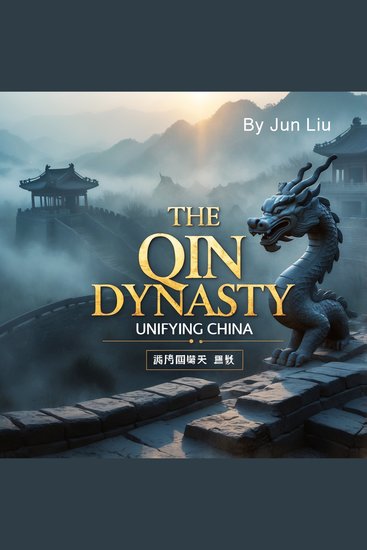
    The Qin state emerged as one of the most formidable powers during the Warring States Period, a time of intense conflict and political fragmentation in ancient China. Situated in the western frontier, Qin was once considered a relatively backward state compared to its eastern rivals. However, through strategic reforms, military innovations, and a firm commitment to Legalist principles, Qin transformed itself into the dominant force that would eventually unify China. 
    One of the key factors in Qin’s rise was the implementation of Legalist policies under the statesman Shang Yang. In the fourth century BCE, Shang Yang introduced a series of reforms that fundamentally reshaped Qin society. These policies emphasized strict laws, centralized authority, and merit-based advancements. Land ownership was restructured to allow farmers more direct control over their land, encouraging agricultural productivity and economic growth. At the same time, a rigid legal code was enforced, ensuring discipline among the population while diminishing the power of aristocratic families. By weakening the influence of hereditary nobles and promoting individuals based on their abilities, Shang Yang’s reforms created a more efficient and loyal administrative system that strengthened Qin’s central government. 
    The military advancements of Qin also played a crucial role in its ascendance. Unlike other states that relied heavily on noble warriors, Qin adopted a professional army system that allowed for greater discipline and efficiency. The state implemented mass conscription, ensuring a steady supply of soldiers trained under strict military codes. Advanced weaponry, including iron swords and crossbows, gave Qin troops a significant advantage on the battlefield. Additionally, the construction of an extensive road network allowed for rapid troop movements, enabling Qin forces to respond quickly to threats and expand their territorial control.
    Zum Buch
  • French Express: Turbocharge Your Beginner Learning Journey - Master Grammar Phrases and Conversations Effortlessly with Levels 1 to 8 – Learn Fast on the Go Ideal for Travel! - cover

    French Express: Turbocharge Your...

    Alexandre Verbeau

    • 0
    • 0
    • 0
    Bonjour! Ready to embark on your French learning adventure? Say bonjour to "French Express: Turbocharge Your Beginner Learning Journey"!  
    This audiobook is your passport to mastering French with ease.  
    Dive into Levels 1 to 8 and conquer grammar, phrases, and conversations effortlessly.  
    Whether you're on the go or jet-setting to Paris, this audio course is your ultimate travel companion.  
    Here's why "French Express" stands out: 
    - Comprehensive coverage of grammar, phrases, and conversations from beginner to intermediate levels. 
    - Convenient audio format allows for learning on the go, perfect for busy schedules and travel. 
    - Engaging and effective teaching methods to accelerate your learning process. 
    - Practical vocabulary and real-life dialogues to enhance your conversational skills. 
    - Expertly designed for English speakers, making learning French intuitive and enjoyable. 
    Bid farewell to language barriers and embrace fluency with "French Express"!  
    Start your journey to mastering French today.Ready to immerse yourself in the language of love? Get your copy of "French Express" now!
    Zum Buch
  • The Sibylline Oracles - cover

    The Sibylline Oracles

    Milton Terry

    • 0
    • 0
    • 0
    Brought to you by Altrusian Grace Media and narrated by Matthew Schmitz. 
    The Sibylline Oracles are a collection of oracular utterances written in Greek hexameters ascribed to the Sibyls, prophetesses who uttered divine revelations in a frenzied state.  
    Fourteen books and eight fragments of Sibylline Oracles from the 6th or 7th century AD survived. 
    Zum Buch