Begleiten Sie uns auf eine literarische Weltreise!
Buch zum Bücherregal hinzufügen
Grey
Einen neuen Kommentar schreiben Default profile 50px
Grey
Jetzt das ganze Buch im Abo oder die ersten Seiten gratis lesen!
All characters reduced
Digital Ethics Issues - cover

Digital Ethics Issues

Michael Davies

Übersetzer A AI

Verlag: Publifye

  • 0
  • 0
  • 0

Beschreibung

Digital Ethics Issues explores the complex intersection of technology and politics, particularly how nations grapple with challenges like data privacy, misinformation, and ethical hacking. In today's interconnected world, these issues directly influence democratic processes and personal freedoms. Did you know that the European Union's GDPR and California's CCPA are attempts to regulate data privacy, reflecting varied approaches to internet policy? The book argues that understanding both technology and its ethical and political implications is crucial for effective policy-making.

 
The book begins by laying a foundation of key concepts, then examines varying national approaches to online regulation, comparing the policies of the United States, China, and the European Union. Through case studies of significant data breaches and misinformation events, it dissects ethical failures and political ramifications.

 
The book uniquely offers a comparative analysis of national strategies, providing insights into the effectiveness of different approaches to digital governance and offering valuable lessons for policymakers. Ultimately, it equips readers to navigate the ethical dilemmas of the digital age.
Verfügbar seit: 04.03.2025.
Drucklänge: 79 Seiten.
Weitere Bücher, die Sie mögen werden

  • The Era of Liberation - 1862-1894 - cover

    The Era of Liberation - 1862-1894

    Louis Kossuth, Abraham Lincoln,...

    • 0
    • 0
    • 0
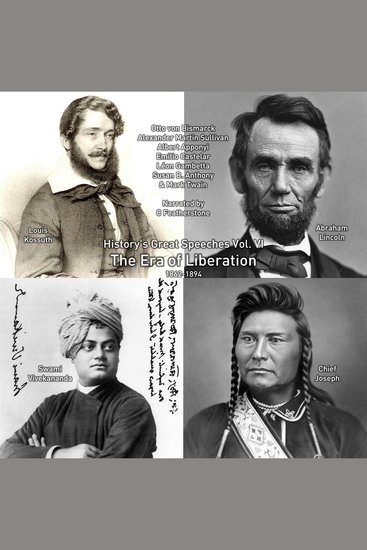
    The late 19th Century was a time of liberation. After the collapse of empires, people of all creeds demanded their equality.We begin with two speeches that represent the old order, by Bismarck. Between the two speeches he went from being Prussia’s last Minister President to being the Germany’s first Chancellor. A statesman in the oldest mold, he argues for nationalist dominance against forces temporal and religious.The counter is given by Sullivan, who excoriates the British government for the Zulu war, asking why the country supported wars of aggression in foreign lands.From there, we move to the liberation of nations and peoples. Louis Kossuth embodied Hungary’s struggle against imperial oppression, Castelar argues for a Spanish republic, and Gambetta for the education of the peasantry in France. Across Europe, a tide rose demanding the government serve the people rather than use them.In America, Lincoln defined the struggle between the Union and Confederacy as the start of universal emancipation and freedom for all men. In contrast, Chief Joseph’s speech drips with pathos, as he lays down his spear forever, desperate to find what is left of his massacred and desolate peoples in the wilderness. After the Civil War ends, Susan Anthony’s speech demands that women should have the vote, as guaranteed in the constitution for all citizens.A series of speeches by Swami Vivekananda follow, given at the first World’s Parliament of Religions. These speeches brought Buddhism and Hinduism into the Anglosphere, and began a trend of searching for spiritual liberation alongside the more material demands of the time.We finish on a lighter tone, as Mark Twain bemoans the decay of the art of lying. In an age of such seriousness, the tall tale fell out of fashion, and the simple joy of telling a fisherman’s tale was lost.
    Zum Buch
  • Little Red Riding Hood - cover

    Little Red Riding Hood

    Rebecca Bondor

    • 0
    • 0
    • 0
    Beautiful music and fun sound-effects help tell the classic tale of “Little Red Riding Hood.” When Little Red Riding Hood's grandmother becomes sick, she decides to visit her and bring her a basket of her favorite things. Her mother warns her to not talk to any strangers on her journey. But Little Red Riding Hood soon forgets her mother's warning and talks to a wolf along her way. The clever wolf races ahead to Grandmother's house because he wants a tasty supper. Find out how a nearby woodcutter saves Little Red Riding Hood and her Grandmother.  A happy ending adds interest to this fairy tale and encourages a lifelong love of great storytelling.
    Zum Buch
  • Tangled in Terror - Uprooting Islamophobia - cover

    Tangled in Terror - Uprooting...

    Suhaiymah Manzoor-Khan

    • 0
    • 0
    • 0
    'Lyrical and uncompromising - Suhaiymah writes to disrupt' - gal-dem 
    Islamophobia is everywhere. It is a narrative and history woven so deeply into our everyday lives that we don’t even notice it – in our education, how we travel, our healthcare, legal system and at work. Behind the scenes it affects the most vulnerable, at the border and in prisons. Despite this, the conversation about Islamophobia is relegated to microaggressions and slurs. 
    In this audiobook, beautifully narrated by the author, Suhaiymah Manzoor-Khan reveals how Islamophobia not only lives under the skin of those who it marks, but is an international political project designed to divide people in the name of security, in order to materially benefit global stakeholders. It can only be truly uprooted when we focus not on what it is but what it does. 
    Tangled in Terror shows that until the most marginalised Muslims are safe, nobody is safe.
    Zum Buch
  • World According to Star Wars - cover

    World According to Star Wars

    Cass R. Sunstein

    • 0
    • 0
    • 0
    ""Star Wars is the ultimate mythological tale of our age, a hero's journey that is a tribute to the beauty of human freedom as well as an exploration of its dark complexities. In this gem of a book, the brilliant Cass Sunstein uses the series to explore profound questions about being a parent, a child, and a human. It will change the way you think about your own journey, and it might even make you pick up the phone and call your dad.""  – Walter Isaacson 
    A deeply original celebration of George Lucas’s masterpiece as it relates to history, presidential politics, law, economics, fatherhood, and culture by Harvard legal scholar and former White House advisor. 
    There’s Santa Claus, Shakespeare, Mickey Mouse, The Bible, and then there’s Star Wars. Nothing quite compares to sitting with down with a young child and hearing the sound of John Williams’ score as those beloved golden letters fill the screen. In this fun, erudite and often moving book, Cass R. Sunstein explores the lessons of Star Wars as they relate to childhood, fathers, the Dark Side, rebellion, and redemption. As it turns out, Star Wars also has a lot to teach us about constitutional law, economics, and political uprisings. 
    In rich detail, Sunstein tells story of the films’ wildly unanticipated success and what it has to say about why some things succeed while others fail. Ultimately, Sunstein argues, Star Wars is about the freedom of choice and our never-ending ability to make the right decision when the chips are down. Written with buoyant prose and considerable heart, The World According to Star Wars shines new light on the most beloved story of our time.
    Zum Buch
  • Anxiety in Relationships - The Essential Guide to Move Beyond Negative Thinking Jealousy and Fear of Abandonment - cover

    Anxiety in Relationships - The...

    Vincenzo Venezia

    • 0
    • 0
    • 0
    Does thinking about the future of your relationship always leave you imagining the worst-case scenario?  
    Do you constantly live with a sense of insecurity? 
    Are you in a relationship but you feel like there’s too much negative energy? 
      
    Picture this: it is the scenario of the beginning of a relationship that is going very well. There is a high level of mutual understanding, communication is fantastic and clear, except for some doubts that plague you. 
      
    A little voice creeps into your head: 
      
    “Why would anyone be interested in me?” “Am I really up to it?” “Does she or he love me enough?”, “What if she or he leaves me?”, “Am I a romantic disaster?”, “What if she or he is cheating on me?”, “Can I live without this person?” In some cases, these questions linger on even after 'I love you' has been exchanged in the relationship. 
      
    Here's what you'll learn in this book:Where the roots of anxiety come from and 8 signs to identify them.Understanding your attachment style to better manage it.Overcoming the fear of abandonment and jealousy that stops you from living a more peaceful life.Techniquest to increase your self-confidence even if others have never believed in your worth.10 red flags to spot if you are in a toxic relationship.Techniques to better communicate your needs and resolve conflict.Loving a person with anxiety (partner tips). 
      
    What if I told you there is a way to silence this little voice? 
      
    Act now before everything falls apart! 
    This book was written for you and will help you to find satisfaction and thrive in your romantic relationships, in all their wonderful nuances.
    Zum Buch
  • The Shaking Woman or A History of My Nerves - cover

    The Shaking Woman or A History...

    Siri Hustvedt

    • 0
    • 0
    • 0
    While speaking at a memorial event in 2006, Siri Hustvedt suffered a violent seizure from the neck down. Despite her flapping arms and shaking legs, she continued to speak clearly and was able to finish her speech. It was as if she had suddenly become two people: a calm orator and a shuddering wreck. Then the seizures happened again and again. The Shaking Woman tracks Hustvedt's search for a diagnosis, one that takes her inside the thought processes of several scientific disciplines, each one of which offers a distinct perspective on her paroxysms but no ready solution. In the process, she finds herself entangled in fundamental questions: What is the relationship between brain and mind? How do we remember? What is the self? 


    During her investigations, Hustvedt joins a discussion group in which neurologists, psychiatrists, psychoanalysts, and brain scientists trade ideas to develop a new field: neuropsychoanalysis. She volunteers as a writing teacher for psychiatric in-patients at the Payne Whitney clinic in New York City and unearths precedents in medical history that illuminate the origins of and shifts in our theories about the mind-body problem. Hustvedt synthesizes her experience and research into a compelling mystery: Who is the shaking woman? In the end, the story she tells becomes, in the words of George Makari, "a brilliant illumination for us all."
    Zum Buch