Rejoignez-nous pour un voyage dans le monde des livres!
Ajouter ce livre à l'électronique
Grey
Ecrivez un nouveau commentaire Default profile 50px
Grey
Abonnez-vous pour lire le livre complet ou lisez les premières pages gratuitement!
All characters reduced
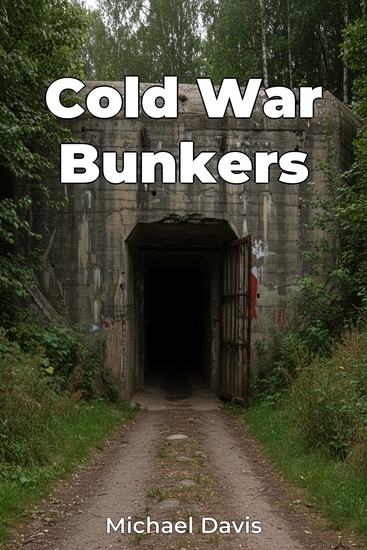
Cold War Bunkers - cover

Cold War Bunkers

Michael Davies

Traducteur A AI

Maison d'édition: Publifye

  • 0
  • 0
  • 0

Synopsis

Cold War Bunkers unveils the hidden world of subterranean facilities built by governments as a last-ditch response to potential nuclear fallout. These structures embody the architectural, historical, and military significance of an era defined by the pervasive fear of nuclear annihilation. Did you know that these bunkers weren't just about physical protection; they also represented a massive investment of resources and psychological energy aimed at preparing for a potential doomsday scenario? The book explores these bunkers as tangible expressions of societal anxieties during the Cold War.

 
This exploration begins by setting the historical context, detailing the arms race and the doctrine of mutually assured destruction. The narrative then transitions into an examination of the architectural designs, analyzing layout, materials, and life-support systems. Particular focus is given to specific examples worldwide, revealing their intended purpose and level of preparedness.

 
The book culminates by discussing the legacy of these bunkers, their current status, and insights into our ongoing relationship with nuclear threats.
Disponible depuis: 26/02/2025.
Longueur d'impression: 62 pages.

D'autres livres qui pourraient vous intéresser

  • Reckoning of Power - Oppenheimer the Atomic Bomb & World War 2 - cover

    Reckoning of Power - Oppenheimer...

    History Brought Alive

    • 0
    • 0
    • 0
    Discover the untold story of the most terrifying invention in human historyThis audiobook explores the history of the Atomic Bomb in World War II, and uncovers Robert Oppenheimer's mysterious role as its visionary leader.As the world plunged into war, Oppenheimer found himself at the centre of a moral and scientific dilemma. Could science save humanity, or would it be its downfall?With gripping narratives and meticulous research, this book takes you on a riveting journey from the Manhattan Project to the Atomic Bombings at Hiroshima and Nagasaka, traversing the landscapes of WWII, and the nuclear age aftermath.Here are some of the highlights: 
    J. Robert Oppenheimer, the brilliant, but troubled physicist who played a key role in the development of the Atomic Bomb 
    Explore the turbulent backdrop of World War II, where global conflict ignited scientific innovation 
    Step into the shoes of some of the greatest scientific minds in history—Albert Einstein, Edward Teller, Leslie Groves, Niels Bohr, and Leo Szilárd 
    Witness the crucial moments and decisions that led to the dropping of the "Little Boy" and "Fat Man" Atomic Bombs on Hiroshima and Nagasaki 
    Discover the Manhattan Project, a top secret mission that assembled the world's brightest minds in a race against the sinister, Nazi Atomic Project 
    E = mc²: Unravel the mysteries of Einstein's groundbreaking equation that laid the foundation for atomic science 
    Explore the Cold War and the arms race, followed by a glimpse into the future of nuclear energy 
    All of this and much, much more….Whether you're a history enthusiast or new to the subject, this book tells all about Oppenheimer, the Atomic Bomb, World War II, and the Nuclear Age Aftermath.Grab your copy of this book today!
    Voir livre
  • Meditations by Marcus Aurelius - The Complete Audiobook - cover

    Meditations by Marcus Aurelius -...

    Marcus Aurelius

    • 0
    • 0
    • 0
    Meditations has been translated into English more than twenty times. This audiobook presents one of the most enduring versions — the classic translation by George Long — narrated in full, from the first page to the last. 
    These are the private reflections of a Roman Emperor, written between 161 and 180 CE, during military campaigns far from Rome. Marcus Aurelius never intended them for publication. He wrote them for himself, as a way of returning, night after night, to the questions that mattered most: how to face death without fear, how to respond to difficult people without losing patience, how to live in agreement with nature when nothing is within your control except your own mind. 
    This audiobook contains the complete, unabridged text of all twelve books, narrated by Daniel Carvalho, with a short editorial introduction placing the work in context. 
    Eighteen centuries after it was written, Meditations remains one of the most listened-to works of philosophy in the world — not because it offers easy answers, but because it asks the right questions, in the voice of a man who had no audience but himself. 
    Listen to the words of an emperor who ruled the known world, and chose, instead, to master himself.
    Voir livre
  • History of Marathas EP18 - Mahadji Scindia - cover

    History of Marathas EP18 -...

    Vikrant Pande

    • 0
    • 0
    • 0
    Tipu formed a large corps of young Muslim lads whom he called his sons and now provided them with handsome young wives from the Hindu fold. These atrocities were perpetrated during the wet months of 1785. In Malabar he had converted, in one stroke, a hundred thousand Hindus to his faith. Portuguese missionaries wrote that 'he tied naked Christians and Hindus to the legs of elephants and made the elephants move around till the bodies of the helpless victims were torn to pieces.' In 1786 he declared himself emperor and had the khutba read in his name in all the mosques throughout his kingdom. His contention was that 'those idiots who introduce the name of Shah Alam in the khutba act through ignorance since the real condition of the so called emperor is this: that he is actually enslaved and a servant of the Scindia. So to pronounce the name of someone dependent on the infidels while reciting the sacred khutba was blasphemy.
    Voir livre
  • Martin Guerre - cover

    Martin Guerre

    Alexandre Dumas

    • 0
    • 0
    • 0
    "Martin Guerre" by Alexandre Dumas recounts the gripping true story of identity and deception in 16th-century France. Martin Guerre, a peasant, abandons his family, only for a man claiming to be him to return years later. The impostor, Arnaud du Tilh, seamlessly integrates into Martin’s life, earning the trust of his wife and community. However, cracks in his facade lead to a dramatic trial that questions truth, loyalty, and justice. Dumas explores themes of identity, love, and societal expectations, painting a vivid picture of rural life and legal drama. A tale of intrigue and human complexity, it reflects on the fragility of trust and the consequences of ambition, blending history with suspenseful storytelling.
    Voir livre
  • The Big Change - America Transforms Itself 1900-1950 - cover

    The Big Change - America...

    Frederick Lewis Allen

    • 0
    • 0
    • 0
    During the first fifty years of the twentieth century, the United States saw two world wars, a devastating economic depression, and more social, political, and economic changes than in any other five-decade period before. Frederick Lewis Allen, former editor of Harper's Magazine, recounts these years—spanning World War I, the Progressive Era, the Great Depression, World War II, and the early Cold War—in vivid detail, from the fashions and customs of the times to major events that changed the course of history. 


    Politically, the United States grew into its own as a global superpower during these years, even as domestic developments altered the everyday lives of its citizens. The introduction of the automobile, mass production, and organized labor changed the way Americans lived and worked, while innovations like penicillin and government regulation of food safety contributed to an increase in average life expectancy from forty-nine years in 1900 to sixty-eight years in 1950. With the development of a strong, centralized government, a thriving middle class, and widespread economic prosperity, the nation emerged from the Second World War transformed in virtually every way. 


    Richly informative, The Big Change is an indispensable volume charting the many changes that ushered in our contemporary age.
    Voir livre
  • The Best Is Possible - Book Sub Title: Modern Morocco Viewed Through the Lens of King Mohammed VI’s Speeches (1999–2019) - cover

    The Best Is Possible - Book Sub...

    Desmond Swan, Touria Jouilla McKee

    • 0
    • 0
    • 0
    “A compact, well-written and well-researched book. I am sure it will be welcomed as a valuable contribution to the history of contemporary Morocco and the remarkable process of transition it is undergoing as we speak.”
     
    Prof. Karim Bejjit, UniversityAbdelmalek Essadi, Tetouan, Morocco


    “Morocco has been experiencing major socio-economic transformation from an agricultural to an industrial economy… and His Majesty has been to the fore in these hugely significant developments. The authors paint a wonderful picture in this highly recommended book.”       
     
    Charles Flanagan, Minister for Foreign Affairs and Trade (2014–2017), Minister for Justice (2017–2020), Current Chair of Parliamentary Committee on Foreign Affairs and Defence (Irish Parliament)
    Voir livre