Begleiten Sie uns auf eine literarische Weltreise!
Buch zum Bücherregal hinzufügen
Grey
Einen neuen Kommentar schreiben Default profile 50px
Grey
Jetzt das ganze Buch im Abo oder die ersten Seiten gratis lesen!
All characters reduced
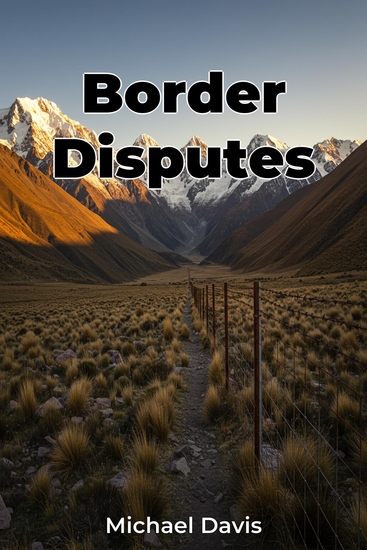
Border Disputes - cover

Border Disputes

Michael Davies

Übersetzer A AI

Verlag: Publifye

  • 0
  • 0
  • 0

Beschreibung

Border Disputes explores the complex history of territorial conflicts in the Americas, revealing how seemingly arbitrary lines on a map have ignited centuries of discord. It examines the enduring impact of colonialism, where European powers carved up the continent with little regard for existing indigenous land claims and societal structures.

 
Furthermore, the book highlights how resource competition and economic interests fueled disputes between newly formed nations, influencing the establishment of modern national borders. The book systematically analyzes these conflicts across different regions, starting with the colonial era and transitioning into the post-independence period. It delves into specific areas like the US-Mexico border, the Andes, and Central America, drawing from historical treaties, diplomatic records, and cartographic analysis to illustrate shifting territorial claims.

 
A unique aspect of this study is its comparative approach, which uncovers similar patterns and divergent outcomes across the Americas, offering a nuanced understanding of the forces shaping the continent's geopolitical landscape. The conclusion synthesizes these regional case studies, providing insights into potential pathways for conflict resolution. By understanding the historical roots of territorial disputes, the book provides context for current geopolitical flashpoints and offers valuable perspectives on international relations, making it relevant for anyone interested in history, political science, and the ongoing controversies surrounding immigration, trade, and resource management.
Verfügbar seit: 19.03.2025.
Drucklänge: 61 Seiten.
Weitere Bücher, die Sie mögen werden

  • Protecting My Peace - Embracing Inner Beauty and Ancestral Power - cover

    Protecting My Peace - Embracing...

    Elizabeth Leiba

    • 0
    • 0
    • 0
    A comprehensive guide for black women seeking to prioritize their mental, emotional, and physical health 


    Reclaim your peace. Protecting My Peace: Embracing Inner Beauty and Ancestral Power focuses on transforming self-perception, recreating ancestral traditions, and channeling the spiritual power of the African feminine divine. Delve into transformative self-care practices. Find strategies to connect with ancestral roots, embrace spirituality, and foster personal growth. Prioritize your mental, emotional, and physical health with practical advice on African American home remedies, how to be healthy, and overcoming trauma. 


    Rediscover your inner strength. Enter a transformative journey toward self-acceptance and belonging. Learn to perceive physical beauty through a fresh lens and embrace your whole self. 


    A must-listen for black women seeking to reclaim their power and well-being. Understand the philosophy of the African feminine divine. Find empowerment in the idea that places women of the African diaspora at the heart of their cultures. Learn how embracing this power can improve self-confidence, self-esteem, mental health, and emotional well-being.
    Zum Buch
  • Free to Stand for Truth and Justice - cover

    Free to Stand for Truth and Justice

    Laurent Gbagbo

    • 0
    • 0
    • 0
    Ousted from power by the French army on April 11, 2011, following the disputed presidential election in Côte d'Ivoire of November 2010, Laurent Gbagbo was charged with crimes against humanity before the International Criminal Court (ICC) in The Hague, on December 5, 2011.
    
    This book, written from 2012 onwards, thanks to numerous prison visits and interviews, is the only one to have been produced with the participation of the Ivorian president during his incarceration and trial.
    This unique testimony is more than ever a document for history, because it sheds light on the manipulations of the 2010 elections, the collusion between Nicolas Sarkozy's France and the ICC to get rid of Laurent Gbagbo, and the stalling tactics and maneuvers that marred "Gbagbogate."
    Over meetings with François Mattei, Laurent Gbagbo looks back on his seven years in prison, explains what they mean and shares his vision for the future—that of a free man, come what may.
    Zum Buch
  • Essays: First Series Circles - cover

    Essays: First Series Circles

    Ralph Waldo Emerson

    • 0
    • 0
    • 0
    Nothing stands still. The moment we grasp an idea, it expands beyond us. The instant we define a boundary, a wider one emerges. Ralph Waldo Emerson's essay Circles is not about shapes on a page but about the shifting nature of thought, existence, and perception. Each insight is a stepping stone, each conclusion just another starting point. There is no final answer—only an ever-widening ring of understanding.
    Emerson writes with the quiet confidence of someone who has seen the world rearrange itself countless times. He does not dictate; he invites. He does not confine; he liberates. Circles is both a challenge and a comfort: the challenge to let go of fixed truths, the comfort that every ending is merely a new circumference waiting to be drawn. This essay, part of his Essays: First Series, distills the restless energy of transcendentalism into a meditation on the inevitable movement of life.
    To read Circles is to be reminded that no thought, no identity, no moment is static. And that is not a reason for despair, but for wonder.
    Zum Buch
  • The Tech Coup - How to Save Democracy from Silicon Valley - cover

    The Tech Coup - How to Save...

    Marietje Schaake

    • 0
    • 0
    • 0
    Under the cover of "innovation," technology companies have successfully resisted regulation and have even begun to seize power from governments themselves. Facial recognition firms track citizens for police surveillance. Cryptocurrency has wiped out the savings of millions and threatens the stability of the global financial system. Spyware companies sell intelligence tools to anyone who can afford them. This new reality—where unregulated technology has become a forceful instrument for autocrats worldwide—is terrible news for democracies and citizens. 


    In The Tech Coup, Marietje Schaake explains how technology companies crept into nearly every corner of our lives and our governments. She takes us beyond the headlines to high-stakes meetings with human rights defenders, business leaders, computer scientists, and politicians to show how technologies have gone from being heralded as utopian to undermining the pillars of our democracies. To reverse this existential power imbalance, Schaake outlines solutions to empower elected officials and citizens alike. Democratic leaders can—and must—resist the influence of corporate lobbying and reinvent themselves as dynamic, flexible guardians of our digital world. Schaake offers a frightening look at our modern tech-obsessed world—and a clear-eyed view of how democracies can build a better future before it is too late.
    Zum Buch
  • Empire of Liberty - A History of the Early United States Republic 1789–1815 - cover

    Empire of Liberty - A History of...

    Harry Montgomery

    • 0
    • 0
    • 0
    In 1789, the United States stood at a turning point. After years of conflict during the American Revolution and an uncertain postwar period under the Articles of Confederation, the country was in need of stronger national leadership. The new Constitution, ratified in 1788, was designed to create a more effective federal system while still preserving the ideals of liberty and republicanism. This document was a compromise between those who wanted a powerful central government and those who feared tyranny. It created three branches of government—executive, legislative, and judicial—each with checks and balances to prevent abuse of power. The Bill of Rights, added shortly after ratification, helped ease concerns by protecting individual freedoms such as speech, religion, and the right to a fair trial. 
    With the Constitution in place, attention turned to the task of putting it into practice. George Washington was unanimously elected as the first president, taking office in April 1789. His presence offered reassurance to many citizens who trusted his leadership and commitment to republican values. Washington worked to establish the authority of the executive branch without appearing monarchical. He formed the first presidential cabinet, appointing Thomas Jefferson as Secretary of State, Alexander Hamilton as Secretary of the Treasury, and Henry Knox as Secretary of War. This team would help shape the future direction of the republic. 
    The first Congress, meanwhile, worked to set up the basic structures of the new government. They created the federal court system through the Judiciary Act of 1789 and established executive departments. They also passed revenue legislation to fund the government’s activities. One of the early and pressing tasks was addressing the national debt from the Revolution. Alexander Hamilton proposed a financial plan that included federal assumption of state debts, the creation of a national bank, and new taxes.
    Zum Buch
  • Ride Lonesome - cover

    Ride Lonesome

    Kirk Ellis

    • 0
    • 0
    • 0
    Ride Lonesome, the fifth film in the "Ranown cycle," is both the best and most representative of the whole series, which has been called "the most remarkable convergence of artistic achievement in the history of low-budget moviemaking." Director Bud Boetticher captures the alienation and loneliness of an America faced with the Cold War and the daily threat of nuclear annihilation. Shot in seventeen days for under a half-million dollars, Ride Lonesome is a masterpiece of cinematic minimalism. 


    Veteran screenwriter Kirk Ellis brilliantly unpacks the themes, narrative, visual language, and editing in this seminal film. In Ride Lonesome Ellis not only shows how this one film embodies a turning point for the Western, but he also explores the unique vision and contributions of director Boetticher and his writing partner Burt Kennedy.
    Zum Buch