Begleiten Sie uns auf eine literarische Weltreise!
Buch zum Bücherregal hinzufügen
Grey
Einen neuen Kommentar schreiben Default profile 50px
Grey
Jetzt das ganze Buch im Abo oder die ersten Seiten gratis lesen!
All characters reduced
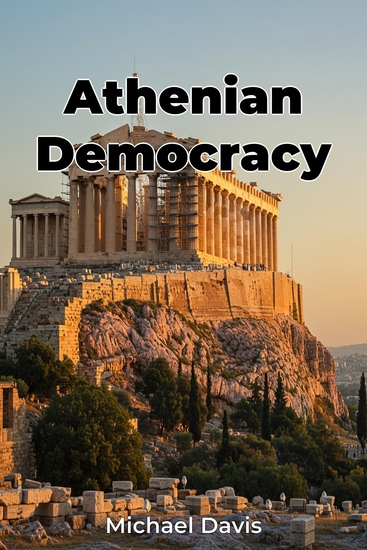
Athenian Democracy - cover

Athenian Democracy

Michael Davies

Übersetzer A AI

Verlag: Publifye

  • 0
  • 0
  • 0

Beschreibung

Athenian Democracy explores the radical experiment in self-governance that defined ancient Athens and forever altered political thought. This history examines the core tenets of direct participation, civic responsibility, and the common good, analyzing their enduring impact on contemporary political systems. The book delves into the historical context, from the reforms of Cleisthenes to the contributions of Pericles, illustrating how these leaders championed citizen involvement. Discover how the Assembly allowed all male citizens to debate and vote on laws, ensuring accountability and preventing the concentration of power.

 
The book progresses by introducing direct democracy and its roots, then explores the institutions of Athenian government, examining their powers and limitations. Later chapters delve into the social and cultural context, assessing the legacy of Athenian democracy and its relevance to modern challenges. By drawing upon primary sources and modern scholarship, Athenian Democracy offers a comprehensive, analytical account of this unique political system.
Verfügbar seit: 29.03.2025.
Drucklänge: 58 Seiten.

Weitere Bücher, die Sie mögen werden

  • The Power of the Dao - Seven Essential Habits for Living in Flow Fulfilment and Resilience - cover

    The Power of the Dao - Seven...

    Max Landsberg

    • 0
    • 0
    • 0
    Being in flow is when you are “in the zone,” “on your game,” or even “on fire.” It is both a mental state and a physical one. You have a feeling of complete focus, full involvement, and deep enjoyment in whatever you are doing. You feel the activity takes no energy from you—indeed you feel that it is giving you energy. You barely notice the passage of time. You feel calm but almost ecstatic. Most of us have glimpsed being in this state. But what if you could be in your zone not just for a moment of flow, nor merely for a day, but always and forever? This book shows you how to achieve that state, based on the enduring ancient Chinese wisdom of Daoist principles and practice. Millions of people have lived a better, happier, and more productive life by following all or some of these Daoist principles. This book provides the seven core principles of Daoism to help you live your life in productive yet relaxed flow for extended periods—or all the time.
    Zum Buch
  • Drunks: An American History - An American History - cover

    Drunks: An American History - An...

    Christopher M. Finan

    • 0
    • 0
    • 0
    A social history of alcoholism in the United States, from the seventeenth century to the present day 
    Today, millions of Americans are struggling with alcoholism, but millions are also in long-term recovery. Alcoholics Anonymous and a growing number of recovery organizations are providing support for alcoholics who will face the danger of relapse for the rest of their lives. We have finally come to understand alcoholism as a treatable illness, rather than a moral failure. Today’s advocates can draw inspiration from the victories of sober drunks throughout American history. 
    Christopher Finan recounts the nation’s history with alcohol and its search for sobriety, which began among Native Americans in the colonial period, when liquor was used to cheat them of their property. He introduces us to the first of a colorful cast of characters, a remarkable Iroquois leader named Handsome Lake, who dedicated his life to helping his people renounce hard liquor. And we meet Carrie Nation, the wife of an alcoholic who destroyed bars with an ax in her anger over what alcohol had done to her family, as well as the idealistic and energetic Washingtonians, reformed drunks who led the first national movement to save men like themselves. 
    Finan also tells the dramatic story of Bill Wilson and Dr. Bob Smith, the two drunks who helped each other stay sober and then created AA, which survived its tumultuous early years and has made it possible for millions of men and women to quit drinking. This is narrative history at its best: entertaining and authoritative, an important portrait of one of America’s great liberation movements.
    Zum Buch
  • Her Slave - Lesbian BDSM Erotica - cover

    Her Slave - Lesbian BDSM Erotica

    Jenika Lovey

    • 1
    • 1
    • 0
    When her new girlfriend confesses to enjoying dominating her lovers, a young woman becomes intrigued and asks to be shown. It's the start of a night where she is kept as a love slave and used. Stripped naked and chained to the wall in a basement, she is made to wait as her girlfriend gets ready, and then the pain and pleasure begins as she is tied, dominated, and brought to a climax.   
    This story contains sex scenes and is suitable for adults only. All characters are fictional and are over 18 years old.
    Zum Buch
  • Formation of the United Nations The: The History of the Negotiations that Brought About the World’s Biggest International Organization - cover

    Formation of the United Nations...

    Charles River Editors

    • 0
    • 0
    • 0
    On November 29, 1943, as the Allies’ primary leaders met in Tehran, Roosevelt described to Stalin his idea for the organization that would become the United Nations. The American president suggested that the active arm of the organization be “the Four Policemen”: the U.S., USSR, UK, and China. Stalin agreed with much of the framework in principle, but asserted that China likely would not possess the strength after the war to assist. He also noted that the “Policemen” must hold a series of strong points, putting Germany and Japan at too much of a disadvantage to attempt military adventurism again. Roosevelt, eager to please his “friend,” agreed with everything Stalin said.  
    	That exchange might be considered the origin of the United Nations, one of the most famous bodies in the world, but the concept was already in existence in the form of its predecessor, the League of Nations. At the end of World War I, President Woodrow Wilson's pleas at the Paris Peace Conference relied on his Fourteen Points, which included the establishment of a League of Nations, but while his points were mostly popular amongst Americans and Europeans alike, leaders at the conference largely discarded them and favored different approaches. British leaders saw their singular aim as the maintenance of British colonial possessions. France, meanwhile, only wanted to ensure that Germany was weakened and unable to wage war again, and it too had colonial interests abroad that it hoped to maintain. Britain and France thus saw eye-to-eye, with both wanting a weaker Germany and both wanting to maintain their colonies. Wilson, however, wanted both countries to rid themselves of their colonies, and he wanted Germany to maintain its self-determination and right to self-defense. Wilson totally opposed the “war guilt” clause, which blamed the war on Germany.
    Zum Buch
  • Women Holding Things & Still Life with Remorse - cover

    Women Holding Things & Still...

    Maira Kalman

    • 0
    • 0
    • 0
    From the critically acclaimed artist, designer, and author of the bestsellers The Principles of Uncertainty and My Favorite Things comes a collection of moving meditations on the beauty and complexity of women’s lives and roles, revealed in the things they hold, and on remorse, joy, ancestry, and memory. 
    Women Holding Things includes thoughtful and intimate anecdotes, recollections, and ruminations about portraits of women, both ordinary and famous. These women hold a range of objects, from the mundane—balloons, a cup, a whisk, a chicken, a hat—to the abstract—dreams and disappointments, sorrow and regret, joy and love. Kalman considers the many things that fit physically and metaphorically between women’s hands: We see a woman hold a book, hold shears, hold children, hold a grudge, hold up, hold her own. In telling their stories, Kalman lays bare the essence of women’s lives—their tenacity, courage, vulnerability, hope, and pain. Ultimately, she reveals that many of the things we hold dear—as well as those that burden or haunt us—remain constant and connect us from generation to generation.  
    Maira Kalman’s most autobiographical and intimate work to date, Still Life with Remorse is a beautiful collection of deeply personal stories. Tracing her family’s story from her grandfather’s birth in Belarus and emigration to Tel Aviv—where she was born—Maira considers her unique family history, illuminating the complex relationship between recollection, regret, happiness, and heritage. In addition to vignettes exploring her Israeli and Jewish roots, Kalman includes short stories about other great artists, writers, and composers. Through these narratives, Kalman uses her signature wit and tenderness to reveal how family history plays an influential role in all of our work, lives, and perspectives. A feat of storytelling and vulnerability, Still Life with Remorse explores the profound hidden in the quotidian, and illuminates the powerful universal truths in our most personal family stories.
    Zum Buch
  • Pragmatism - cover

    Pragmatism

    William James

    • 0
    • 0
    • 0
    'Pragmatism' contains a series of public lectures held by William James in Boston 1906–7. James provides a popularizing outline of his view of philosophical pragmatism while making highly rhetorical and entertaining lashes towards rationalism and other competing schools of thought. James is especially concerned with the pragmatic view of truth. True beliefs should be defined as, according to James, beliefs that can successfully assist people in their everday life. This is claimed to not be relativism. That reality exists is argued to be a fact true beyond the human subject. James argues, nevertheless, that people select which parts of reality are made relevant and how they are understood to relate to each other. Charles Sanders Peirce, widely considered to be the founder of pragmatism, eventually chose to separate himself intellectually from James, renaming his own theory to ‘pragmaticism’.
    Zum Buch