Begleiten Sie uns auf eine literarische Weltreise!
Buch zum Bücherregal hinzufügen
Grey
Einen neuen Kommentar schreiben Default profile 50px
Grey
Jetzt das ganze Buch im Abo oder die ersten Seiten gratis lesen!
All characters reduced
Ancient Conspiracies - cover

Ancient Conspiracies

Michael Davies

Übersetzer A AI

Verlag: Publifye

  • 0
  • 0
  • 0

Beschreibung

Ancient Conspiracies explores the hidden world of political intrigue in ancient history, examining how secret alliances and covert actions shaped empires. The book demonstrates how conspiracies were integral to the political landscape, challenging conventional views that emphasize open warfare and diplomacy. For instance, the Pisonian conspiracy against Nero reveals the ruthless pursuit of power, while the assassination of Julius Caesar underscores the fragility of political stability. The book investigates how conspiracies were conceived, organized, and executed, and assesses their lasting impact on civilizations. By analyzing case studies like potential plots within Egyptian dynasties, the book uncovers recurring patterns of human behavior and political maneuvering.

 
It progresses by first introducing the core concepts of conspiracy, then presenting case studies across different regions and eras, and finally analyzing the long-term consequences. Offering a fresh perspective on ancient history, Ancient Conspiracies provides valuable insights into the enduring nature of political intrigue. By drawing connections to psychology, sociology, and political science, the book offers a holistic understanding of conspiracies and their relevance to contemporary political dynamics. This systematic, comparative analysis encourages readers to critically analyze historical narratives and understand the complexities of political power.
Verfügbar seit: 21.03.2025.
Drucklänge: 68 Seiten.


Weitere Bücher, die Sie mögen werden

  • Conspiracy - Why the Rational Believe the Irrational - cover

    Conspiracy - Why the Rational...

    Michael Shermer

    • 0
    • 0
    • 0
    Best-selling author Michael Shermer presents an overarching theory of conspiracy theories—who believes them and why, which ones are real, and what we should do about them. 
     
    Nothing happens by accident, everything is connected, and there are no coincidences: that is the essence of conspiratorial thinking. Long a fringe part of the American political landscape, conspiracy theories are now mainstream: 147 members of Congress voted in favor of objections to the 2020  
    presidential election based on an unproven theory about a rigged electoral process promoted by the mysterious group QAnon. But this is only the latest example in a long history of ideas that include the satanic panics of the 1980s, the New World Order and Vatican conspiracy theories, fears about  
    fluoridated water, speculations about President John F. Kennedy's assassination, and the notions that the Sandy Hook massacre was a false-flag operation and 9/11 was an inside job. 
     
    In Conspiracy, Michael Shermer presents an overarching review of conspiracy theories—who believes them and why, which ones are real, and what we should do about them. Trust in conspiracy theories, he writes, cuts across gender, age, race, income, education level, occupational status—and even  
    political affiliation. One reason that people believe these conspiracies, Shermer argues, is that enough of them are real that we should be constructively conspiratorial: elections have been rigged (LBJ's 1948 Senate race); medical professionals have intentionally harmed patients in their care (Tuskegee); your  
    government does lie to you (Watergate, Iran-Contra, and Afghanistan); and, tragically, some adults do conspire to sexually abuse children. But Shermer reveals that other factors are also in play: anxiety and a sense of loss of control play a role in conspiratorial cognition patterns, as do certain personality traits. 
     
    This engaging book will be an important read for anyone concerned about the future direction of American politics, as well as anyone who's watched friends or family fall into patterns of conspiratorial thinking. 
     
    A supplemental PDF is included with this audiobook.
    Zum Buch
  • Finding Your Walden - How to Strive Less Simplify More and Embrace What Matters Most - cover

    Finding Your Walden - How to...

    Jen Tota McGivney

    • 0
    • 0
    • 0
    Discover Henry David Thoreau’s philosophy of living a good life and learn how to apply it to your own.   The hero for our time is someone few people get right. Thoreau wasn’t a hermit in the woods. He lived during a time like ours, of rapid technological and economic changes, political division, and a pandemic. Thoreau, like us, reassessed his priorities: What does success really look like? What is my duty as an ethical citizen of a less-than-ethical world? How can I live a good life amid (insert hand-sweeping gesture) all of this?   His solution: Pare down to trade up.  Finding Your Walden combines classic literature with happiness studies, exploring how experts—psychologists, career coaches, and doctors—support Thoreau’s ideas as guideposts for today’s Great Reassessment. It combines insights of the 1854 classic with people who embrace the pare-down-to-trade-up philosophy today, whether through major life changes (such as tiny homes or sabbaticals) or smaller life hacks (like digital sabbaths or meditation practices). Their stories inspire us to apply creativity, simplicity, and peace to the experiment of life.  Finding Your Walden isn’t about shunning money or success. It’s about grappling with the purpose of the first and the meaning of the second. Whether you love Walden or haven’t read it, you can join Thoreau on a path to discover an intentional life during a volatile time—you just need to make a stop at a cabin on the way.
    Zum Buch
  • Brave Dames and Wimpettes - What Women Are Really Doing on Page and Screen - cover

    Brave Dames and Wimpettes - What...

    Susan Isaacs

    • 0
    • 0
    • 0
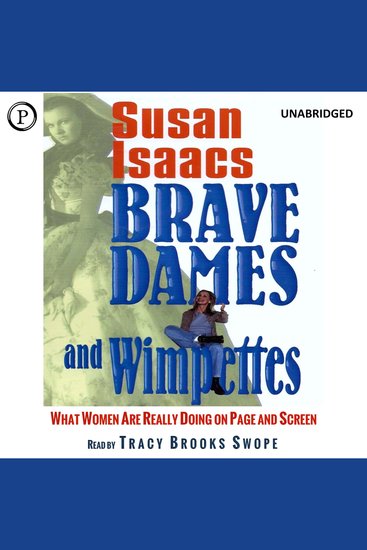
    What makes Buffy the Vampire Slayer a "brave dame" but Ally McBeal a "wimpette"? In this witty, incisive look at the role of women on screen and page, Susan Isaacs argues that assertive, ethical women characters are losing ground to wounded, shallow sisters who are driven by what she calls, "the articles of wimpette philosophy." Although female roles have included lawyers like Ally McBeal, they are wimpettes nonetheless. A brave dame, on the other hand, is a dignified, three-dimensional hero who may care about men, home, and hearth, but also cares—and acts—passionately about something in the world beyond. Brave dames' stories range from mundane (Mary Richards in The Mary Tyler Moore Show) to romantic (Francesca in The Horse Whisperer) to fantastic (Xena: Warrior Princess), but whatever they do, they care about justice and carry themselves with self-respect and decency.
    Zum Buch
  • Engineering Hitler's Downfall - The Brains that Enabled Victory - cover

    Engineering Hitler's Downfall -...

    Gwilym Roberts

    • 0
    • 0
    • 0
    While living in Liverpool, Britain's second most heavily bombed city during World War II, the author experienced firsthand the terrible effects of the war on the civilian population and when studying at Cambridge he witnessed the American heavy bombers and their fighter escorts flying to attack targets in Germany and occupied Europe. 


    Serving as an engineering officer in the Royal Navy in HMS Sheffield provided firsthand realization of the importance of engineering and emphasized that victories achieved in the Battle of Britain and other campaigns were made possible by newly-developed machines, equipment, or techniques. These innovations gave the Allied forces a significant advantage and helped ensure eventual victory. 


    Engineering Hitler's Downfall features numerous inventions such as the decoding machines developed at Bletchley Park; the hand-held mine detectors that cleared pathways through enemy minefields, firstly  at the Battle of el Alamein but also in most subsequent actions; the newly-located factories and tanks that enabled the Russians to repulse the German invasion; the escort carriers and long range aircraft that enabled U-boats to be attacked in the mid-Atlantic; and the 4000 plus Bailey bridges that allowed narrow ravines and rivers as wide as the Rhine to be crossed. These and many other examples illustrate what was achieved under such immense pressure.
    Zum Buch
  • China - Fragile Superpower - cover

    China - Fragile Superpower

    Susan L. Shirk

    • 0
    • 0
    • 0
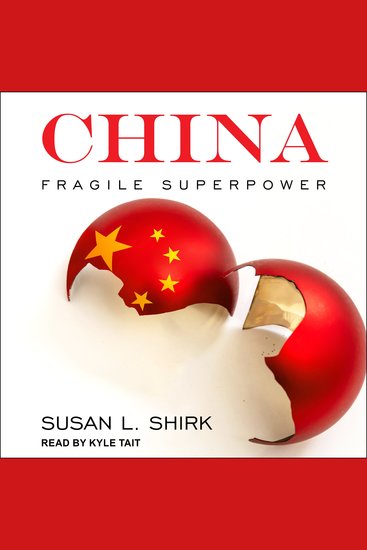
    Susan L. Shirk, a former Deputy Assistant Secretary of State responsible for China, knows many of today's Chinese rulers personally and has studied them for three decades. She offers invaluable insight into how they think—and what they fear. In this revealing book, you will see the world through the eyes of men like President Hu Jintao and former President Jiang Zemin. We discover a fragile communist regime desperate to survive in a society turned upside down by miraculous economic growth and a stunning new openness to the greater world. Theirs is a regime afraid of its own citizens, and this fear motivates many of their decisions when dealing with the US and other foreign nations. In particular, the fervent nationalism of the Chinese people, combined with their passionate resentment of Japan, and attachment to Taiwan, have made relations with these two regions a minefield. It is here, Shirk concludes, in the tangled interactions between Japan, Taiwan, China, and the United States, that the greatest danger lies. 


    Shirk argues that rising powers such as China tend to provoke wars in large part because other countries mishandle them. Unless we understand China's brittle internal politics and the fears that motivate its leaders, we face the very real possibility of avoidable conflict with China.
    Zum Buch
  • How We Think - cover

    How We Think

    John Dewey

    • 0
    • 0
    • 0
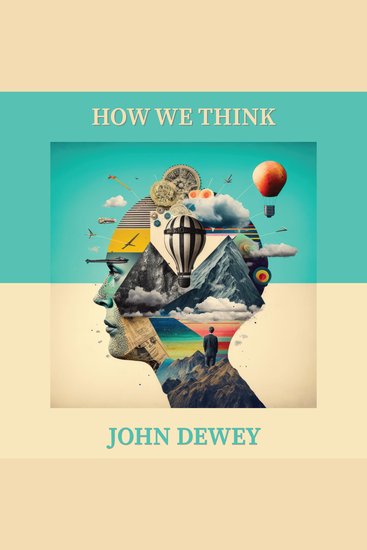
    How We Think is a seminal work by the American philosopher and educator John Dewey, first published in 1910. The book explores the process of human thought and inquiry, examining how we develop ideas and knowledge, and how we use critical thinking and problem-solving to make sense of the world around us. 
    Dewey's approach emphasizes the importance of experience and reflection in the process of learning and thought. He argues that our thinking is influenced by our past experiences and that we must reflect on those experiences in order to form new ideas and perspectives. He also advocates for a scientific approach to inquiry, emphasizing the importance of observation, experimentation, and testing in the development of knowledge. 
    In How We Think, Dewey also introduces his ideas on experimentalism and pragmatism, arguing that knowledge must be grounded in experience and that theories and ideas must be tested through practical application. He discusses the role of logic and critical thinking in this process, and the importance of education in fostering these skills. 
    How We Think is a groundbreaking work in the fields of philosophy, education, and psychology, and remains relevant today for its insights into the nature of human thought and learning
    Zum Buch