Begleiten Sie uns auf eine literarische Weltreise!
Buch zum Bücherregal hinzufügen
Grey
Einen neuen Kommentar schreiben Default profile 50px
Grey
Jetzt das ganze Buch im Abo oder die ersten Seiten gratis lesen!
All characters reduced
Gentrification Impact - cover

Gentrification Impact

Michael A. Johnson

Übersetzer A AI

Verlag: Publifye

  • 0
  • 0
  • 0

Beschreibung

Gentrification Impact explores the multifaceted phenomenon of gentrification, examining its economic drivers, displacement effects, and impact on community identity. It highlights how urban change, while often bringing benefits like improved infrastructure, can lead to the displacement of long-term residents, particularly in minority communities facing social inequality. For example, increased property values, while seemingly positive, can drive up housing costs, making it unaffordable for vulnerable populations.

 
The book progresses from a historical overview of gentrification's evolution to an analysis of its economic forces, such as real estate speculation and the influx of high-income residents. It then delves into displacement mechanisms, including rent increases and evictions, before examining the qualitative impact on community cohesion and cultural diversity.

 
The book emphasizes that urban development requires careful consideration to avoid exacerbating social inequality and to promote affordable housing. Ultimately, this study provides a balanced perspective, blending quantitative data with qualitative insights to offer a nuanced understanding of gentrification. It aims to equip policymakers, community organizers, and engaged citizens with the knowledge and tools to address the challenges of gentrification, fostering social equity and sustainable community development.
Verfügbar seit: 21.02.2025.
Drucklänge: 73 Seiten.
Weitere Bücher, die Sie mögen werden

  • Soviet Union - cover

    Soviet Union

    Kelly Mass

    • 0
    • 0
    • 0
    This title consists of 3 books, which are about these topics:1 - Stalingrad has changed names. It's now called Volgograd and is still one of the largest cities in Russia. But we can't ignore the fact that for a significant time in history, it was called Stalingrad, named after the tyrant and leader of the Soviet Union in the Second World War, Joseph Stalin. Let's explore the history of this city during the Second World War, and why the battles fought there were so horrendous and pivotal in history.2 - From 1924 till his death in 1953, Joseph Vissarionovich Stalin was a Georgian revolutionary and Soviet politician who ruled the Soviet Union. He was General Secretary of the Communist Party of the Soviet Union from 1922 to 1952 and Chairman of the Soviet Union's Council of Ministers from 1941 to 1953. In spite of ruling the nation as part of a collective management, he ultimately combined power and ended up being the totalitarian of the Soviet Union by the 1930s. Stalin, a communist dedicated to Lenin's grasp of Marxism, formalized these concepts as Marxism-- Leninism, while his personal policies were called Stalinism.3 - From 1922 till 1991, the Soviet Union, officially the Union of Soviet Socialist Republics (USSR), was a socialist state that covered Europe and Asia. It was in theory a federal union of different sovereign republics; but, till its closing years, its administration and economy were highly centralized.
    Zum Buch
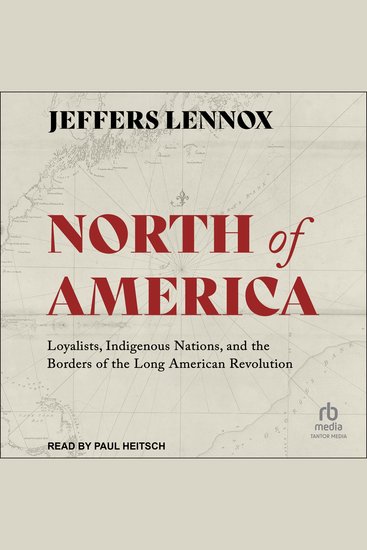
  • North of America - Loyalists Indigenous Nations and the Borders of the Long American Revolution - cover

    North of America - Loyalists...

    Jeffers Lennox

    • 0
    • 0
    • 0
    The story of the Thirteen Colonies' struggle for independence from Britain is well known to every American schoolchild. But at the start of the Revolutionary War, there were more than thirteen British colonies in North America. Patriots were surrounded by Indigenous homelands and loyal provinces. Independence had its limits. 


    Upper Canada, Lower Canada, New Brunswick, Nova Scotia, Newfoundland, and especially the homelands that straddled colonial borders, were far less foreign to the men and women who established the United States than Canada is to those who live here now. These northern neighbors were far from inactive during the Revolution. The participation of the loyal British provinces and Indigenous nations that largely rejected the Revolution—as antagonists, opponents, or bystanders—shaped the progress of the conflict and influenced the American nation's early development. 


    In this book, historian Jeffers Lennox looks north, as so many Americans at that time did, and describes how Loyalists and Indigenous leaders frustrated Patriot ambitions, defended their territory, and acted as midwives to the birth of the United States while restricting and redirecting its continental aspirations.
    Zum Buch
  • More Than Things - A Personalist Ethics for a Throwaway Culture - cover

    More Than Things - A Personalist...

    Paul Louis Metzger

    • 0
    • 0
    • 0
    ECPA Top Shelf Book Cover Award
    We live in a culture of commodification. People are too often defined by what they do or own; they're treated as means to an end or cogs in a machine. What goes missing is a deep sense of personhood—the belief that all humans are unique subjects with inherent worth and the right to self-determination in authentic communion with others.
    In a world dominated by things, Paul Louis Metzger argues, we must work hard to account for one another's personhood. We need to cultivate relational structures that honor every human's dignity in vital interpersonal community. The theological and philosophical framework known as personalism can help guide us toward such a culture. Drawing from a wide range of thought leaders, including Martin Luther King Jr. and Pope John Paul II, Metzger presents a personalist moral vision founded on the Christian ideals of faith, hope, and love. He demonstrates how this moral compass can help us navigate a pluralistic world by applying it to a variety of pressing ethical issues, including abortion, genetic engineering, immigration, drone warfare, and more.
    More Than Things is perfect as a supplemental text for philosophy or ethics courses and for those who want to go deeper in the study of human dignity and worth. Ultimately human personhood begins with the personal, triune God, who invites us to live more fully as human beings. With this book, learn to refuse to reduce fellow humans—and yourself—to mere abstractions or objects, and follow the example of Jesus in honoring the value of every person and of creaturely life as a whole.
    Zum Buch
  • Taming the Octopus - The Long Battle for the Soul of the Corporation - cover

    Taming the Octopus - The Long...

    Kyle Edward Williams

    • 0
    • 0
    • 0
    The untold story of how efforts to hold big business accountable changed American capitalism. 


    In this vivid and surprising history, we meet twentieth-century activists, investors, executives, and workers who fought over a simple question: Is the role of the corporation to deliver profits to shareholders, or something more? On one side were "business statesmen" who believed corporate largess could solve social problems. On the other were libertarian intellectuals such as Milton Friedman and his oft-forgotten contemporary, Henry Manne, whose theories justified the ruthless tactics of a growing class of corporate raiders. But Kyle Edward Williams reveals that before the "activist investor" emerged as a capitalist archetype, Civil Rights groups used a similar playbook for different ends, buying shares to change a company from within. 


    As a rising tide of activists pushed corporations to account for societal harms from napalm to environmental pollution to inequitable hiring, a new idea emerged: that managers could maximize value for society while still turning a maximal profit. This elusive ideal, "stakeholder capitalism," still dominates our headlines today. Williams's necessary history equips us to reconsider democracy's tangled relationship with capitalism.
    Zum Buch
  • Prophet the - cover

    Prophet the

    Kahlil Gibran

    • 0
    • 0
    • 0
    Brought to you by Altrusian Grace Media and narrated by Matthew Schmitz. Gibran’s book follows the final hours of the prophet Almustafa as he prepares to depart the city of Orphalese, offering distilled reflections on the fundamental forces of human existence—love, work, joy, sorrow, freedom, self-knowledge, and death. Each teaching arises from direct insight rather than doctrine, presenting life as an interwoven field of opposites whose tensions refine the soul. The text unfolds as a sequence of poetic addresses that cut through sentiment and moralism, pointing the reader toward inward clarity and responsibility.
    Zum Buch
  • William Shakespeare - The True Story of Life & Time of the Great Author - cover

    William Shakespeare - The True...

    Liam Dale

    • 0
    • 0
    • 0
    Mentioning William Shakespeare to English students worldwide elicits a range of reactions, from indifference to dread. 
     
    When approaching the works of a literary giant like Shakespeare, three perspectives must be considered. First, there are the writer's literary creations, such as novels, plays, and poems, for readers to explore. 
     
    Secondly, it's essential to place the author's work within the context of the society in which they lived. This doesn't entail an exhaustive history lesson but rather a snapshot of the author's life and era, which this journal provides. 
     
    Explore: 
    - William Shakespeare's life, from birth to passing 
    - His family life and places of residence 
    - The significance of the Globe Theatre 
    - Analysis of characterizations in his plays 
    - Deconstructing his works 
    - A closer look at plays like Twelfth Night, Romeo & Juliet, and Macbeth 
    - Helpful tips for students studying his literature
    Zum Buch