


Begleiten Sie uns auf eine literarische Weltreise!
Buch zum Bücherregal hinzufügen
Grey
Einen neuen Kommentar schreiben Default profile 50px
Grey
Jetzt das ganze Buch im Abo oder die ersten Seiten gratis lesen!
All characters reduced
Digital Privacy Concerns - cover

Digital Privacy Concerns

Michael A. Johnson

Übersetzer A AI

Verlag: Publifye

  • 0
  • 0
  • 0

Beschreibung

Digital Privacy Concerns explores the increasing challenges of safeguarding personal data in our interconnected world, where the balance between convenience and control is constantly shifting. The book examines the legal frameworks struggling to keep pace with technological advancements and the technologies themselves that both threaten and protect our data. It highlights how the erosion of digital privacy, impacting individual autonomy and corporate responsibility, can lead to identity theft, discrimination, and manipulation.

 
The book analyzes existing regulations, such as GDPR and CCPA, and explores encryption and anonymization techniques. It argues for a holistic approach, combining robust legal protections with ethical technology development and informed individual action. It begins by introducing fundamental concepts, progresses through legal and technological dimensions, and culminates in a framework for comprehensive digital privacy protection.

 
Integrating legal and technological perspectives, the book avoids technical jargon to remain accessible. It provides insights into judicial interpretations and policy debates, while also offering data-driven assessments of security vulnerabilities. Ultimately, it aims to equip readers with the knowledge to navigate the complexities of digital privacy, advocate for stronger data protection, and contribute to a more secure digital future.
Verfügbar seit: 22.02.2025.
Drucklänge: 82 Seiten.
Weitere Bücher, die Sie mögen werden

  • Liberation of Western Europe in World War II The: The History of the Western Allies’ Campaigns on the Continent - cover

    Liberation of Western Europe in...

    Editors Charles River

    • 0
    • 0
    • 0
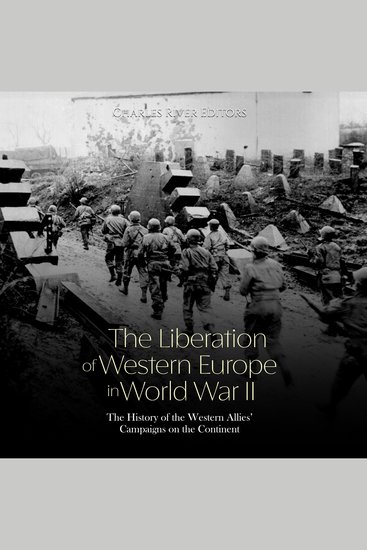
    During World War II, the free world literally hung in the balance, with the Axis and Allies engaging in warfare on an unprecedented scale. Although Hitler’s Nazi Germany had overrun much of the European continent by 1940, the Allies began to reverse the momentum in 1942. By the end of 1943, with Allied forces firmly established in Italy and the Soviets on the verge of turning the tide in Russia, the British and Americans began to plot the invasion that would liberate Europe from the Nazis.  
    	During the first half of 1944, the Americans and British commenced a massive buildup of men and resources in the United Kingdom, while Allied Supreme Commander Dwight D. Eisenhower and military brass planned the details of an enormous and complex amphibious invasion of Europe. Though the Allies used misinformation to try deceiving the Germans, the most obvious place for an invasion was just across the narrow English Channel, and the Germans had built coastal fortifications throughout France to protect against just such an invasion. 
    The invasion across the Channel came in the early morning hours of June 6, 1944. That day, forever known as D-Day, the Allies commenced Operation Overlord by staging the largest and most complex amphibious invasion in human history. After the successful amphibious invasion on D-Day in June 1944, the Allies began racing east toward Germany and liberating France along the way. The Allies had landed along a 50 mile stretch of French coast, and despite suffering 8,000 casualties on D-Day, over 100,000 still began the march across the western portion of the continent.  
    After resisting the German attack, the Allied armies began advancing, and with that, the race to Berlin was truly on. While much has been written of the Battle of the Bulge, Okinawa, Midway, Stalingrad, and many other conflicts of the Second World War, the Battle for Berlin has remained in the shadows for many historians. 
    Zum Buch
  • Ottomans and Christians The: The History and Legacy of the Ottomans’ Conflicts with Catholic and Orthodox Nations - cover

    Ottomans and Christians The: The...

    Editors Charles River

    • 0
    • 0
    • 0
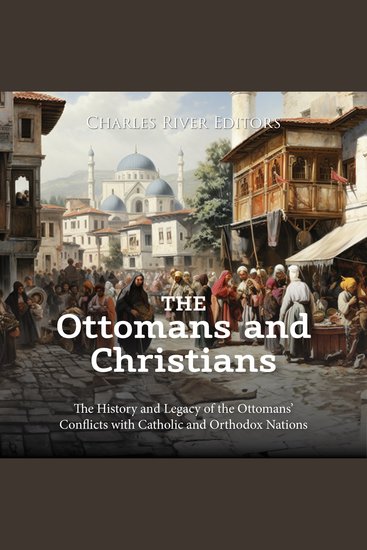
    In terms of geopolitics, perhaps the most seminal event of the Middle Ages was the successful Ottoman siege of Constantinople in 1453. The city had been an imperial capital as far back as the 4th century, when Constantine the Great shifted the power center of the Roman Empire there, effectively establishing two almost equally powerful halves of antiquity’s greatest empire. Constantinople would continue to serve as the capital of the Byzantine Empire even after the Western half of the Roman Empire collapsed in the late 5th century. Naturally, the Ottoman Empire would also use Constantinople as the capital of its empire after their conquest effectively ended the Byzantine Empire, and thanks to its strategic location, it has been a trading center for years and remains one today under the Turkish name of Istanbul.  
    	The end of the Byzantine Empire had a profound effect not only on the Middle East but Europe as well. Constantinople had played a crucial part in the Crusades, and the fall of the Byzantines meant that the Ottomans now shared a border with Europe. In the wake of taking Constantinople, the Ottoman Empire would spend the next few centuries expanding its size, power, and influence, bumping up against Eastern Europe and becoming one of the world’s most important geopolitical players. It was a rise that would not truly start to wane until the 19th century. Naturally, the Islamic empire was viewed as a threat by the predominantly Christian continent to their west, and it took little time for different European nations to start clashing with the powerful Turks. In fact, the Ottomans would clash with Russians, Austrians, Venetians, Polish, and more before collapsing as a result of World War I, when they were part of the Central Powers. 
    Zum Buch
  • South African History - A History Book of South Africa - cover

    South African History - A...

    History Retold

    • 0
    • 0
    • 0
    Interested in exploring Apartheid's complexities and its profound societal impact? 
    Ready to embark on a journey through South African history, exploring its triumphs and struggles? 
    If so, this book is for you! 
    Embark upon a journey of profound resonance, traversing the rhythmic currents of South African history. Plunge into a narrative that spans the epochs, from age-old indigenous wisdom to the resplendent tapestry of modern triumph. Immerse yourself in the vivid mosaic of ancestral heritage, where the echoes of colonial encounters interlace with the profound transformation from the shadows of apartheid to the radiant emergence of democracy's dawn. 
    Unearth the sagas of giants such as Nelson Mandela, whose path toward reconciliation stands as an unwavering testament to the human spirit's resolve. Prepare, dear traveler, for a transformative voyage akin to a labyrinthine exploration—a tapestry woven with tales that have stood the test of time with incisive analysis that plunges you into the very heart of South Africa's past. 
    In this book you will learn:The Origins of Ancient Indigenous Cultures and Early CommunitiesThe Dawn of European Colonization: Dutch East India Company's ImpactThe British Dominion, Boer Wars, and the Birth of Unified South AfricaThe Apartheid's Era: Struggle, Guided by Nelson Mandela's VisionThe Path to Democracy: The Transformative Truth and Reconciliation JourneyToday's Landscape: Rich Cultural Tapestry, Economic Advancement, and Ongoing Endeavors 
    Scroll up now and buy this book. Wisdom and knowledge awaits!
    Zum Buch
  • Jackson Pollock: A short biography - 5 Minutes: Short on time – long on info! - cover

    Jackson Pollock: A short...

    5 Minutes, 5 Minute Biographies,...

    • 0
    • 0
    • 0
    Jackson Pollock, American painter and inventor of "Action painting": Life and work in a short biography! Everything you need to know, brief and concise. Infotainment, education and entertainment at its best!
    Zum Buch
  • Elixir - A Parisian Perfume House and the Quest for the Secret of Life - cover

    Elixir - A Parisian Perfume...

    Theresa Levitt

    • 0
    • 0
    • 0
    For centuries, scientists believed that living matter possessed a special quality—a spirit or essence—that differentiated it from nonliving matter. But by the nineteenth century, the scientific consensus was that the building blocks of one were identical to the building blocks of the other. Elixir tells the story of two young chemists who were not convinced, and how their work rewrote the boundary between life and nonlife. 


    In the 1830s, Édouard Laugier and Auguste Laurent were working in Laugier Père et Fils, the oldest perfume house in Paris. By day they prepared the perfumery's revitalizing elixirs and rejuvenating eaux, drawing on alchemical traditions that equated a plant's vitality with its aroma. In their spare time they hunted the vital force that promised to reveal the secret to life itself. Their ideas, roundly condemned by established chemists, led to the discovery of structural differences between naturally occurring molecules and their synthetic counterparts, even when the molecules were chemically identical. 


    Scientists still can't explain this anomaly, but it may point to critical insights concerning the origins of life on Earth. Rich in sparks and smells, brimming with eccentric characters, experimental daring, and the romance of the Bohemian salon, Elixir is a fascinating cultural and scientific history.
    Zum Buch
  • Soldiers - A Global History of the Fighting Man 1800–1945 - cover

    Soldiers - A Global History of...

    John A Haymond

    • 0
    • 0
    • 0
    A global study of how soldiers lived, worked, and fought, and how many died, spanning from the Napoleonic War to World War II. No matter the war, no matter the army, no matter the nationality, common threads run through the experiences of men at war. Soldiers highlights these shared experiences across 150 years of warfare, from the Napoleonic Wars through World War II and everything in between, such as the Mexican and Crimean Wars, the American Civil War, the U.S. Indian Wars and Britain’s imperial bush wars, the Boxer Rebellion, the Boer War, the First World War, and more. Haymond explores the experiences that connect soldiers across time and space and draws heavily from firsthand accounts to craft a narrative with flesh-and-blood immediacy. Soldiers is entertaining and informative: history at its best. Praise for Soldiers“What makes Soldiers an interesting read is Haymond’s writing style and technique of comparing the common experiences of fighting men regardless of uniform and time served during the period.... Highly recommended for both scholars and students alike. It is a must for readers interested in the experience and psychology of being a warrior during this period.”—Military Review: The Professional Journal of the United States Army
    Zum Buch
