Begleiten Sie uns auf eine literarische Weltreise!
Buch zum Bücherregal hinzufügen
Grey
Einen neuen Kommentar schreiben Default profile 50px
Grey
Jetzt das ganze Buch im Abo oder die ersten Seiten gratis lesen!
All characters reduced
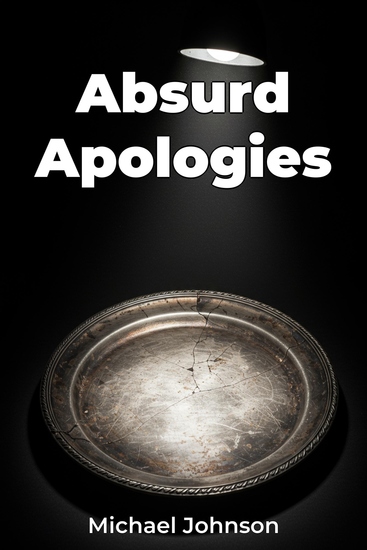
Absurd Apologies - cover

Absurd Apologies

Michael A Johnson

Übersetzer A AI

Verlag: Publifye

  • 0
  • 0
  • 0

Beschreibung

Absurd Apologies examines why some public apologies, intended for crisis management and effective communication, backfire spectacularly, turning transgression into full-blown outrage. From political apologies to business management blunders, the book dissects what makes an apology fail, revealing that insincerity or deflection can be worse than silence. It highlights how societal norms and social media have reshaped accountability, underscoring that a mismanaged apology inflicts lasting damage on reputation and trust.

 
The book offers a framework for understanding the psychology of apologies and public perception, emphasizing that aligning words with tangible actions is vital. It explores how the language of denial and the timing of delivery impact an apology's reception. Through case studies and analysis of public statements, Absurd Apologies demonstrates that poorly executed apologies intensify negative perceptions and erode ethical leadership.

 
Starting with the core elements of an effective apology, such as acknowledging responsibility and expressing remorse, the book progresses through high-profile failures, identifying specific missteps. It provides practical guidelines for crafting authentic apologies, emphasizing proactive communication strategies. This approach allows readers to understand the nuances of sincere apologies versus absurd apologies, making it a valuable resource for leaders and communicators.
Verfügbar seit: 29.03.2025.
Drucklänge: 90 Seiten.

Weitere Bücher, die Sie mögen werden

  • A Rare Recording of FA Hayek on Socialism - cover

    A Rare Recording of FA Hayek on...

    FA Hayek

    • 0
    • 0
    • 0
    The following two audio clips are from Friedrich August von Hayek (May 8, 1899 - March 23, 1992), who was an Austrian-British economist and political philosopher. Hayek shared the 1974 Nobel Memorial Prize in Economic Sciences with Gunnar Myrdal for work on money and economic fluctuations, and how prices communicate information. His seminal work, "The Road to Serfdom," has been republished many times over the eight decades since its original publication.
    Zum Buch
  • SAD - Overcoming Seasonal Affective Disorder and Winter Depressions - cover

    SAD - Overcoming Seasonal...

    Gavin Schlieker

    • 0
    • 0
    • 0
    Among the dark and dreary winters, there is a glimmer of light to aid you on your road to recovery.  
    If you are feeling sadness, fatigue, low energy, suicidal contemplations, or eating disorders, but they just come back every year during the winter time, you might have seasonal affective disorder. This disorder has affected many helpless victims and has taken its toll on countless depressed individuals. But don’t be afraid. There is a way to overcome this.  
    In this audiobook, you will learn:Identify the symptoms of a winter depressionDiscover what to tell your children with SADFigure out which healings work best for youKnow whether or not you have SADFind answers to solve the problem of SADDiscover which conducts will help you overcome your winter depressionAnd much more!  
    Don’t put it off if you want to be happier in the winter, and download this affordable audiobook right now!
    Zum Buch
  • Successful Introvert in Extroverted World - Complete guide for introverts who want to make friends be social and build leadership abilities and developing powerful skills - cover

    Successful Introvert in...

    Brian Gibson

    • 0
    • 0
    • 0
    This audiobook is narrated by an AI Voice.   
    We often seem to be living in an extroverted world—it is the route to attention. We teach our children to speak up, not be shy, and encourage them to be bold. Even our parents would tell us that “the squeaky wheel gets the oil!” The media tells us that the person willing to be the loudest will win the reality show, get the recording contract, get hits on YouTube… Growing up, we were encouraged to find our voice, choose a research area, and set the framework for a lifetime profession. 
    Many claims that Americans live in an “extroverted society” that rewards extroverted behavior and rejects introversion. This is because the United States is currently a culture of personality, whereas other cultures are cultures of character. Being an introvert in an extrovert’s world is doable—maybe even pleasant. And maybe the world does not truly belong to one or the other, but to the symbiosis between the two. The most important point to remember is that both types are equally important in their worth and contributions to society. Introverts should not be viewed as the “underdog” or disadvantaged because they are less outgoing or verbal. We have all heard of famous introverts such as Bill Gates, Steven Spielberg, J. K. Rowling, Albert Einstein, Jane Austen, Thomas Jefferson, and Mahatma Gandhi, individuals who, through their quiet ways, have made a tremendous impact on human culture. 
    In this book, you will learn all about introverted and extroverted personalities, the right way to communicate, and the solutions to success today.
    Zum Buch
  • Velociraptor The: The History of the Popular but Misunderstood Dinosaur Genus - cover

    Velociraptor The: The History of...

    Editors Charles River

    • 0
    • 0
    • 0
    The massively popular 1990 novel Jurassic Park by Michael Crichton and its subsequent movie adaptations led to a huge resurgence in interest in dinosaurs and the prehistoric world. That interest continues to the present day, even though most of the dinosaurs in Jurassic Park weren’t actually from the Jurassic period. Triceratops, Velociraptor, Tyrannosaurus Rex and the huge sauropods such as Brachiosaurus that feature in the book and movies all actually belong to the Late Cretaceous period, more than 40 million years after the end of the Jurassic. Regardless, the movie made certain kinds of dinosaurs instantly recognizable, even if associated with the wrong era. 
    	Thanks to the movie, there has been some unwitting confusion over the identity of the Velociraptor, and this confusion was due in large part to the fact the name sounds far more scary than the creature to which the name originally belonged. Moreover, the creature to which the label was applied in the novel and movie was actually a distant cousin named Deinonychus, but as the story goes, the author, Michael Crichton, thought “Velociraptor” sounded “more dramatic.” The actual Velociraptor lived not in the badlands of North America, but in the badlands of central-eastern Asia, and it was not nearly as intimidating as Deinonychus. In fact, the main species of genus Velociraptor - Velociraptor mongoliensis - was no bigger than a turkey. Thus, in a very real sense, the Velociraptor has taken on a larger-than-life reputation.
    Zum Buch
  • The Unbroken Reich - What If Germany Had Won World War I? - cover

    The Unbroken Reich - What If...

    Marcus Draysun

    • 0
    • 0
    • 0
    As World War I raged across Europe, 1917 emerged as the critical year that could have determined the war’s ultimate outcome. In our reality, the entry of the United States and the crumbling of the Eastern Front led to Germany’s eventual defeat. But what if events had unfolded differently? A few pivotal moments could have swung the war in Germany’s favor, altering the course of history entirely. 
    One of the most significant factors was the failure of the German spring offensives in 1918. If these attacks had broken through Allied lines, Germany might have forced Britain and France to negotiate peace before American troops arrived in full strength. The Germans, under General Ludendorff, came close to achieving this, but logistical challenges and the resilience of the Allies ultimately led to exhaustion on the German side. Had Germany secured victory on the Western Front in early 1918, a new Europe could have emerged under German dominance. 
    Another key element was the Russian Revolution. With the fall of the Tsar and the rise of the Bolsheviks, Russia exited the war, allowing Germany to shift troops westward. However, if Germany had been able to negotiate a more favorable peace with Russia earlier—perhaps by supporting a less radical government—it could have stabilized the Eastern Front sooner, securing vital resources and preventing the chaotic collapse that followed. A stable Russian ally or puppet state could have relieved Germany’s strategic burden and ensured long-term control over Eastern Europe.
    Zum Buch
  • Blind Obedience and Denial - The Nuremberg Defendants - cover

    Blind Obedience and Denial - The...

    Andrew Sangster

    • 0
    • 0
    • 0
    "...offers a unique and valuable insight into the psychology of human beings who violate the laws of war. Anyone interested in war crimes generally and the IMT in particular should read this interesting book." — Journal of Military HistoryA revealing yet accessible examination of the Nuremberg trial, and most crucially all 23 men who stood accused, not just the most infamous—Speer, Hess, and Göring. This account sets the scene by explaining the procedures, the legal context, and the moments of hypocrisy in the Allies’ prosecution—ignoring the fact that the Katyn massacre was a Soviet crime and overlooking carpet bombing.  Author Andrew Sangster discusses how the word “Holocaust” was not used until long after the trial, probably due to Russian objection as they had lost many more people, and because the Allies generally were not innocent of anti-Semitism themselves, especially Russia and Vichy France. However, the defendants to a person immediately recognized that this was the singular issue which placed them on the steps of the gallows, and their various defenses on this charge are therefore crucial to understanding the trial. Sangster also explores how the prisoners related to one another in their approach to defending themselves on the charge of genocide and extermination camps, especially in facing the bully-boy Göring.  This new study utilizes not only the trial manuscripts, but the pre-trial interrogations, the views of the psychiatrists and psychologists, and the often-overheard conversations between prisoners—who did not know their guards spoke German—to give the fullest exploration of the defendants, their state of mind, and their attitudes towards the Third Reich, Hitler and each other as they faced judgement by the victors of the war.
    Zum Buch