
Begleiten Sie uns auf eine literarische Weltreise!
Buch zum Bücherregal hinzufügen
Grey
Einen neuen Kommentar schreiben Default profile 50px
Grey
Jetzt das ganze Buch im Abo oder die ersten Seiten gratis lesen!
All characters reduced
Tales of the Vibrant Cities of North America - cover

Tales of the Vibrant Cities of North America

MD Sharr

Verlag: Publishdrive

  • 0
  • 0
  • 0

Beschreibung

"Tales of the Vibrant Cities of North America" is a journey through the diverse urban landscapes that shape this expansive continent. From San Diego’s sunlit shores to Quebec City's historic streets, the book delves into the stories that define each city. Exploring their origins, evolution, and unique charm, it captures not only the iconic landmarks and grand events but also the everyday lives, hidden gems, and personal experiences that make these cities come alive. This book celebrates the cultural, emotional, and historical essence of each urban center, highlighting the interactions between people and places. It uncovers how these cities contribute to North America's identity while offering insights into their rhythms, challenges, and triumphs. Through tales from Chicago’s architecture to Philadelphia’s history, the book invites readers to appreciate these cities' uniqueness, sparking a deeper connection to the forces driving urban life and development.
Verfügbar seit: 01.05.2025.
Drucklänge: 450 Seiten.
Weitere Bücher, die Sie mögen werden

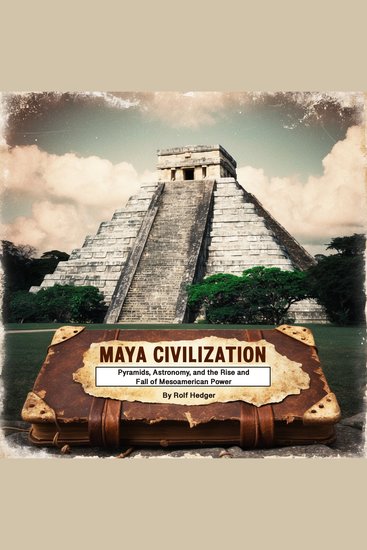
  • Maya Civilization - Pyramids Astronomy and the Rise and Fall of Mesoamerican Power - cover

    Maya Civilization - Pyramids...

    Rolf Hedger

    • 0
    • 0
    • 0
    The Maya civilization emerged from the fertile lands of Mesoamerica, where early agricultural societies gradually developed into one of the most advanced cultures of the ancient world. Long before the rise of monumental cities and towering pyramids, the ancestors of the Maya lived in small villages, relying on farming, hunting, and fishing for sustenance. Corn, or maize, became the cornerstone of their diet and played a central role in their mythology, economy, and daily life. Over time, these early settlements expanded, evolving into complex societies with trade networks, religious practices, and political hierarchies. 
    The roots of Maya civilization can be traced back to the Preclassic period, around 2000 BCE. During this time, small communities scattered across present-day southern Mexico, Guatemala, Belize, Honduras, and El Salvador began cultivating staple crops such as maize, beans, squash, and chili peppers. As agricultural techniques improved, populations grew, leading to the formation of larger settlements. Villages transitioned into regional centers, where early forms of leadership and governance emerged. These developments set the stage for the sophisticated city-states that would later define the Maya world. 
    The Maya were not isolated in their cultural development. They shared Mesoamerica with other influential civilizations, most notably the Olmecs, who thrived along the Gulf Coast of Mexico. The Olmecs, often considered the “mother culture” of Mesoamerica, left a lasting impact on the Maya through their artistic styles, religious beliefs, and ceremonial architecture. The colossal stone heads of the Olmecs, their early writing systems, and their concept of a sacred ballgame were all absorbed and adapted by the Maya. This exchange of ideas helped shape the foundations of Maya civilization, leading to the rise of the first great Maya cities.
    Zum Buch
  • Viking History - The warrior the Merchant the Explorer the Settler - cover

    Viking History - The warrior the...

    Secrets of History

    • 0
    • 0
    • 0
    Join us on an epic journey through time as we explore Viking History! 
    Our book will take you back to a long-forgotten era where brave warriors embarked on daring raids, merchants traded exotic goods, explorers mapped uncharted lands, and settlers established new homes.  
    Get to know the remarkable viking culture like never before, discovering what drove them to such great heights and understanding why they left such a lasting legacy.  
    From King Harald in Norway to the discovery of Greenland and Iceland. Battles, disputes, and raids, this book includes it all.   
    Buy your copy now and be part of this legendary tale!
    Zum Buch
  • The Battle of the Bulge - Hitler's Last Offensive in the Ardennes Forest - cover

    The Battle of the Bulge -...

    Sage Winters

    • 0
    • 0
    • 0
    In the winter of 1944, as the Allies closed in on Nazi Germany from both the west and east, Adolf Hitler’s regime found itself increasingly cornered. Desperate to reverse the tide of the war, Hitler launched one last, audacious offensive: the Battle of the Bulge. Known as Germany’s last major push against the Allied forces, the battle took place in the dense forests of the Ardennes region in Belgium, Luxembourg, and France. This surprise attack, initiated on December 16, 1944, was meant to divide the Allied armies, capture vital port cities like Antwerp, and cripple the Allied war effort. In his final attempt to change the course of the war, Hitler gambled everything—hoping to break the deadlock and buy time for his collapsing forces. 
      
    The Battle of the Bulge was an enormous, high-stakes operation that relied on surprise, speed, and overwhelming force. The Ardennes was chosen not only for its strategic location but also because it was considered an unlikely place for a large-scale attack. The Allies, exhausted from months of fighting and underestimating the potential of a German counteroffensive, were caught off guard. The weather, heavy with snow and fog, further complicated the Allied defense and gave the Germans an initial advantage. Hitler believed that a swift, unexpected strike through the dense forests would disorient the Allies, creating confusion and panic, and ultimately forcing a favorable settlement. 
      
    However, this final gamble was doomed to fail. Despite the initial successes of the German forces, the battle’s outcome ultimately hinged on the determination of the Allied soldiers, the rapid mobilization of reinforcements, and the logistical prowess of the Allies.
    Zum Buch
  • The Invention of Amsterdam - a history of Europe's greatest city in ten walks - cover

    The Invention of Amsterdam - a...

    Ben Coates

    • 0
    • 0
    • 0
    An essential guide to one of the world's most remarkable, and often misunderstood, cities by the author of Why the Dutch Are Different. 


    When Ben Coates injures his leg and needs to rebuild his strength by walking, he finds himself presented with an exciting opportunity: to rediscover the city he has been working in for over a decade, at a slower pace. He devises ten walks, each demonstrating a different chapter of Amsterdam's history, from its humble beginnings in the early 1200s as a small fishing community through two Golden Ages, fueled by the growth of the Dutch colonial empire, two world wars, and countless reinventions. 


    Join Coates as he meanders past beautiful townhouses and glittering canals, dances at Pride celebrations, witnesses the King's apology at Keti Koti, attends a WW2 memorial, gets high at a coffee shop, walks through the red-light district, and gazes in awe at Rembrandt paintings, all the while illuminating modern Amsterdam by explaining its past. 


    Blending travelogue and quirky history, The Invention of Amsterdam is an entertaining and sharply observed portrait of a fascinating and complicated city.
    Zum Buch
  • Titanic - A Voyage into Tragedy - cover

    Titanic - A Voyage into Tragedy

    Priyank Agrawal

    • 0
    • 0
    • 0
    This audiobook is narrated by an AI Voice.   
    The RMS Titanic was more than just a ship—it was a marvel of human ambition, luxury, and engineering. Yet, on the fateful night of April 14, 1912, this unsinkable giant met its tragic end, plunging into the depths of the North Atlantic and forever altering history. 
    In Titanic: A Voyage into Tragedy, journey through the vision, creation, and demise of the world’s most famous ocean liner. From the grand halls of first-class luxury to the struggles of third-class passengers, from the ignored iceberg warnings to the final desperate moments, this book brings to life the stories of those who built, sailed, and perished aboard the Titanic. 
    Explore the aftermath of the disaster, the investigations that reshaped maritime safety, and the modern-day fascination with Titanic’s wreckage. Delve into the myths, legends, and conspiracy theories that continue to surround the ship and uncover the true legacy left behind. 
    With meticulously researched historical details and powerful storytelling, Titanic: A Voyage into Tragedy is a compelling and immersive account of one of the most enduring and haunting events in history. 
    Perfect for history enthusiasts, maritime lovers, and anyone captivated by the triumphs and tragedies of the human spirit.
    Zum Buch
  • A Very Byzantine Journey - Discovering the New Testament Story through Icons and Pilgrimage - cover

    A Very Byzantine Journey -...

    J. Richard Smith

    • 0
    • 0
    • 0
    From the earliest days of the Church, Christians have used icons—images of Christ—to engage with the story of their faith. However, icons are far more than ancient pictures of Jesus: they are windows on the holy and transcendental, and they tell the New Testament story in a way that makes it real even to those exploring it from a distance.
    
     
    Knowing that this is a story based in geographical fact, J. Richard Smith has visited many of the places where the New Testament story happened, and here he takes us along on his travels tracing the story of icons, to places like Jerusalem, Athens, Istanbul and Cairo, and also to the final resting place of the Cloth of Edessa hidden in the hills in southern Italy. Combining spiritual writing, art history and travelogue, J. Richard Smith invites us to discover that there is more to icons than meets the eye.
    Zum Buch