Begleiten Sie uns auf eine literarische Weltreise!
Buch zum Bücherregal hinzufügen
Grey
Einen neuen Kommentar schreiben Default profile 50px
Grey
Jetzt das ganze Buch im Abo oder die ersten Seiten gratis lesen!
All characters reduced
Why Do People Fail - cover

Why Do People Fail

Md. Shahoriar Shakil

Verlag: BookRix

  • 0
  • 0
  • 0

Beschreibung

From this book, you will understand why people fail and a person becomes established in one day! Who has thousands of failure stories behind him, he is an established man today after passing that critical period. Despair never makes life successful but it only invites people to failure. Failure can only be proven wrong by a person who believes in the statement "I have never lost, won, or learned". So there is nothing to lose. If you learn from there and try again, victory is sure.
Verfügbar seit: 20.12.2023.
Drucklänge: 12 Seiten.

Weitere Bücher, die Sie mögen werden

  • It Doesn't Suck: Showgirls - cover

    It Doesn't Suck: Showgirls

    Adam Nayman

    • 0
    • 0
    • 0
    A new edition of the first book in the acclaimed Pop Classics series The Worst. Movie. Ever. is a masterpiece. Seriously. Enough time has passed since Showgirls flopped spectacularly that it’s time for a good hard look back at the sequined spectacle. A salvage operation on a very public, very expensive train wreck, It Doesn’t Suck argues that Showgirls is much smarter and deeper than it is given credit for. In an accessible and entertaining voice, the book encourages a shift in critical perspective on Paul Verhoeven’s Showgirls, analyzing the film, its reception, and rehabilitation. This in-depth study of a much-reviled movie is a must-read for lovers and haters of the 1995 Razzie winner for Worst Picture. This expanded edition includes an exclusive interview between the author and Showgirls director Paul Verhoeven, as well as a new preface.
    Zum Buch
  • Nobody Is Protected - How the Border Patrol Became the Most Dangerous Police Force in the United States - cover

    Nobody Is Protected - How the...

    Reece Jones

    • 0
    • 0
    • 0
    Late one July night in 2020, armed men, identified only by the word POLICE written across their uniforms, began snatching supporters of Black Lives Matter off the street in Portland, Oregon, and placing them in unmarked vans. These mysterious actions were not carried out by local law enforcement or even right-wing terrorists, but by the US Border Patrol. Why was the Border Patrol operating so far from the boundaries of the United States? What were they doing at a protest that had nothing to do with immigration or the border? 


    Nobody Is Protected: How the Border Patrol Became the Most Dangerous Police Force in the United States is the untold story of how, through a series of landmark but largely unknown decisions, the Supreme Court has dramatically curtailed the Fourth Amendment of the Constitution in service of policing borders. The Border Patrol exercises exceptional powers to conduct warrantless stops and interrogations within one hundred miles of land borders or coastlines, an area that includes nine of the ten largest cities and two thirds of the American population. 


    Mapping the Border Patrol's history from its bigoted and violent Wild West beginnings through the legal precedents that have unleashed today's militarized force, Reece Jones reveals the shocking true stories and characters behind its most dangerous policies.
    Zum Buch
  • Dutch History - The Age of Change in the Netherlands - cover

    Dutch History - The Age of...

    Kelly Mass

    • 0
    • 0
    • 0
    The following topics will be discussed in this combo of books: 
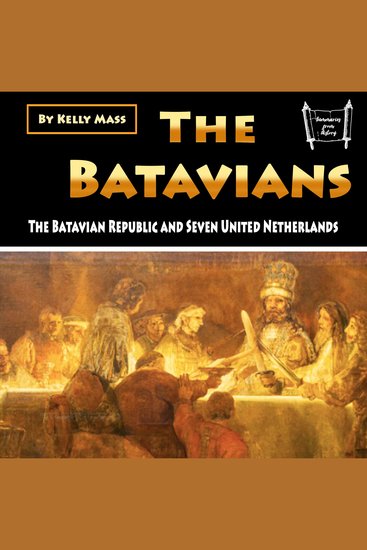
    1: In this book, we will shed more light on the Batavians, a people in history with much bravery, innovation, and determination to form a republic with freedom for its citizens, with opposing enemies they resisted. The Republic of the 7 United Netherlands was followed by the Batavian Republic. It started on January nineteenth, 1795, and ended on June fifth, 1806, with Louis I's succession to the Dutch throne. The political, financial, and social modifications that took place at the time of the Batavian Republic's short existence have left an enduring mark. The old Dutch Republic's confederal structure was completely changed by a unitary state. The constitution of 1798, which was developed for the first time in Dutch history, was really democratic. 
    2: The Netherlands had a great century in the 1600s, until it all ended about three-fourths along the way. Trading was all around, business was good. Their vast empire that reached across the world made money from spices, raw materials, metals, and so much more, with an extensive network of ships, merchants, and an entire army fleet. The Dutch Golden Era was a time in Dutch history varying circa from 1588 (the start of the Dutch Republic) to 1672 (the "Catastrophe Year"), throughout which Dutch trade, science, and art, and the Dutch armed force, were amongst the world's best. The Eighty Years' War, which ended in 1648, controls the first area. 
    3: Undoubtedly, Napoleon, the French revolutionist and emperor has left his mark on European history. His vast empire stretched all over the continent, his unique image and posture have been emulated by many, and his infamous defeat in Russia was a precursor of the defeat Hitler experienced for similar reasons.
    Zum Buch
  • Streamlined Meditations: Stoic Guidance For Modern Living - cover

    Streamlined Meditations: Stoic...

    Drew_Mende

    • 0
    • 0
    • 0
    Streamlined Meditations simplifies ancient Stoic wisdom, combining teachings from Marcus Aurelius and Epictetus into actionable advice for modern life. This practical guide helps you build resilience, gain mental clarity, and live with purpose. Perfect for anyone looking to navigate life's challenges with greater discipline and peace.
    Zum Buch
  • Bettencourt Affair The: Book Summary and Analysis - cover

    Bettencourt Affair The: Book...

    Briefly Summaries

    • 0
    • 0
    • 0
    This is a concise summary and analysis of The Bettencourt Affair, by Tom Sancton.
     
    It is not the original book and is not affiliated with or endorsed by Tom Sancton.
     
    Ideal those seeking a quick and insightful overview.


    In The Bettencourt Affair, the author unveils the gripping true story of the Bettencourt family, heirs to the L’Oréal empire, caught in a web of wealth, power, and betrayal. At the heart of this saga is Liliane Bettencourt, one of the world’s richest women, whose relationship with the enigmatic artist François-Marie Banier triggers a legal battle that rocks French high society and exposes hidden family conflicts. As her daughter, Françoise, steps in to protect her mother and the family legacy, secrets are revealed, alliances are tested, and a family’s private struggles become a national spectacle.
     
    This audiobook not only explores the human cost of immense wealth but also offers listeners a deeper understanding of trust, loyalty, and resilience. With each chapter, the author takes you beyond the headlines, revealing the personal challenges that accompany fortune and legacy.
     
    Perfect for listeners intrigued by true stories of ambition and influence, The Bettencourt Affair is a compelling tale filled with lessons on family dynamics, reputation, and the importance of integrity. Prepare to be drawn into a world where power and loyalty collide—and to find inspiration in the resilience it takes to navigate life’s most complex relationships.
    Zum Buch
  • 10´Summary HOMO DEUS: A Brief History of Tomorrow - The future of humanity and the evolution of societies in the 21st century - cover

    10´Summary HOMO DEUS: A Brief...

    Yuval Noah Harari

    • 0
    • 0
    • 0
    In "Homo Deus," Yuval Noah Harari explores the future of humanity and the evolution of societies in the 21st century. Unlike his previous book, "Sapiens," which analyzes humanity's past, "Homo Deus" focuses on what the future might hold, considering technological advancements, artificial intelligence, and new forms of social organization. Harari argues that humanity has largely overcome three fundamental historical problems: famine, plague, and war. However, new challenges have emerged, including the pursuit of immortality, absolute happiness, and the deification of humans. 
     In "Homo Deus," Harari takes us to a philosophical frontier where humanity must redefine its purpose in a world increasingly dominated by technology and artificial intelligence. Beyond survival and progress, the essential question is: What does it mean to be human when consciousness is no longer exclusive to our species? 
     The challenge of the 21st century is not just technological but also spiritual: finding a new sense of purpose in a world where human identity is no longer the center of the universe. 
      
     
    Zum Buch