Begleiten Sie uns auf eine literarische Weltreise!
Buch zum Bücherregal hinzufügen
Grey
Einen neuen Kommentar schreiben Default profile 50px
Grey
Jetzt das ganze Buch im Abo oder die ersten Seiten gratis lesen!
All characters reduced
Understanding Social Media Algorithms Tips for Organic Growth - Understanding Social Media Algorithms Tips for Organic Growth - cover

Understanding Social Media Algorithms Tips for Organic Growth - Understanding Social Media Algorithms Tips for Organic Growth

Mayfair Digital Agency

Verlag: Mayfair Digital Agency

  • 0
  • 0
  • 0

Beschreibung

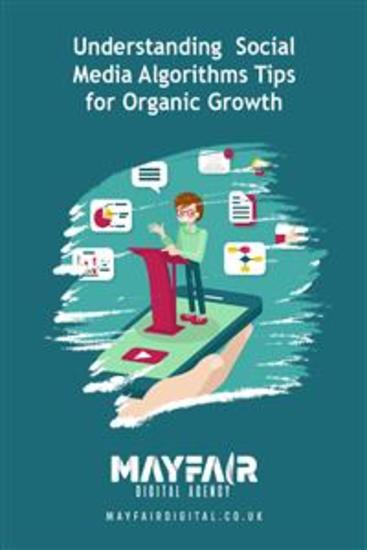
In the digital age, harnessing the power of social media algorithms has become a pivotal skill for those aiming to expand their online presence. "Understanding Social Media Algorithms: Tips for Organic Growth" offers a comprehensive guide to navigating these intricate systems. By delving into the core mechanisms that govern platforms such as Facebook, Instagram, Twitter, and TikTok, this book equips readers with invaluable insights. From deciphering the relevance of user engagement to decoding the impact of content timing, the book sheds light on the key factors that can propel one's content towards organic growth. With expert advice and real-world examples, it empowers individuals and businesses to tailor their strategies effectively. Whether you're a seasoned influencer or a novice entrepreneur, this book is your compass to not only comprehend but also leverage social media algorithms in your favor.
Verfügbar seit: 01.08.2023.

Weitere Bücher, die Sie mögen werden

  • 100 Mind-Blowing AI Facts - 100 Shocking Ways Artificial Intelligence is Changing the World - cover

    100 Mind-Blowing AI Facts - 100...

    Felix Grayson

    • 0
    • 0
    • 0
    Artificial intelligence isn’t just reshaping the future—it’s transforming the world right now. From mind-reading machines to robots that perform surgery, this audiobook explores the wildest, weirdest, and most groundbreaking stories from the frontlines of AI.
     
    Whether you’re a tech fan, a trivia lover, or just curious about the sci-fi-like breakthroughs happening every day, 100 Mind-Blowing AI Facts delivers a high-energy, eye-opening listening experience that will change the way you think about technology.
     
    In this audiobook, you’ll hear about:
    
     
    An AI that recreated a lost Beatles song decades after Lennon’s death
    
     
    A robot that taught itself to walk without human input
    
     
    How AI discovered a powerful new antibiotic in days
    
     
    A machine that reads your brainwaves—and turns them into full sentences
    
     
    The moment AI predicted a supernova before it exploded
    
     
    How artificial intelligence restored ancient scrolls buried by volcanic ash
    
     
    And much more...


    Each fact is short, punchy, and packed with wonder—perfect for quick listens, road trips, or sparking conversation with friends.
     
    Ideal for:
    
     
    Tech lovers and futurists hungry for real-world sci-fi
    
     
    Listeners who enjoy shocking facts and game-changing discoveries
    
     
    Anyone curious about how AI is reshaping everyday life in ways we rarely notice


    Whether you’re new to AI or you’ve been following its rise for years, this audiobook will blow your mind and make you say, “Wait… what?!”
     
    Press play and discover 100 jaw-dropping ways AI is changing the world—right now.
    Zum Buch
  • The Milky Way Smells of Rum and Raspberries - And Other Amazing Cosmic Facts - cover

    The Milky Way Smells of Rum and...

    Jillian Scudder

    • 0
    • 0
    • 0
    An offbeat guided tour of the Universe, focusing on weird and wonderful facts.
    
    Astrophysicist Dr Jillian Scudder knows more than most of us what a surreal place the Universe can be. In this light-hearted book she delves into some of the more arcane facts that her work has revealed, and tells us how we have actually managed to discover these amazing truths.
    
    Did you know: the galaxy is flatter than a sheet of paper; supermassive black holes can sing a super-low B flat; it rains iron on a brown dwarf, and diamonds on Neptune; you could grow turnips on Mars if its soil weren't full of rocket fuel; the Universe is beige, on average; Jupiter's magnetic field will short-circuit your spacecraft - and, of course, the Milky Way smells of rum and raspberries.
    Zum Buch
  • What the River Knows - Essays from the Heart of Alaska - cover

    What the River Knows - Essays...

    Michael Engelhard

    • 0
    • 0
    • 0
    Edward Abbey, who never much liked Alaska, called it "our biggest, buggiest, boggiest state." To others, it has been a cure for despair. When Michael Engelhard moved to Fairbanks more than three decades ago, he was a cheechako, a subarctic tenderfoot. Gathering skills and experiences the hard way, he attained "Sourdough" status while realizing there would always be more to learn, see, and do in the land of midnight sun and auroras. 


    En route, Engelhard suffered frostbite, stubborn yaks, grizzly charges, trophy hunters, cold-water immersion, heartbreak, incontinent raptors, one pesky squirrel, and honeymooners from abroad. He tried to rescue a raven and explored Arctic dunes and a glacier's blue heart, and his own as he mingled with caribou on their epic journeys.
    Zum Buch
  • The Drowning Wave - cover

    The Drowning Wave

    Marcus Reed

    • 0
    • 0
    • 0
    The Drowning Wave is an elegy for the human mind in the age of acceleration — a poetic reckoning with the systems we built, and the tides that now carry us. It explores the quiet violence of progress: how technology promised liberation but delivered dependency, how intelligence became automated, and how meaning dissolved into motion. Through haunting, reflective prose, the book contemplates the moral cost of convenience and the psychological surrender of a generation that trades awareness for ease. The Drowning Wave is not a warning, but a mirror — a meditation on what it means to remain human when the machines have already begun to dream without us.
    Zum Buch
  • Better Health With AI - Your Roadmap To Results - cover

    Better Health With AI - Your...

    Jr. Earl J. Campazzi

    • 0
    • 0
    • 0
    Discover how artificial intelligence can revolutionize your health—without replacing your doctor. In Better Health With AI: Your Roadmap to Results, Dr. Earl J. Campazzi Jr., a seasoned physician with expertise in preventive medicine, shows you how to harness AI, wearables, and genetic data for personalized wellness. 
    From spotting early signs of heart disease and cancer to managing obesity, dementia, and infectious threats, this practical guide demystifies AI's role in everyday health. Learn to:Use smartwatches and apps to track vital signs and detect issues like atrial fibrillation before symptoms appear.Decode genetic tests with AI for actionable insights on risks like Alzheimer's or breast cancer.Prevent medication errors and optimize supplements tailored to your needs.Build longevity habits, from AI-guided exercise to stress management. 
    Packed with real-world examples, step-by-step instructions, and warnings about AI's limitations (like hallucinations and privacy concerns), this book empowers you to partner with technology and healthcare pros. Whether you're tech-savvy or a beginner, gain control over your health in an AI-driven world. 
    Includes appendices on wearables, mental health tools, and health apps. Foreword by [if applicable; otherwise omit]. Copyright © 2025. 
    "AI isn't a doctor—it's your smart assistant for better living." – Dr. Campazzi 
    Ideal for anyone seeking proactive health strategies in 2025 and beyond.
    Zum Buch
  • The Human Gene Editing Debate - cover

    The Human Gene Editing Debate

    John H. Evans

    • 0
    • 0
    • 0
    In 2018 the first genetically modified babies were reportedly born in China, made possible by the invention of CRISPR technology in 2012. This controversial advancement overturned the pre-existing moral consensus, which had held for over fifty years before: while gene editing an adult person was morally acceptable, modifying babies, and thus subsequent generations, crossed a significant moral line. If this line is passed over, scientists will be left without an agreed-upon ethical limit. What do we do now? 


    John H. Evans here provides a meta-level guide to how these debates move forward and their significance to society. He explains how the bioethical debate has long been characterized as a slippery slope, with consensually ethical use at the top, nightmarish dystopia at the bottom, and specific agreed-upon limits in between, which draw the lines between the ethical and the unethical. Evans frames his analysis around these limits, or barriers. He examines the history of how barriers were placed, then fell, then replaced by new ones, and discusses how these insights inform where the debate may head. He evaluates other proposed barriers relevant to where we are now, projects that most of the barriers suggested by scientists and bioethicists will not hold, and cautiously identifies a few that could serve as the moral boundary for the next generation.
    Zum Buch