Rejoignez-nous pour un voyage dans le monde des livres!
Ajouter ce livre à l'électronique
Grey
Ecrivez un nouveau commentaire Default profile 50px
Grey
Abonnez-vous pour lire le livre complet ou lisez les premières pages gratuitement!
All characters reduced
Devil Stories - [An Anthology] - cover

Devil Stories - [An Anthology]

Maximilian J. Rudwin

Maison d'édition: E-Kitap Projesi & Cheapest Books

  • 0
  • 0
  • 0

Synopsis

Of all the myths which have come down to us from the East, and of all the creations of Western fancy and belief, the Personality of Evil has had the strongest attraction for the mind of man.

The Devil is the greatest enigma that has ever con-fronted the human intelligence. So large a place has Satan taken in our imagination, and we might also say in our heart, that his expulsion therefrom, no matter what philosophy may teach us, must for ever remain an impossibility. As a character in imagi-native literature Lucifer has not his equal in heaven above or on the earth beneath. In contrast to the idea of Good, which is the more exalted in proportion to its freedom from anthropomor-phism, the idea of Evil owes to the presence of this element its chief value as a poetic theme.

The discrowned archangel may have been inferior to St. Michael in military tactics, but he cer-tainly is his superior in matters literary. The fair angels—all frankness and goodness—are beyond our comprehension, but the fallen angels, with all their faults and sufferings, are kin to us.

There is a legend that the Devil has always had literary aspi-rations. The German theosophist Jacob Böhme relates that when Satan was asked to explain the cause of God's enmity to him and his consequent downfall, he replied:

"I wanted to be an author." Whether or not the Devil has ever written anything over his own signature, he has certainly helped others compose their greatest works. It is a significant fact that the greatest im-aginations have discerned an attraction in Diabolus. What would the world's literature be if from it we eliminated Dante's Divine Comedy, Calderón's Marvellous Magician, Milton's Paradise Lost, Goethe's Faust, Byron's Cain, Vigny's Eloa, and Lermon-tov's Demon? Sorry indeed would have been the plight of litera-ture without a judicious admixture of the Diabolical. Without the Devil there would simply be no literature, because without his intervention there would be no plot, and without a plot the story of the world would lose its interest.

Even now, when the belief in the Devil has gone out of fashion, and when the very mention of his name, far from causing men to cross themselves, brings a smile to their faces, Satan has continued to be a puissant personage in the realm of letters. As a matter of fact, Beelzebub has perhaps received his greatest elaboration at the hands of writers who believed in him just as little as Shake-speare did in the ghost of Hamlet's father.
Disponible depuis: 25/01/2024.
Longueur d'impression: 400 pages.
D'autres livres qui pourraient vous intéresser

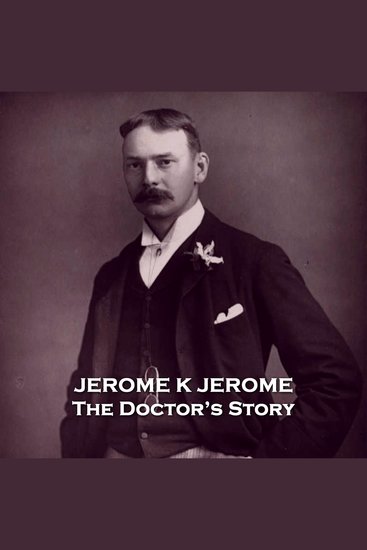
  • The Doctor’s Story - From their pens to your ears genius in every story - cover

    The Doctor’s Story - From their...

    Jerome K

    • 0
    • 0
    • 0
    Jerome Klapka Jerome was born on the 2nd May 1859 at Belsize House in Caldmore, Walsall, England. 
    His family were reduced to poverty whilst he was a toddler owning to failed investments in the local mining industry. 
    After several moves in declining circumstances Jerome became a pupil at St Marylebone Grammar School.  His aim then was to go into politics, or even become a man of letters, but with the death of his father, when he was thirteen, and his mother two years later, now meant that he had to support himself and leave all thoughts of education behind. 
    He spent four years working for the London and North Western Railway, initially collecting coal that fell along the railway lines.  Thereafter, using the name Harold Crichton, he tried his hand at acting but the repertory company he joined was stretched in its resources and, at times, relied on the actors to purchase their own props and costumes.  After three years he tried journalism, teaching and work as a solicitor’s clerk.  All came to nothing.  Finally, in 1885, he had some success with ‘On the Stage―and Off’, a comic memoir collection of his stage experiences and his early attempts at acting.  
    Shortly thereafter he married and his honeymoon on the Thames became the inspiration for ‘Three Men in a Boat’.  This of course was a wild success, both critically and commercially, but also his creative high point.  
    Although he was now able to write full time, he was never able to attain all the heights of that classic humorous novel.  He remained a prolific writer of novels, plays and short stories and its from those classic works that these stories have been mined. 
    Jerome K Jerome died in Northampton General Hospital on the 14th June 1927 two weeks after suffering a paralytic stroke and a cerebral haemorrhage on a motoring tour.  He was 68.
    Voir livre
  • Wandering Ghosts - cover

    Wandering Ghosts

    F Marion Crawford

    • 0
    • 0
    • 0
    Step into the eerie world of Wandering Ghosts by F. Marion Crawford, a classic collection of ghost stories that explore the darker corners of the supernatural. From shadowy mansions hiding deadly secrets to ghostly ships adrift in eternal fog, these tales masterfully combine suspense, mystery, and gothic horror. Perfect for fans of timeless ghost stories, this audiobook brings Crawford's unforgettable narratives to life, drawing listeners into a realm where every shadow whispers a secret and the unknown waits just beyond the edge of reality.
    Voir livre
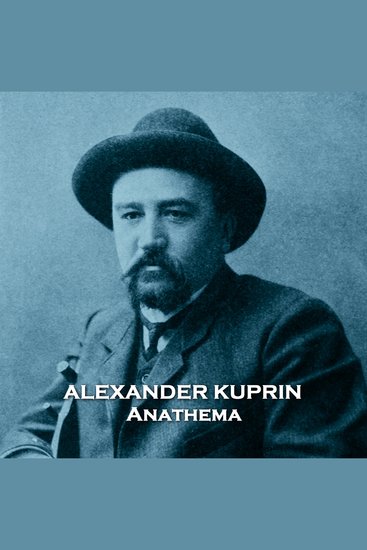
  • Anathema - From their pens to your ears genius in every story - cover

    Anathema - From their pens to...

    Alexandr Kuprín

    • 0
    • 0
    • 0
    Alexander Kuprin was born in Narovchat, Penza in Russia on 7th September 1870. 
    At 3 his Father died and he and mother moved to Moscow. By 10 he was enrolled at the Second Moscow Military High School and there his interest in literature began. The Alexander Military Academy followed and two years later he was a sub-lieutenant and posted to an Infantry Regiment for a further four years. 
    Despite his duties he was a now a keen writer and published his first short story at this time. His military duties also garnered him experiences for his breakthrough work ‘The Duel’.  Leaving the military he left for Kiev to work for local newspapers.  He continued to publish both stories and novels and by 1901 he was in St Petersburg becoming part of a group that included Chekhov, Ivan Bunin, Maxim Gorky and Leonid Andreyev.  
    In the years that followed further controversial works and acclaim followed.  His comments on the regime meant he was also put under secret police surveillance.   
    As World War I erupted, Kuprin opened a military hospital but was then given command of an infantry company in Finland. He was soon discharged on grounds of ill health.  
    The October Revolution saw him praise Lenin, but he warned that the Bolsheviks threatened Russian culture and might cause further widespread suffering to the peasants.  As Civil War raged he took his family to Helsinki and then on to Paris. 
    Exile saw his talents decline further and his succumbing to alcoholism. He became lonely and withdrawn. The family's poverty increased his malaise.   
    In May 1937, the Kuprin’s returned to Moscow.  He now saw his work published but wrote almost nothing new.  In 1938 his health rapidly deteriorated.  Already suffering from a kidney problems and sclerosis, he had now developed cancer of the oesophagus.  
    Alexander Kuprin died on 25th August 1938.
    Voir livre
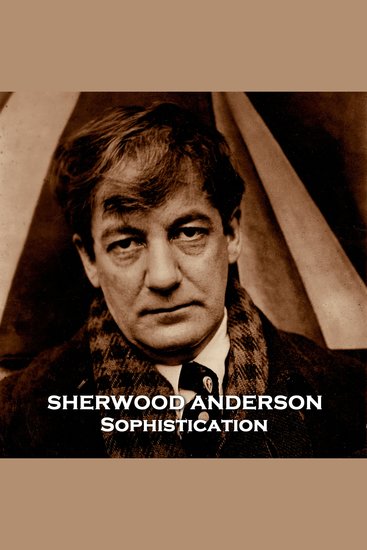
  • Sophistication - From their pens to your ears genius in every story - cover

    Sophistication - From their pens...

    Sherwood Anderson

    • 0
    • 0
    • 0
    Sherwood Anderson was born on 13th September 1876 in Camden, Ohio. 
    When his father’s business failed the family was forced to move on a regular basis before finally settling in Clyde, Ohio.   
    Anderson, one of 7 children, left school at 14 to take a number of jobs to help with the family finances. These were difficult years. 
    He moved to Chicago in search of opportunities before joining the Army for the US-Spanish War of 1898.  He then entered Wittenberg Academy in Springfield, Ohio to complete his education before moving back to Chicago to take up a writing job. 
    In 1904 he married Cornelia Lane, her family had resources and Anderson was keen, with this family backing, to run a business. 
    The early years of their marriage produced 3 children but a nervous breakdown in 1907 and another in 1912, despite his success as a business entrepreneur, resulted in him abandoning his family and deciding that a literary career would be best for him.   
    A move back to Chicago resulted in a job in advertising, a divorce from Cornelia and marriage to Tennessee Mitchell.  
    That same year his first book ‘Windy McPherson’s Son’ was released and in 1919, his most famous book, ‘Winesburg, Ohio’, a collection of short stories about life in an Ohio town was released. 
    Anderson continued to write short stories, novels and non-fiction but his only true bestseller came with ‘Dark Laughter’.  His influence on writers that followed, from Faulkner to Hemingway, was immense. He also married a further two times.   
    Sherwood Anderson died in in Colón, Panama, on the 8th March, 1941. He was 64. An autopsy revealed that a swallowed toothpick had resulted in peritonitis. 
    His headstone epitaph reads ‘Life, Not Death is the Great Adventure.’
    Voir livre
  • The Story of B24 - From their pens to your ears genius in every story - cover

    The Story of B24 - From their...

    Arthur Conan Doyle

    • 0
    • 0
    • 0
    Arthur Conan Doyle was born in Edinburgh, Scotland on 22nd May 1859.  His childhood was blighted by his father’s heavy drinking which for some years broke up the family. Fortunately, wealthy uncles were willing to support them by paying for education and clothing.  
    He was accepted at the University of Edinburgh to study medicine and also began to write short stories the first, ‘The Haunted Grange of Goresthorpe’, was published in Blackwood’s Magazine.  Despite several other stories and some articles in the British Medical Journal his medical studies took priority. 
    When these finished he was appointed as Doctor on the Greenland whaler ‘Hope of Peterhead’ in 1880 and then, after graduation, as ship’s surgeon on the SS Mayumba on its voyage to West Africa. 
    1882 saw a move to Plymouth and his own independent practice. With few patients he resumed writing and completed his first novel, ‘The Mystery of Cloomber’, although most of his output was short stories based on his experiences at sea.  
    He married Louisa Hawkins in 1885. However, two years later he met and fell in love with Jean Elizabeth Leckie, though they remained platonic out of respect for, and loyalty to, his wife. 
    His literary career suddenly burst into life in November 1886 with ‘A Study In Scarlet’, the first of the fabulously successful Sherlock Holmes stories.  
    With two children to support he now revisited his haphazard commercial arrangements and curtailed everything save for commissions from the Strand Magazine.  
    As a sportsman he was remarkably proficient. He was goalkeeper for Portsmouth Association Football Club and played ten first-class cricket matches for the Marylebone Cricket Club as well as captain of the Crowborough Beacon Golf Club in East Sussex.  
    In 1891 tired of writing Holmes stories, he began a series of historical novels and even went so far as to apparently kill off Holmes in a lethal brawl with his arch-nemesis Moriarty. 
    Despite heavy and sustained criticism he continued to write in support of the Boer War, a fact he thought contributed to his knighthood in 1902.  The following year to great relief and acclaim he brought Sherlock Holmes back from the dead in his first outing for a decade. 
    Sadly, his wife Louisa died from TB in 1906 and, a year later, he at last married Jean.  
    During the War and for several years after family deaths had left him depressed. In a search for solace and answers he alighted upon spiritualism and, such was his interest, that he wrote several books on the subject. 
    On 7th July 1930 Conan Doyle was discovered in the hall of Windlesham Manor, his house in East Sussex, clutching his chest dying of a heart attack.  He was 71.
    Voir livre
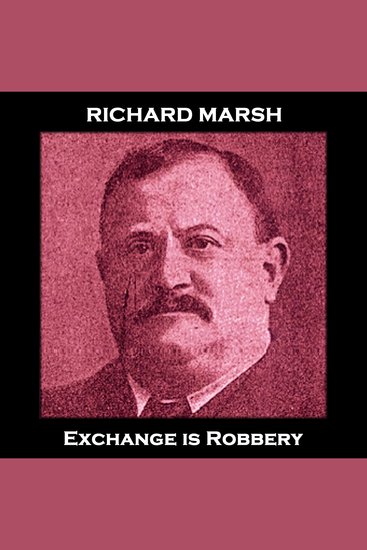
  • Exchange is Robbery - From their pens to your ears genius in every story - cover

    Exchange is Robbery - From their...

    Richard Marsh

    • 0
    • 0
    • 0
    Richard Bernard Heldmann was born on 12th October 1857, in St Johns Wood, North London.  
    By his early 20’s Heldmann began publishing fiction for the myriad magazine publications that had sprung up and were eager for good well-written content.  
    In October 1882, Heldmann was promoted to co-editor of Union Jack, a popular magazine, but his association with the publication ended suddenly in June 1883.  It appears Heldman was prone to issuing forged cheques to finance his lifestyle.  In April 1884 he was sentenced to 18 months hard labour. 
    In order to be well away from the scandal and the damage that this had caused to his reputation Heldmann adopted a pseudonym on his release from jail.  Shortly thereafter the name ‘Richard Marsh’ began to appear in the literary periodicals.  The use of his mother’s maiden name as part of it seems both a release and a lifeline. 
    A stroke of very good fortune arrived with his novel ‘The Beetle’ published in 1897.  This would turn out to be his greatest commercial success and added some much-needed gravitas to his literary reputation.   
    Marsh was a prolific writer and wrote almost 80 volumes of fiction as well as many short stories, across many genres from horror and crime to romance and humour.   His unusual characters, plotting devices and other literary developments have identified his legacy as one of the best British writers of his time.   
    Richard Marsh died from heart disease in Haywards Heath in Sussex on 9th August 1915.  He was 57.
    Voir livre