Begleiten Sie uns auf eine literarische Weltreise!
Buch zum Bücherregal hinzufügen
Grey
Einen neuen Kommentar schreiben Default profile 50px
Grey
Jetzt das ganze Buch im Abo oder die ersten Seiten gratis lesen!
All characters reduced
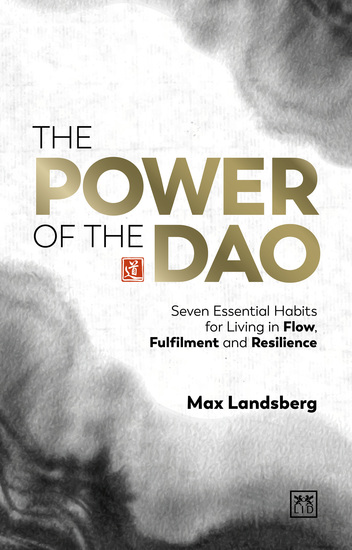
The Power of the Dao - Seven Essential Habits for Living in Flow Fulfilment and Resilience - cover

The Power of the Dao - Seven Essential Habits for Living in Flow Fulfilment and Resilience

Max Landsberg

Verlag: LID Publishing

  • 0
  • 0
  • 0

Beschreibung

“Insightful and engaging! … this book hits the mark with powerful techniques for living a more fulfilled life.”Dr. Marshall Goldsmith, Thinkers50 #1 Executive Coach, and New York Times bestselling author of The Earned Life, and What Got You Here Won’t Get You There 
 
What if you could live your life in flow? 
 
Being in flow is when you are ‘in the zone’, ‘on your game’, or even ‘on fire’. This is both a mental state and a physical one. You have a feeling of complete focus, full involvement and deep enjoyment in whatever you are doing. You feel the activity takes no energy from you – indeed you feel that it is giving you energy. You barely notice the passage of time. You feel calm but almost ecstatic.Most of us have glimpsed being in this state. But what if you could be in your zone not just for a moment of flow, nor merely for a day, but always and forever?Max Landsberg, best-selling author whose previous titles have sold more than a million copies, reveals how we can live in a state of flow all the time. He shows how to achieve this, based on the enduring wisdom of Daoist principles and practice. 
 
“One of the best books I have read on personal development and growth … I am sending copies to my friends and CEO contacts.”André Andonian, Board Chair, CEO coach, and former Managing Partner of McKinsey in Korea and Japan
Verfügbar seit: 14.09.2023.

Weitere Bücher, die Sie mögen werden

  • Dome of the Rock The: The History of the Oldest Islamic Shrine in Jerusalem - cover

    Dome of the Rock The: The...

    Charles River Editors

    • 0
    • 0
    • 0
    Among the world’s most recognizable man-made structures, the Dome of the Rock – known in Arabic as the Qubbat as-Sakara – is also one of its most mysterious. Although much of the Dome’s construction, reconstruction, and later additions are well-known from historical texts and archeological work, what it represents, why it was built where it was, and even its use remain the subject of scholarly controversy. Known for its immense size and beauty, and also for being located in the middle of Jerusalem, one of the world’s holiest cities, the Dome of the Rock has been the focus of political leaders who wished to legitimize their rule, religious warriors who believed that it empowered their weapons, and pilgrims who thought it was a site of salvation and enlightenment. As it drew these often diverse and sometimes disparate people to it, it has served the purposes of devout Jews, Muslims, and Christians, who -- although often not peacefully sharing the site -- seem to recognize its spiritual importance. 
    The Dome of the Rock has been many things to many people over the centuries, and historians, art historians, and archaeologists have studied the Dome of the Rock and its background extensively. Academics have created an accurate chronology of its life, as well as details about how the monument was built, including the construction and artistic techniques that were used. The dome was built on the site of what is believed to have been the Solomonic Temple that the Israelites built to worship their god, Yahweh, setting the stage for the entire area to be a holy site for the Abrahamic religions over the following centuries. Historians believe that the Umayyad Muslims saw this background as a prime location to build one of the greatest religious complexes in the Islamic world.
    Zum Buch
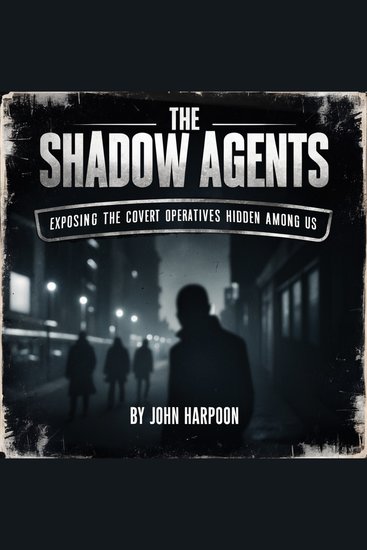
  • The Shadow Agents - Exposing the Covert Operatives Hidden Among Us - cover

    The Shadow Agents - Exposing the...

    John Harpoon

    • 0
    • 0
    • 0
    Covert operations are a cornerstone of modern intelligence and national security strategies. They are defined by their secrecy and the fact that they are often conducted in a manner that prevents any overt acknowledgment of their existence. In essence, covert operations are activities undertaken by government agencies, intelligence services, or other organizations to influence events or gather information while keeping their involvement hidden from the public eye. These operations can range from intelligence gathering and surveillance to acts of sabotage and subversion, and they play a crucial role in shaping global power dynamics. 
    The concept of covert operations is not new. Throughout history, countries have engaged in clandestine activities to protect their interests, advance their political goals, or weaken their adversaries. From ancient espionage missions to the sophisticated, technology-driven operations of today, the underlying principles of secrecy and deception have remained constant. However, the scale, complexity, and tools used in these operations have evolved significantly over the years. 
    One of the most significant aspects of covert operations is their ability to influence world events without direct confrontation. These operations can alter the course of conflicts, sway elections, or shape public perception, all while remaining largely unseen. The ability to conduct these operations without attribution allows governments and organizations to maintain plausible deniability, minimizing the risk of political or diplomatic fallout. This makes covert operations an essential tool in international relations, especially in times of heightened tensions or when open warfare would be too costly.
    Zum Buch
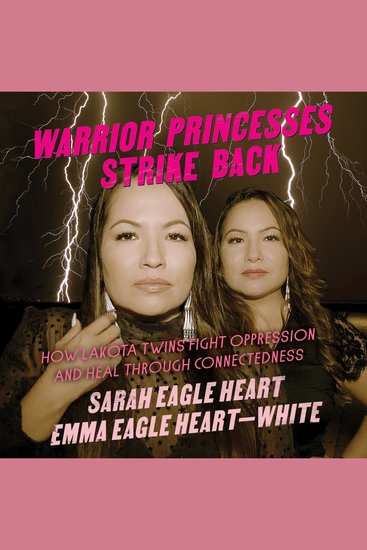
  • Warrior Princesses Strike Back - How Lakota Twins Fight Oppression and Heal through Connectedness - cover

    Warrior Princesses Strike Back -...

    Sarah Eagle Heart, Emma Eagle...

    • 0
    • 0
    • 0
    Interspersing personal memoir with radical notions of self-help and collective recovery, Warrior Princesses Strike Back focuses how Indigenous activist strategies can be a crucial roadmap for contemporary truth and healing. 
     
    Pine Ridge Indian Reservation is home to the original people of this land, yet it is also one of the poorest communities in America. Through intimate and vulnerable memoir, Lakota twin sisters Sarah Eagle Heart and Emma Eagle Heart–White recount growing up on the reservation and overcoming enormous odds, first as teenage girls in a majority-white high school, and then battling bias in their professional careers. Woven throughout are self-help strategies centering women of color, that combine marginalized histories, psychological research on trauma, and perspectives on decolonial therapy. Through the lens of Indigenous activism, the Eagle Hearts explore the possibility of healing intergenerational and personal trauma by focusing on traditional strategies of reciprocity, acknowledgment, and collectivism.
    Zum Buch
  • The Voting Rights Act of 1965 - cover

    The Voting Rights Act of 1965

    Various

    • 0
    • 0
    • 0
    This program is read by an AI-based synthesized voice.
    Zum Buch
  • What is Love? - cover

    What is Love?

    Neera Kankara

    • 0
    • 0
    • 0
    Love encompasses a range of strong and positive emotional and mental states, from the most sublime virtue or good habit, the deepest interpersonal affection, to the simplest pleasure. An example of this range of meanings is that the love of a mother differs from the love of a spouse, which differs from the love for food. Most commonly, love refers to a feeling of strong attraction and emotional attachment.
    Zum Buch
  • The Christian Right in Europe - Movements Networks and Denominations - cover

    The Christian Right in Europe -...

    Gionathan Lo Mascolo

    • 0
    • 0
    • 0
    Inspired by the success of the US Christian Right and the rise of the global far-right, ultraconservative Christians in Europe are joining forces and seek to reshape Europe. By assembling in anti-gender movements and sharing anti-Muslim narratives, they actively influence the political landscape and shape government policies. The contributors offer new perspectives on the protagonists and the entangled networks that work to abolish liberal democracy in Europe behind the scenes. This anthology is the first to bring together case studies on the Christian Right in over 20 European countries, providing a transnational perspective and an accessible insight for clergy, politicians, and academics alike.
    Zum Buch