Begleiten Sie uns auf eine literarische Weltreise!
Buch zum Bücherregal hinzufügen
Grey
Einen neuen Kommentar schreiben Default profile 50px
Grey
Jetzt das ganze Buch im Abo oder die ersten Seiten gratis lesen!
All characters reduced
Mountain Paths - Exploring Nature's Mysteries and Human Reflections - cover

Mountain Paths - Exploring Nature's Mysteries and Human Reflections

Maurice Maeterlink

Übersetzer Alexander Teixeira de Mattos

Verlag: Good Press

  • 0
  • 0
  • 0

Beschreibung

In "Mountain Paths," Maurice Maeterlinck invites readers on a contemplative journey through the metaphysical wilderness of existence, exploring the intricate relationship between nature, spirituality, and the human condition. This eloquent work transcends traditional narrative forms, employing rich imagery and lyrical prose that reflect Symbolist influences, allowing readers to engage deeply with their inner landscapes as well as the physical world. Maeterlinck'Äôs reflections on the perilous ascent of mountains serve as an allegory for personal growth and existential inquiry, capturing the delicate balance between aspiration and the inherent solitude of the human spirit. Maurice Maeterlinck, a Belgian playwright and philosopher awarded the Nobel Prize in Literature in 1911, was deeply influenced by his interest in mysticism and the natural world. His earlier works, such as "The Blue Bird," reveal his fascination with the intersection of the human psyche and the sublime. "Mountain Paths" is a culmination of these themes, showcasing his evolution as a thinker and writer, and reflecting his belief in the profound connections between humanity and nature. Highly recommended for readers seeking introspective literature that delves into the complexities of existence, "Mountain Paths" provides a unique insight into both the external and internal landscapes we traverse. This rich narrative not only invites contemplation but also inspires a deeper appreciation for the natural world and our place within it.
Verfügbar seit: 17.01.2022.
Drucklänge: 111 Seiten.

Weitere Bücher, die Sie mögen werden

  • Hold Please - Stage Managing A Pandemic - cover

    Hold Please - Stage Managing A...

    Richard Hester

    • 0
    • 0
    • 0
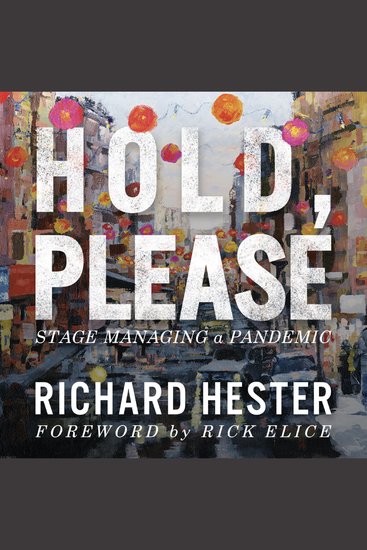
    A Broadway Stage Manager's pandemic memoir! 
    March 12, 2020 
    Last night, after weeks of downplaying and ridiculing the virus, we were finally told by our President, that it is, in fact, serious… 
    And so, it began. Broadway shut down. Instead of sitting in a darkened theatre every night watching Jersey Boys, Richard Hester found himself sitting on his sofa glued to the news. Hold, Please chronicles what came next from the particular point of view of a career Broadway stage manager living in Manhattan. Part journal, part blog, these essays attempted to make sense of the crisis and what it was doing to us. 
    What follows is a journey through one of the most fascinating periods in both our cultural and our personal histories. Written with humor and compassion, Hold, Please provides a unique perspective on this time and delivers the most important lesson of all - Hope. 
    “I’ve watched Richard create order out of chaos for years, so it comes as no surprise when he was able to do it again with these beautiful posts. Together they create a powerful reminder of where we’ve been as well as a thoughtful and compassionate guide for moving ahead.” - Bernadette Peters 
    “I am so grateful that Richard wrote all of this down so that I don’t have to remember it myself.” - Patti LuPone  
    “(Hester) describes such experiences in a warm, conversational tone in a book in which his lyrical writing about the natural world adds dimension to humorous stories about working—and not working—from home....Hester interweaves descriptions of living through Covid-19 with stories of his colorful theatrical career…” - Kirkus Reviews
    Zum Buch
  • Algeria of the Generals - cover

    Algeria of the Generals

    Lyes Laribi

    • 0
    • 0
    • 0
    Since independence, Algeria has been ruled by Generals who have kept the country in a state of civil war and misery. But how does this power function and endure? Arrested and tortured in Algeria for setting up a free student union in the 1980s, accused of Islamism and frequently harassed ever since, Lyes Laribi has come into close contact with Military Security, Algeria’s political police force.
    The author traces the history of the internal quarrels between General Zeroual's clan and General Nezzar's—coups d'état, economic schemes, political crimes spanning from 1962 to 1999. Now, Lyes Laribi reveals that behind the government of the current president, Abdelaziz Bouteflika, lies a third clan of Generals, an extension of these corrupt cliques.
    This courageous investigation by the author of Dans les geôles de Nezzar is an original and passionate critique of Algeria's recent history. An invitation to give back to the Algerian people the trust and voice confiscated from them.
    Zum Buch
  • Whatever You Say You Aren't with Robert Anton Wilson - cover

    Whatever You Say You Aren't with...

    Robert Anton Wilson

    • 0
    • 0
    • 0
    In this lecture Robert Anton Wilson speaks of how we think we all know who we are. You are living in your own reality that you are creating. Everybody has a vision of themselves that they have created. Where in relationships the other person has an entirely different vision of you are as a person. Strangers see you completely different from how you view yourself. Which is the real you? Certainly not the you that you know. Our knowledge of ourselves is usually tremendously delusional and most people don't actually know the real them.
    Zum Buch
  • Perceiving Without the Perceiver - Brockwood Park and Gstaad 1975 - Dialogue 6 - cover

    Perceiving Without the Perceiver...

    Jiddu Krishnamurti

    • 0
    • 0
    • 0
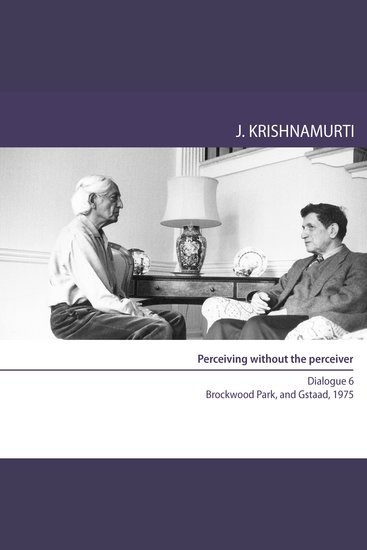
    Perceiving without the perceiver - 28 June 1975 
    • Can thought naturally cease? 
    • Perceiving without the perceiver 
    • Facing the truth of death 
    • Krishnamurti’s ‘process’ and early years. 
    • Kundalini 
    • If you can understand suffering, face it and not escape from it, that has quite a 
    different energy. 
    • Truth is a pathless land. 
    • There is something really tremendously mysterious. 
    • Knowledge is becoming the curse. 
    • When the mind, with all the confusion, is nothing, not a thing, then perhaps 
    there is the other.
    Zum Buch
  • Baruch Spinoza - God Nature and the Ethics of Reason - cover

    Baruch Spinoza - God Nature and...

    Hector Davidson

    • 0
    • 0
    • 0
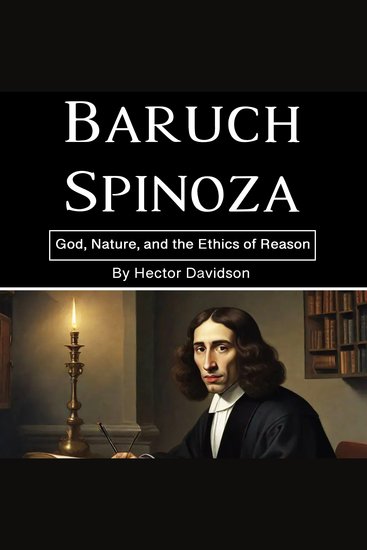
    Baruch Spinoza's philosophy is a comprehensive system that integrates metaphysics, epistemology, ethics, and political theory into a unified framework. Central to his thought is the idea of God and nature as a single, infinite substance, which Spinoza refers to as "Deus sive Natura" (God or Nature). This concept encapsulates his pantheistic view that everything that exists is a part of this one, all-encompassing reality. 
      
    Metaphysics and Substance 
      
    Spinoza's metaphysical framework revolves around the notion of substance monism. He argues that there is only one substance in the universe, which is both God and nature. This substance possesses an infinite number of attributes, with thought and extension being the two that humans can comprehend. Everything that exists, according to Spinoza, is a mode or manifestation of this single substance. This idea challenges traditional theistic views by rejecting the notion of a personal, transcendent God who is separate from the world. 
      
    Epistemology and Knowledge 
      
    In epistemology, Spinoza emphasizes the role of reason and intuitive knowledge in understanding the nature of reality. He distinguishes between different types of knowledge: imagination, reason, and intuition. Imaginative knowledge, based on sensory experience and inadequate ideas, is unreliable and often leads to confusion. Rational knowledge, which arises from understanding the necessary connections between ideas, is more accurate. The highest form of knowledge, according to Spinoza, is intuitive knowledge—an immediate, direct understanding of the essence of things.
    Zum Buch
  • Nihilism - The Philosophy of Embracing the Void - cover

    Nihilism - The Philosophy of...

    Hector Davidson

    • 0
    • 0
    • 0
    Nihilism is often misunderstood as mere pessimism or despair, yet it is far more complex than a simple rejection of hope. At its core, nihilism is the philosophical stance that life lacks inherent meaning, purpose, or intrinsic value. This perspective challenges the foundations of morality, knowledge, and existence itself, questioning whether anything possesses objective significance. While nihilism can evoke feelings of emptiness and disillusionment, it can also serve as a liberating force, stripping away illusions and compelling individuals to forge their own meaning. 
    The term "nihilism" originates from the Latin word "nihil," meaning "nothing." Though traces of nihilistic thought can be found in ancient skepticism, it was in the 19th century that the philosophy gained prominence. Friedrich Nietzsche famously declared the "death of God," arguing that traditional religious and moral values had lost their authority. He warned that without these guiding structures, society risked falling into despair and meaninglessness. However, Nietzsche did not advocate surrendering to nihilism but instead sought a way to overcome it through the creation of new values. Russian nihilists of the same era took a different approach, rejecting societal norms and advocating for radical change, often through extreme means. Their interpretation of nihilism fueled revolutionary movements, demonstrating its potential to inspire both destruction and transformation.  
    Nihilism manifests in various forms, from existential and moral nihilism to epistemological and political nihilism. Existential nihilism is perhaps the most well-known, asserting that life has no ultimate purpose or inherent meaning. This idea has been explored by thinkers such as Jean-Paul Sartre and Albert Camus, who wrestled with the absurdity of existence.
    Zum Buch