Begleiten Sie uns auf eine literarische Weltreise!
Buch zum Bücherregal hinzufügen
Grey
Einen neuen Kommentar schreiben Default profile 50px
Grey
Jetzt das ganze Buch im Abo oder die ersten Seiten gratis lesen!
All characters reduced
Our Eternity - Exploring the Mysteries of Eternity and Life - cover

Our Eternity - Exploring the Mysteries of Eternity and Life

Maurice Maeterlinck

Übersetzer Alexander Teixeira de Mattos

Verlag: Good Press

  • 0
  • 0
  • 0

Beschreibung

In "Our Eternity," Maurice Maeterlinck delves into the profound themes of existence, mortality, and the human experience, employing a rich, contemplative prose that intertwines philosophical inquiry with poetic expression. The book reflects Maeterlinck's mastery of symbolist literature, inviting readers to ponder the enduring questions of life and the nature of the soul. Through a series of meditative essays, he articulates a vision of eternity that transcends physical death, offering insights rooted in both spirituality and existential thought, an exploration that resonates deeply within the context of the early 20th century's philosophical movements. Maurice Maeterlinck, a Belgian playwright and essayist who received the Nobel Prize in Literature in 1911, was deeply influenced by his fascination with the metaphysical aspects of life. His earlier works, often steeped in mysticism and nature, laid the groundwork for the contemplative and introspective tone of "Our Eternity." Maeterlinck's own philosophical musings and experiences shaped his exploration of the delicate balance between life and death, compelling him to articulate a cohesive vision of existence that goes beyond temporal boundaries. This book is recommended for readers who seek to engage with profound philosophical reflections on life and immortality. It offers a thought-provoking perspective that challenges conventional understandings of existence, making it a significant contribution to the discourse on eternity. Maeterlinck's lyrical style and his deep probing of the human condition make this work not only a literary achievement but also a source of spiritual insight.
Verfügbar seit: 25.10.2023.
Drucklänge: 89 Seiten.

Weitere Bücher, die Sie mögen werden

  • The American Transportation Revolution - A Social and Cultural History - cover

    The American Transportation...

    Aaron W. Marrs

    • 0
    • 0
    • 0
    In the first half of the nineteenth century, transportation in the United States underwent an extraordinary transformation. In The American Transportation Revolution, Aaron W. Marrs explores the cultural influence of steamboats and railroads, which fascinated Americans across the country. 


    Demonstrating the wide cultural reach of steam transit, Marrs draws from an eclectic set of sources, including children's books, comic almanacs, musical works, sermons, etiquette guides, cartoons, and employee rulebooks. This rich tapestry of cultural production helped "naturalize" steam technology for Americans before they ever encountered steam transit in person. Before ever seeing a railroad, Americans could read a novel that took place on a railroad, see an image of a train on currency, or purchase piano music imitating a train. These cultural artifacts made these new forms of transport feel familiar and natural. 


    Marrs examines how cultural norms about travel emerged through the prescriptions of etiquette authors and the actions of travelers themselves, how enslaved people made innovative use of transportation networks to escape from slavery, and much more. Marrs convincingly demonstrates steam transportation's broad cultural impact on the United States, and how Americans, in turn, imprinted their own meaning on this new technology.
    Zum Buch
  • The Majesty & Mystery Of Krsna's Divine Dance - cover

    The Majesty & Mystery Of Krsna's...

    Radha Krsna Das

    • 0
    • 0
    • 0
    Chaitanya Mahaprabhu appeared as a devotee of Krishna in Mayapur, West Bengal, India in the late fifteenth century. He introduced sankirtan, widespread congregational chanting of the Supreme Person’s names, as the most effective means by which anyone can achieve spiritual perfection. By His influence, many of India’s leading religious scholars and their followers became devotees of Krishna themselves. 
     
    In His youth, Mahaprabhu started a Sanskrit academy in Navadvipa—one of India’s top centers of learning at the time—and earned a reputation as an excellent scholar. But at age twenty-four he renounced everything to travel the subcontinent encouraging everyone he met to chant the Hare Krishna mantra. 
     
    He is considered by disciples, scholars and followers to be the latest avatar of Krishna Himself, based on extensive evidence found in Vedic literature. The International Society for Krishna Consciousness, ISKCON, is a continuation of Chaitanya Mahaprabhu’s sankirtan movement. 
      
    Chaitanya's humble, saintly demeanor and knowledge of Vedic conclusions persuaded prominent impersonalists that Krishna consciousness, worship of the Supreme Person, is life’s highest purpose. On Mahaprabhu’s instruction, the Six Goswamis of Vrindavan made a thorough analysis of the Vedas to show that Krishna bhakti, devotional service to Lord Krishna, is the essence of all Vedic teachings. Mahaprabhu’s extensive conversations with His devotees such as Ramananda Raya and Sanatana Goswami form the philosophical and scriptural basis of Gaudiya Vaishnavism, or Krishna consciousness. 
     
    Chaitanya himself left only eight written verses, the Siksastaka, in which he teaches that chanting God’s names is the most simple and sublime spiritual practice for everyone, everywhere. He also showed such extraordinary symptoms of love of God that great scholars among His devotees, including the Six Goswamis
    Zum Buch
  • Emotional Intelligence - Developing Your Social Skills for Meaningful and Stronger Relationships - cover

    Emotional Intelligence -...

    Jeffrey Floyd

    • 0
    • 0
    • 0
    Imagine understanding people’s emotions as if you could read their minds—knowing exactly what to say and do in every social situation.  
    This isn’t a superpower; it’s emotional intelligence, and it’s the key to unlocking stronger, more meaningful relationships.  
    In today’s world, technical skills alone won’t set you apart—your ability to navigate emotions will. Whether you struggle with difficult conversations, feel disconnected in relationships, or want to become a more influential leader, this audiobook offers a practical, no-nonsense approach to mastering EQ.   
    Through the chapters of this audiobook, you'll gain science-backed strategies to decode body language, master high-stakes interactions, and turn conflict into connection. Learn how to regulate your emotions under pressure, inspire trust in any situation, and communicate with clarity and empathy. Discover techniques used by top performers and world leaders to influence, lead, and build unshakable confidence.  
    Unlike theoretical self-help books, this audiobook is filled with real-world applications, exercises, and actionable insights you can implement immediately. Each chapter ends with practical steps to help you integrate emotional intelligence into your daily life, whether in your career, relationships, or personal growth.   
    Emotional intelligence isn’t just a skill—it’s a game changer. Start listening today and take control of your emotions, your interactions, and your future.  
    The person you want to become is within reach!
    Zum Buch
  • The Inspection House - An Impertinent Field Guide to Modern Surveillance - cover

    The Inspection House - An...

    Emily Horne, Tim Maly

    • 0
    • 0
    • 0
    In 1787, British philosopher and social reformer Jeremy Bentham conceived of the panopticon, a ring of cells observed by a central watchtower, as a labor-saving device for those in authority. While Bentham's design was ostensibly for a prison, he believed that any number of places that require supervision—factories, poorhouses, hospitals, and schools—would benefit from such a design. The French philosopher Michel Foucault took Bentham at his word. In his groundbreaking 1975 study, Discipline and Punish, the panopticon became a metaphor to describe the creeping effects of personalized surveillance as a means for ever-finer mechanisms of control.
       
    Forty years later, the available tools of scrutiny, supervision, and discipline are far more capable and insidious than Foucault dreamed, and yet less effective than Bentham hoped. Shopping malls, container ports, terrorist holding cells, and social networks all bristle with cameras, sensors, and trackers. But, crucially, they are also rife with resistance and prime opportunities for revolution. The Inspection House is a tour through several of these sites—from Guantánamo Bay to the Occupy Oakland camp and the authors' own mobile devices – providing a stark, vivid portrait of our contemporary surveillance state and its opponents.
    Zum Buch
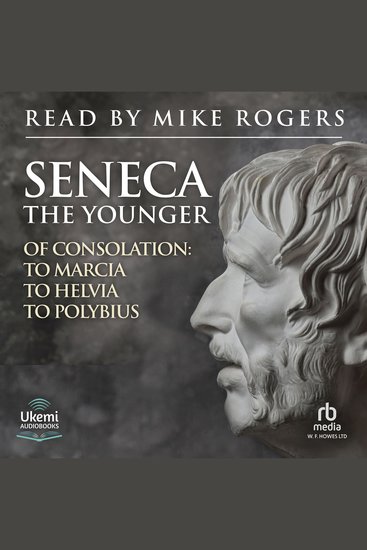
  • Of Consolation - To Marcia To Helvia To Polybius - cover

    Of Consolation - To Marcia To...

    Seneca the Younger

    • 0
    • 0
    • 0
    These three ‘Consolations’, written by Seneca to his mother and two friends, have been described as ‘the crowning achievement in the canon of ‘consolation letters’. But sentimental they are not, for they emerge from the writer’s deep-seated commitment to Stoicism, where individuals are exhorted to inhabit qualities of virtue, positivity, resilience, and indifference. This recording opens with Seneca’s consolatory letter to Marcia, who, after three years, was still mourning the death of her son. He recognises her exceptional personal qualities and what benefits she has brought to her family, having rescued her father’s legacy as a historian following his death. He cites other noble Roman mothers who lost their sons, and enjoins her to adopt a more Stoic attitude of mind: we are all destined to die, he declares.  
    The second letter is to his mother sent after he had been exiled to Corsica by Emperor Caligula. He counsels Helvia not to mourn his absence – not least because he himself does not feel grief at the prospect of his own exile. He acknowledges the trials of his mother during her life, remarking ‘ill-fortune has given you no respite’. But her grief at the absence of her son may be put to one side in the knowledge that as he has ‘never trusted in Fortune,’ she can be comforted that her son is not discommoded. And history points to far harsher separations.  
    The final letter is to Polybius, Emperor Claudius’s Literary Secretary, who was mourning his brother.  Written while in exile, Seneca’s unwavering commitment to Stoic philosophy is again in evidence. One of Seneca’s principal suggestions is for Polybius to distract himself from grief by an increasing involvement in work.  
    These ‘Consolations’ have been widely admired from Classical times to the present, but are periodically questioned for their emphasis on a somewhat detached approach to grief and bereavement. Not all can manage imperturbability in such circumstances. Nevertheless, there is a steadiness and emotional calm in these missives, which Seneca himself displayed when ordered to commit suicide by Emperor Nero.
    Zum Buch
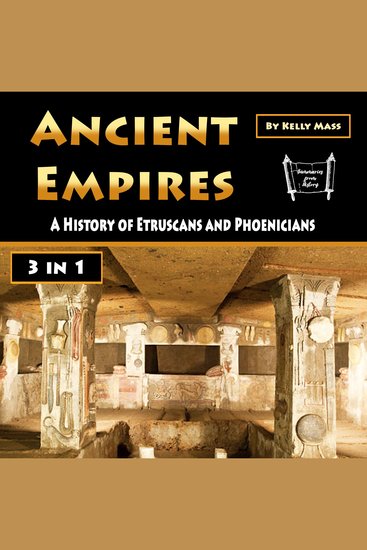
  • Ancient Empires - A History of Etruscans and Phoenicians - cover

    Ancient Empires - A History of...

    Kelly Mass

    • 0
    • 0
    • 0
    This bundle consists of 3 short books, which are about the following subjects: 
    Subject 1: Nineveh was an age-old Assyrian city in Upper Mesopotamia, near Mosul in modern-day northern Iraq. It was the capital and biggest city of the Neo-Assyrian Empire, and the world's biggest city for some decades, and is on the eastern bank of the Tigris River. It's now a prevalent name for the portion of Mosul that's on the Tigris' eastern bank, and it is also the name of the nation's Nineveh Governorate. 
    It was the world's largest city for about fifty years till it was sacked by a union of its previous subject tribes, including but not limited to the Babylonians, Medes, Persians, Scythians, and Cimmerians, in the year 612 BC, following a severe period of civil dispute in Assyria.  
    Subject 2: The term "Phoenicians" describes the people living in Phoenicia, a sometimes-forgotten civilization that was age-old and remarkable. Let's check out the tradition, the history, and the specifics of Phoenicia. 
    Phoenicia was a thalassocratic (a state with mostly maritime worlds) society that thrived in the eastern Mediterranean's Levant area, mainly in modern-day Lebanon. It was fixated the coast of Lebanon, with some seaside parts of modern-day Syria and Galilee included for good procedure, varying as far north as Arwad and as far south as Acre and perhaps Gaza. 
    Subject 3: At its peak, the Etruscan society of age-old Italy covered circa what's now Tuscany, western Umbria, and northern Lazio, and areas of what's now the Po Valley, Emilia-Romagna, south-eastern Lombardy, southern Veneto, and small parts of Campania. 
    The first proof of an Etruscan society might be traced back to around 900 BC.
    Zum Buch