Join us on a literary world trip!
Add this book to bookshelf
Grey
Write a new comment Default profile 50px
Grey
Subscribe to read the full book or read the first pages for free!
All characters reduced
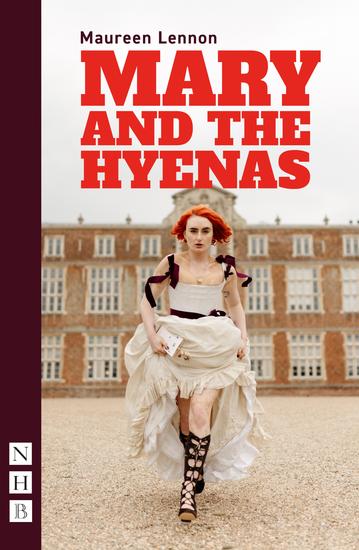
Mary and the Hyenas - cover

Mary and the Hyenas

Maureen Lennon

Publisher: Nick Hern Books

  • 0
  • 0
  • 0

Summary

'I write. I demand. I ask.
Not for women to have power over men but over themselves.'
Trailblazing writer, feminist philosopher, and fearless campaigner for women's rights, Mary Wollstonecraft lived a life of courage and determination. She dared to defy the conventions of eighteenth-century Britain, and kept going when many wanted to bring her down.
Maureen Lennon's play Mary and the Hyenas is a searing tribute to the spirit and resilience of a woman who fought for equality and justice – and an exhilarating dive into history and the birth of feminism. Be prepared for petticoats to be lifted, boots to be stamped, and voices raised in the pursuit of change.
Featuring electrifying music by Billy Nomates and performed by a cast of six, Mary and the Hyenas was first produced by Hull Truck Theatre and Pilot Theatre, directed by Esther Richardson, and opened at Hull Truck Theatre in 2025 before a UK tour.
This edition includes the full text of the play along with a range of teaching materials and resources designed to help educators bring the play to life for their students.
Available since: 02/20/2025.
Print length: 136 pages.

Other books that might interest you

  • Peak Stuff - cover

    Peak Stuff

    Billie Collins

    • 0
    • 0
    • 0
    'I like having things. I like having lots of things. It reminds me that I'm... Y'know? A person.'
    Alice is done with fast fashion. Ben can't stop buying trainers. And Charlie just wants to sell out… one organ at a time.
    Billie Collins's play Peak Stuff is a fast-paced, funny, fearless deep-dive into consumer culture. In an age of retail therapy, climate crisis and click and collect - how does our 'stuff' define us? And have we reached peak stuff?
    The play was commissioned by ThickSkin and Lawrence Batley Theatre, was a winner of the New Play Commission Scheme, and was first presented on tour of the UK in 2024.
    Show book
  • National Gallery - cover

    National Gallery

    Jonathan Ball

    • 1
    • 2
    • 0
    A poetic collage of art in the modern world: from Rilkean elegies for an iPhone to a meditation on Melville's classic
    Jonathan Ball's fourth poetry book, the first in seven years, swirls chaos and confession together. At the book's heart is a question: Why create art? A series of poetic sequences torment themselves over this question, offering few answers and taking fewer prisoners. Loose sonnets that consider the artistic creations of Leatherface, monster-killer from The Texas Chain Saw Massacre, sit alongside Rilkean elegies for an iPhone. Surreal meditations on the collage work of Guy Maddin are followed by all of the lines from Melville's Moby-Dick that mention "salt." Politicians and painters jostle while absurdist humour crashes into stark admissions of vulnerability in the wake of having children. A startling diversity of styles and subjects feed into the maelstrom of The National Gallery, and its dark currents will draw you in to drown.
    Show book
  • The Tragedy of Timon of Athens - cover

    The Tragedy of Timon of Athens

    William Shakespeare

    • 0
    • 0
    • 0
    The Tragedy of Timon of Athens (The Life of Tymon of Athens) is a play by William Shakespeare, probably written in collaboration with Thomas Middleton in about 1605–1606, which was published in the First Folio in 1623. It is about the fortunes of an Athenian named Timon. The central character is a beloved citizen of Athens who through tremendous generosity spends his entire fortune on corrupt hangers-on only interested in getting the next payout.
    The earliest-known production of the play was in 1674, when Thomas Shadwell wrote an adaptation under the title The History of Timon of Athens, The Man-hater. Multiple other adaptations followed over the next century, by writers such as Thomas Hull, James Love and Richard Cumberland. The straight Shakespearean text was performed at Smock Alley in Dublin in 1761, but adaptations continued to dominate the stage until well into the 20th century.
    ... Flavius arrives. He wants the money as well, but he also wants Timon to come back into society. Timon acknowledges that he has had one true friend in Flavius, a shining example of an otherwise diseased and impure race, but laments that this man is a mere servant. He invites the last envoys from Athens, who hoped Timon might placate Alcibiades, to go hang themselves, and then dies in the wilderness. Alcibiades, marching on Athens, then throws down his glove, and ends the play reading the bitter epitaph Timon wrote for himself, part of which was composed by Callimachus:
    "Here lies a wretched corpse of wretched soul bereft:
    Seek not my name: a plague consume you wicked caitiffs left!"
    Here lie I, Timon, who alive, all living men did hate,
    Pass by, and curse thy fill, but pass and stay not here thy gait...
    Among the most significant works William Shakespeare: Hamlet, Othello, King Lear, Macbeth, Orpheus, Romeo and Juliet, Julius Caesar, Troilus and Cressida, The Tempest, Venus and Adonis, Antony and Cleopatra, Measure for Measure, The Winter's Tale and many more.
    Show book
  • Woman at the Crossing - cover

    Woman at the Crossing

    Susan Okie

    • 0
    • 0
    • 0
    In the poem that opens her debut collection, Susan Okie recounts an evening in the anatomy lab. Here we witness the depths of her curiosity toward her subject's inner workings. When I tugged on the flexor digitorum tendons, / her fingers partly closed and her thumb /crooked in. I seemed to see the two of us / as if from outside, and could no longer / name the tendons. I felt my fingers / from inside her hand." What to some might feel like harrowing proximity, Okie delivers, in astonishing verse, with wonder and even intimacy. To be sure, Woman at the Crossing is the work of a seasoned practitioner.
    Show book
  • Contemporary Plays by Black British Writers - cover

    Contemporary Plays by Black...

    Travis Alabanza, Firdos Ali,...

    • 0
    • 1
    • 0
    'Welcome. Welcome to Bristol in 1963. Welcome to Waterloo Bridge in 2016. Welcome to a house in May 2017. Welcome to three couples and what might be, what once was and what could have been in 2017. Welcome to a West Indian household in 2018. Welcome to London in 2018. Welcome to the past, present and – crucially – the future.'
    This anthology brings together six plays, all written or performed since 2017, by six brilliant Black British writers – Travis Alabanza, Firdos Ali, Natasha Gordon, Arinzé Kene, Chinonyerem Odimba and debbie tucker green.
    The plays demonstrate a rich range of settings, forms, styles, locations, scales, contents and concerns – and explore themes including politics and protest, grief and colonisation, relationships and gender.
    They have been seen on stages including the National Theatre, the Royal Court, the Bush and Bristol Old Vic, at the Edinburgh Festival Fringe, in the West End, and on tour of the UK.
    Selected and introduced by leading theatre director Natalie Ibu, Contemporary Plays by Black British Writers celebrates a multiplicity of stories authored by Black playwrights in the UK over the last decade.
    Show book
  • The Legend of Ned Ludd - cover

    The Legend of Ned Ludd

    Joe Ward Munrow

    • 0
    • 0
    • 0
    'They say work harder, strive harder. The machine strives for nothing.
    The loom does the work twice as fast and half as well.
    And they'll settle for that. They'll settle for that.'
    Machines can make our work easier. They can also make it vanish overnight. Joe Ward Munrow's play The Legend of Ned Ludd weaves together stories from around the world and takes us on a whirlwind global commute, from the Luddites' nineteenth-century war against new technology through to London, Liverpool, Lagos and beyond...
    But we're all at the mercy of The Machine. And, in this powerful exploration of work, automation and capitalism, The Machine selects the scenes for each performance, resulting in 256 possible versions of the play, spun from all the stories included in this published edition. It premiered at the Liverpool Everyman in 2024, directed by Jude Christian.
    Show book