Begleiten Sie uns auf eine literarische Weltreise!
Buch zum Bücherregal hinzufügen
Grey
Einen neuen Kommentar schreiben Default profile 50px
Grey
Jetzt das ganze Buch im Abo oder die ersten Seiten gratis lesen!
All characters reduced
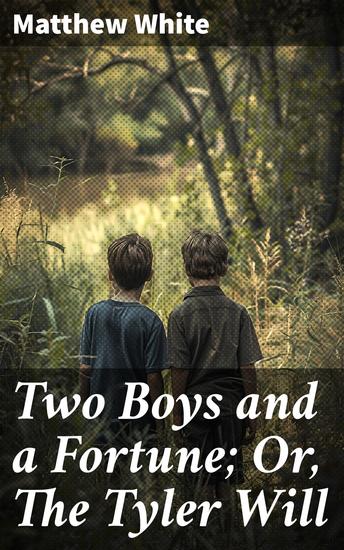
Two Boys and a Fortune; Or The Tyler Will - A Tale of Hidden Wealth and Betrayal - cover

Two Boys and a Fortune; Or The Tyler Will - A Tale of Hidden Wealth and Betrayal

Matthew White

Verlag: Good Press

  • 0
  • 0
  • 0

Beschreibung

In "Two Boys and a Fortune; Or, The Tyler Will," Matthew White crafts a compelling narrative that intertwines themes of ambition, morality, and the intricacies of familial relationships. Set against a backdrop of societal transitions, the novel employs a vivid, accessible literary style replete with sharp dialogue and rich descriptive passages. White's storytelling deftly navigates the complexities of inheritance and the moral dilemmas it evokes, as two boys grapple with an unexpected fortune and its implications on their lives and ethics. The book artfully aligns with the literary traditions of American realism, exploring how wealth can shape character and destiny. Matthew White, a keen observer of human nature and a writer influenced by the socio-economic nuances of his time, imbues this tale with authentic emotional resonance. His experiences and insights into the concept of wealth, particularly its transformative power and potential pitfalls, enrich the narrative. White's background in literature and his understanding of early American societal norms inform his character development and plot structure, allowing for a profound exploration of personal integrity amid temptation. Readers seeking a thought-provoking and engaging tale will find "Two Boys and a Fortune" an enlightening journey. This novel is a rich exploration of youth, greed, and the quest for identity, making it essential reading for those interested in moral complexities and the human condition.
Verfügbar seit: 12.10.2023.
Drucklänge: 131 Seiten.

Weitere Bücher, die Sie mögen werden

  • Wapping Workhouse (Unabridged) - cover

    Wapping Workhouse (Unabridged)

    Charles Dickens

    • 0
    • 0
    • 0
    Charles Dickens was a writer and social critic who created some of the world's best-known fictional characters and is regarded as the greatest novelist of the Victorian era. His works enjoyed unprecedented popularity during his lifetime, and by the twentieth century critics and scholars had recognised him as a literary genius. His novels and short stories enjoy lasting popularity.
    WAPPING WORKHOUSE: My day's no-business beckoning me to the East-end of London, I had turned my face to that point of the metropolitan compass on leaving Covent-garden, and had got past the India House, thinking in my idle manner of Tippoo-Sahib and Charles Lamb, and had got past my little wooden midshipman.
    Zum Buch
  • Notes From The Underground - The Classic Tale - cover

    Notes From The Underground - The...

    Fyodor Dostoevsky

    • 0
    • 0
    • 0
    Notes from Underground is an 1864 novella by Fyodor Dostoyevsky. Notes is considered by many to be the first existentialist novel. It presents itself as an excerpt from the rambling memoirs of a bitter, isolated, unnamed narrator (generally referred to by critics as the Underground Man) who is a retired civil servant living in St. Petersburg. The first part of the story is told in monologue form or the underground man's diary, and attacks emerging Western philosophy, especially Nikolay Chernyshevsky's What Is to Be Done?. The second part of the book is called "Àpropos of the Wet Snow," and describes certain events that, it seems, are destroying and sometimes renewing the underground man, who acts as a first person, unreliable narrator. 
     
    Fyodor Mikhailovich Dostoevsky was a Russian novelist, short story writer, essayist, and journalist. His literary works explore human psychology in the troubled political, social, and spiritual atmospheres of 19th-century Russia, and engage with a variety of philosophical and religious themes. His most acclaimed novels include Crime and Punishment (1866), The Idiot (1869), Demons (1872), and The Brothers Karamazov (1880). 
     
    Many literary critics rate him as one of the greatest novelists in all of world literature, as multiple of his works are considered highly influential masterpieces.
    Zum Buch
  • God Sees the Truth But Waits - From their pens to your ears genius in every story - cover

    God Sees the Truth But Waits -...

    Leo Tolstoy

    • 0
    • 0
    • 0
    Leo Tolstoy was born in 1828 in the Russian province of Tula to a wealthy noble family. As a child, he had private tutors but he showed little interest in any formal education. When he went to the University of Kazan in 1843 to study oriental languages and law, he left without completing his courses.  Life now was relaxed and idle but with some writing also taking place.  Gambling debts forced an abrupt change of path and he joined the army to fight in the Crimean War.  He was commended for his bravery and promoted but was appalled at the brutality and loss of life.  He recorded these and other earlier experiences in his diaries which formed the basis of several of his works. 
    In 1852 ‘Childhood’ was published to immediate success and was followed by ‘Boyhood’ and ‘Youth’. 
    His experience in the army and the horrors he witnessed resulted in ‘The Cossacks’ in 1862 and the trilogy ‘Sevastopol Tales’. After the war he travelled around Europe, visiting London and Paris and meeting such luminaries as Victor Hugo and Charles Darwin.  
    It was now that Tolstoy began his masterpiece, ‘War and Peace’. Published in 1869 it was an epic work that changed literature. He quickly followed this with ‘Anna Karenina’.  
    These successes made Tolstoy rich and helped him accomplish many of his dreams but also brought problems as he grappled with his faith and the lot of the oppressed poor. These revolutionary views became so popular that the authorities now kept him under surveillance.  
    He led a life of asceticism and vegetarianism and put his socialist ideals into practice by establishing numerous schools for the poor and food programmes. He also believed in giving away his wealth, which caused much discord with his wife.  
    His writing continued to bring forth classics such as ‘The Death of Ivan Ilyich’ and many brilliant and incisive short stories such as ‘How Much Land Does A Man Need’.  
    In 1901 Tolstoy was excommunicated from the Church and controversially deselected for the Nobel Prize for Literature. 
    Whilst undertaking a pilgrimage by train in October 1910 with his daughter Aleksandra he caught pneumonia in the nearby town of Astapovo.  Leo Tolstoy died on November 9th, 1910, he was 82.
    Zum Buch
  • A Pair of Silk Stockings - From their pens to your ears genius in every story - cover

    A Pair of Silk Stockings - From...

    Kate Chopin

    • 0
    • 0
    • 0
    Katherine O'Flaherty was born on the 8th February 1850 in St Louis, Missouri to parents of French and Irish descent. 
    At age 5, she was sent to the Sacred Heart Academy and, apart from a 2 year period at home when her father died, remained there until graduating in 1868.  Whilst there she began writing and became an avid reader of almost anything that crossed her path.   
    Kate married Oscar Chopin in 1870 and the couple moved to New Orleans, and later to the rural setting of Cloutierville, Louisiana to raise their 6 children.  
    In 1882 her husband died leaving her in a deep trench of debt.  Despite her best efforts to turn the businesses around they were sold, and she moved the family back to St Louis and the financial help of her mother.  Sadly, her mother died within the year.  Kate, now struggling with depression, pushed herself to write and gained a local reputation as a writer of short stories that captured the local color and vibrancy of her surroundings. 
    By the early 1890’s her short stories were published nationally.  With this widespread audience also came negative reviews, controversy, and cries of immorality as themes such as interracial relationships, the rights of women and other burning issues of the day were written about. 
    Despite the criticism, which unnerved her, she continued to write though in the main her works, around 100 short stories and two novels, were not attributed with any literary worth. 
    Kate Chopin died from a brain haemorrhage in St Louis Missouri on the 22nd of August 1904.  She was 54. 
    For much of the 20th Century her work was forgotten and out of print.  It was only in early 1970’s, with the rise of feminism and the call for a more just society that she was given the status her works had long described and shone a literary light at.  She is now safely revered as one of America’s great authors.
    Zum Buch
  • The Stranger - cover

    The Stranger

    Katherine Mansfield

    • 0
    • 0
    • 0
    "The Stranger" is a 1921 short story by Katherine Mansfield. It was first published in the London Mercury in January 1921, and later reprinted in The Garden Party and Other Stories.
    In Auckland, Mr. Hammond is waiting for his wife, back from Europe. After talking to some other people waiting at the harbour, she lands in but takes her time, leading him to wonder if she was sick during the voyage - she was not.
    Zum Buch
  • Tom Jones - cover

    Tom Jones

    Henry Fielding

    • 0
    • 0
    • 0
    "Tom Jones" is a classic novel by Henry Fielding, published in 1749. Officially titled "The History of Tom Jones, a Foundling," it is a comic novel that follows the life and adventures of the title character, Tom Jones, from his birth to his eventual marriage. The story unfolds in the context of Fielding's satire of 18th-century British society, manners, and morality. It is known for its vibrant characters, intricate plot, and the author's direct engagement with the reader, which was innovative for its time.
    Zum Buch